Cartier’s position within today’s watch market is no longer driven by rediscovery or trend. Collectors now understand something that a small group always appreciated, that the most important Cartier watches were rarely the most complicated, but often the most creatively designed.
This June in Lugano, Monaco Legend Group will present one of its strongest Cartier selections in recent years. The catalogue brings together an exceptional group of watches including two extraordinarily rare Cartiers made by Audemars Piguet, London-made watches, rare Paris pieces, highly unusual Tank variations, special orders and important modern Cartier gems. What unites them is not simply rarity, but individuality. These are watches produced in very small numbers, often for highly specific clients, and frequently outside conventional commercial production.
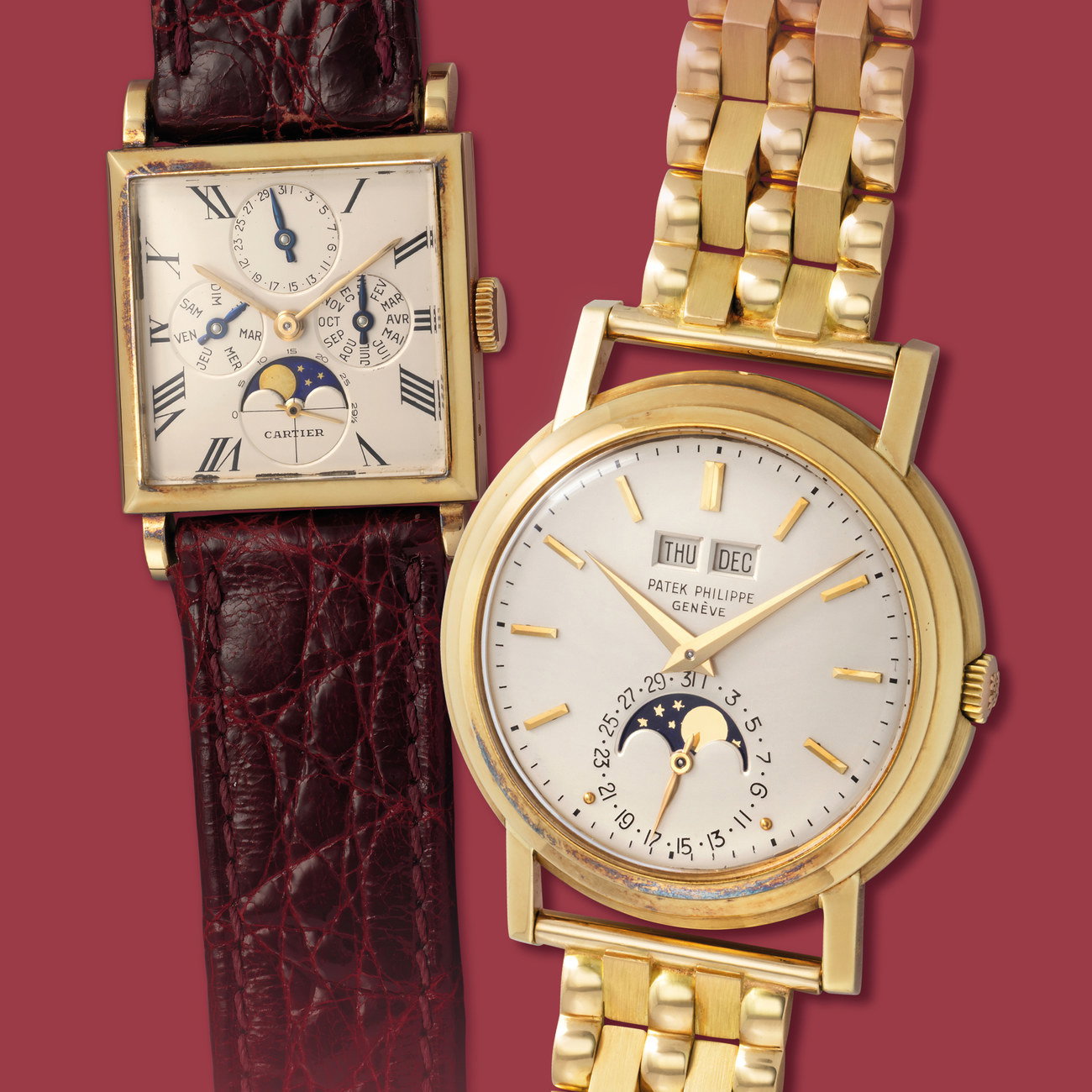
Two highly important calendar wristwatches deserve particular attention. Though manufactured by Audemars Piguet, both were retailed by and house dials signed by Cartier and sit firmly within the wider narrative of Cartier’s mid-century approach to exceptional watchmaking. During this period, Cartier frequently collaborated with the finest Swiss manufactures to offer highly exclusive complicated watches to its most important clients, often in extraordinarily small numbers and bearing the Cartier signature on the dial.
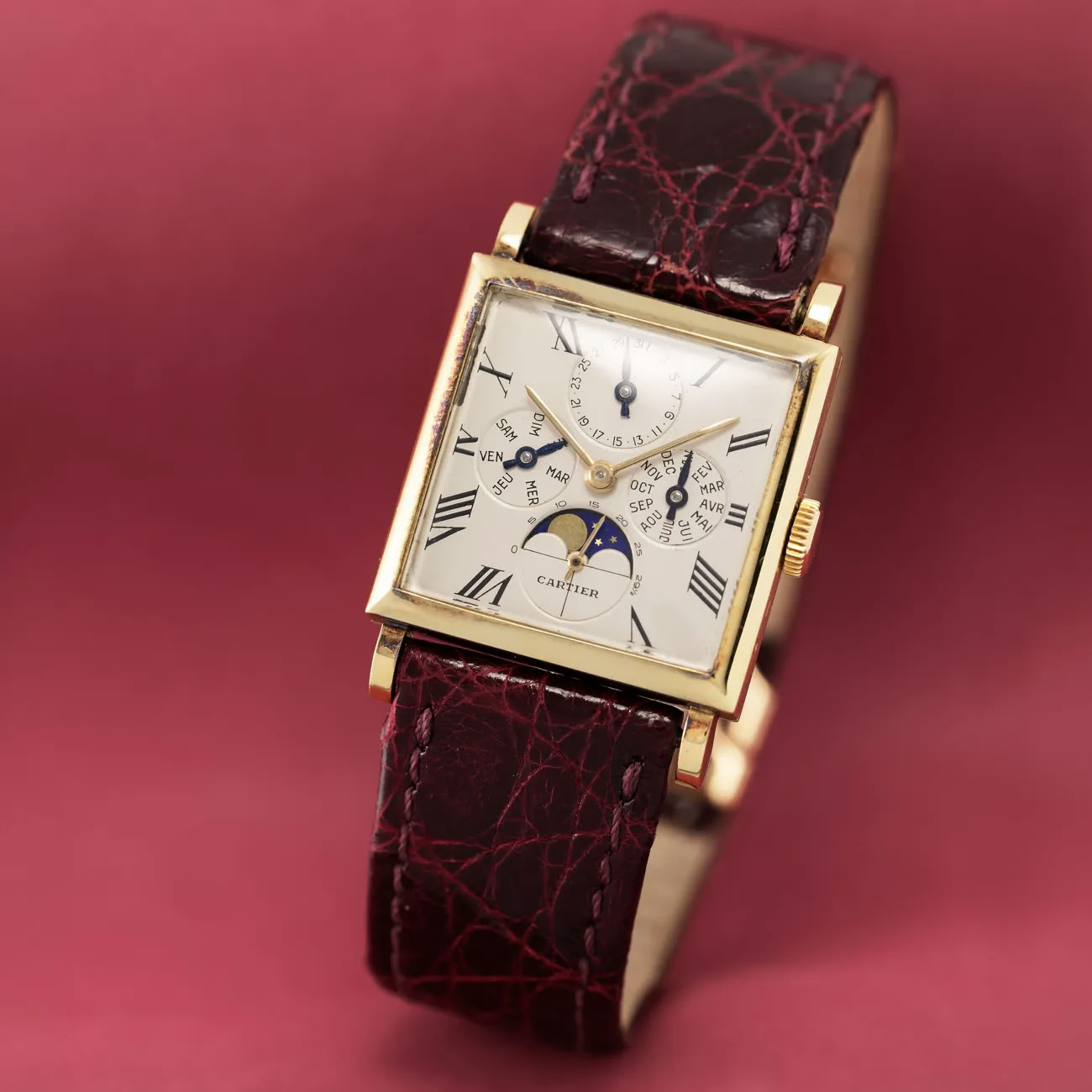
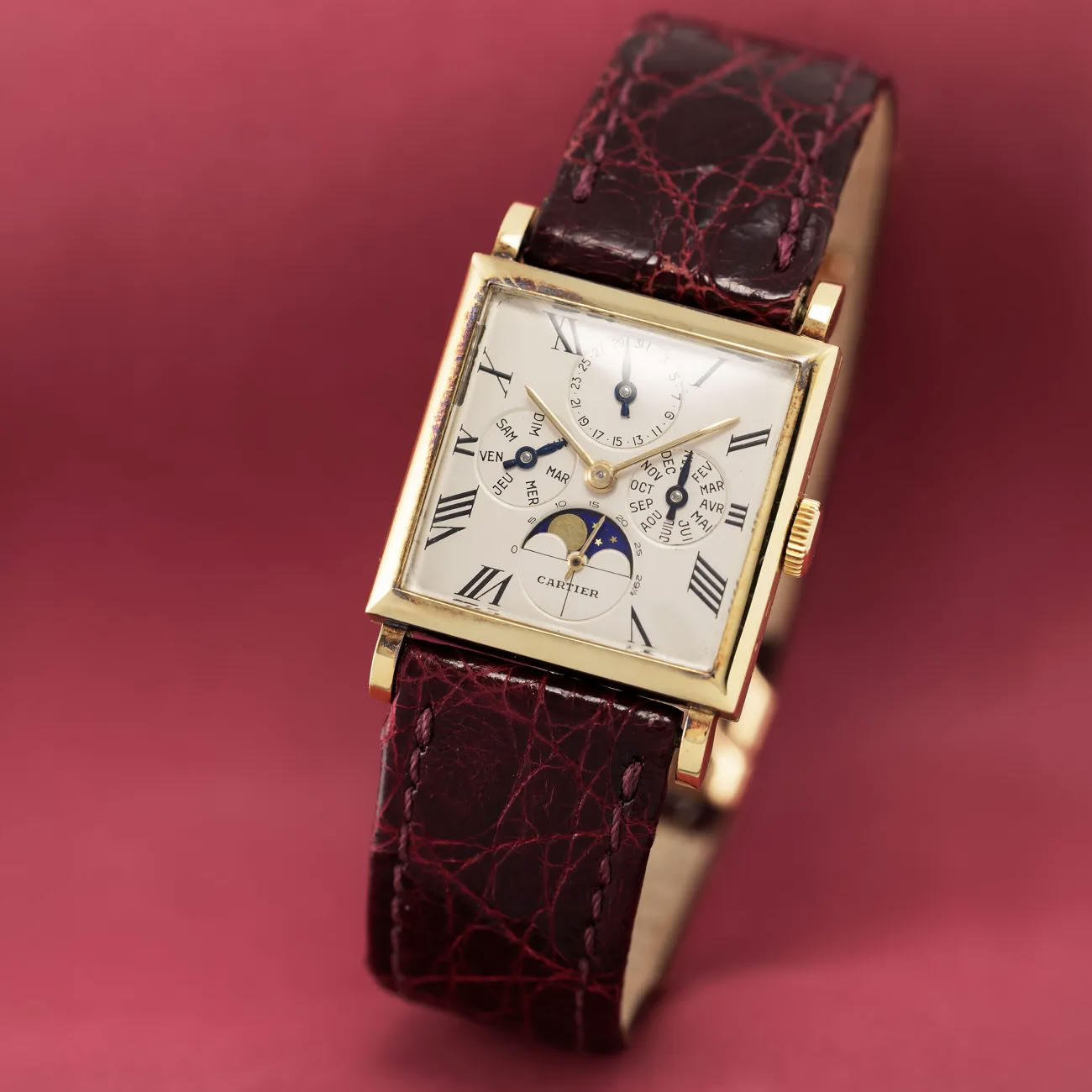
The first is the square-shaped Triple Calendar Moon Phase with Cartier-signed dial, circa 1960s, an exceptionally rare and important complicated wristwatch of which only three examples have ever surfaced the market, all retailed and sold by Cartier. Combining a compact square-shaped case with complete calendar and moonphase indications, it reflects the restrained approach to complicated watchmaking seen during the period.
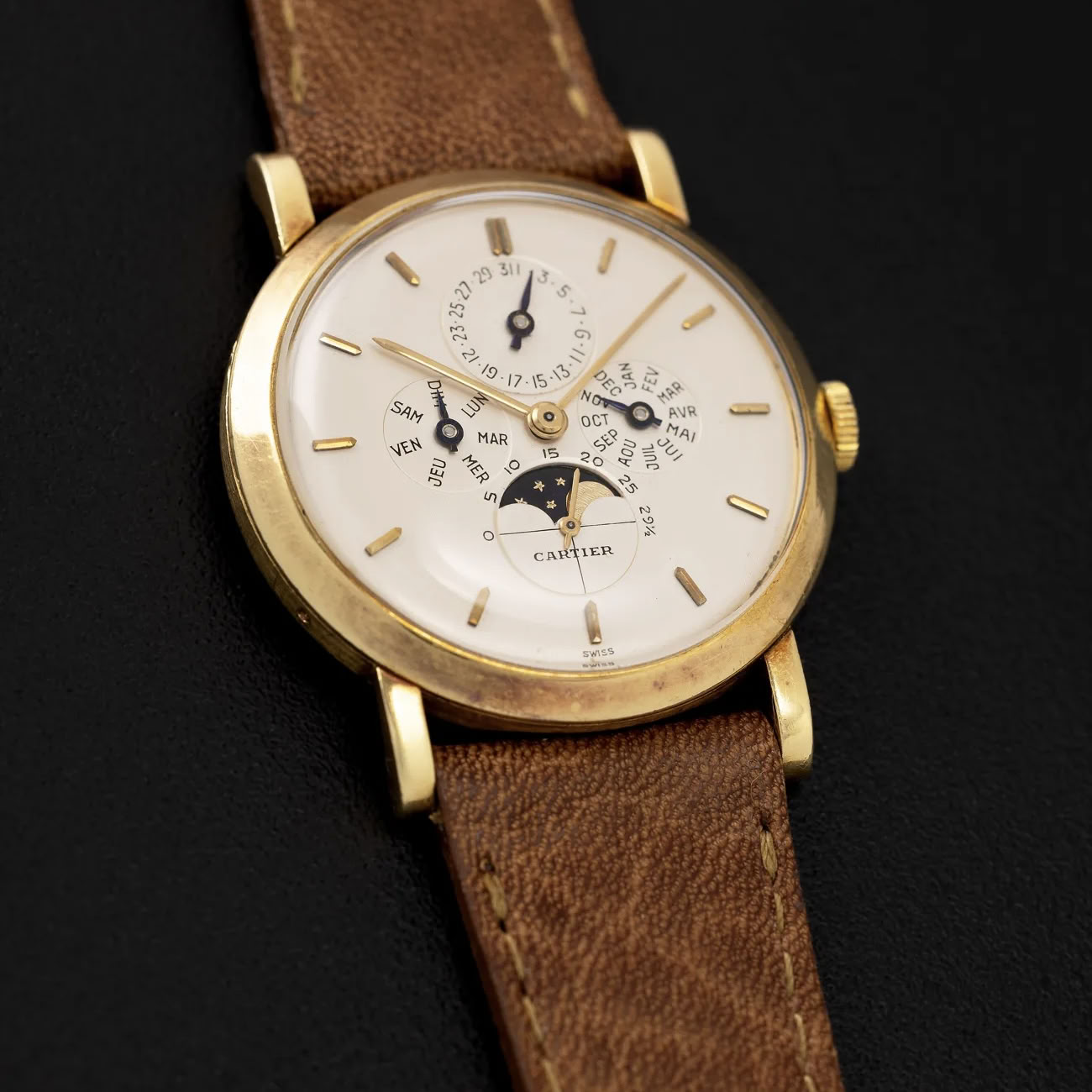
Equally important is the Audemars Piguet reference 5513 Triple Calendar Moonphase with Cartier-signed dial. Produced between 1951 and 1967 in only 19 examples across all metals, scholarship suggests that just 11 were cased in yellow gold. Of those, only two examples were delivered with Cartier signatures, with the present watch being the first supplied in May 1960. Combining exceptional rarity with strong historical relevance, it represents an important intersection between Audemars Piguet’s early complicated wristwatch production and Cartier’s role as a retailer of highly exclusive timepieces during the period.
The London Era
Central to the sale is an extraordinary group of Cartier London watches from the late 1960s and early 1970s, a period now widely regarded as one of the maison’s most inventive eras.
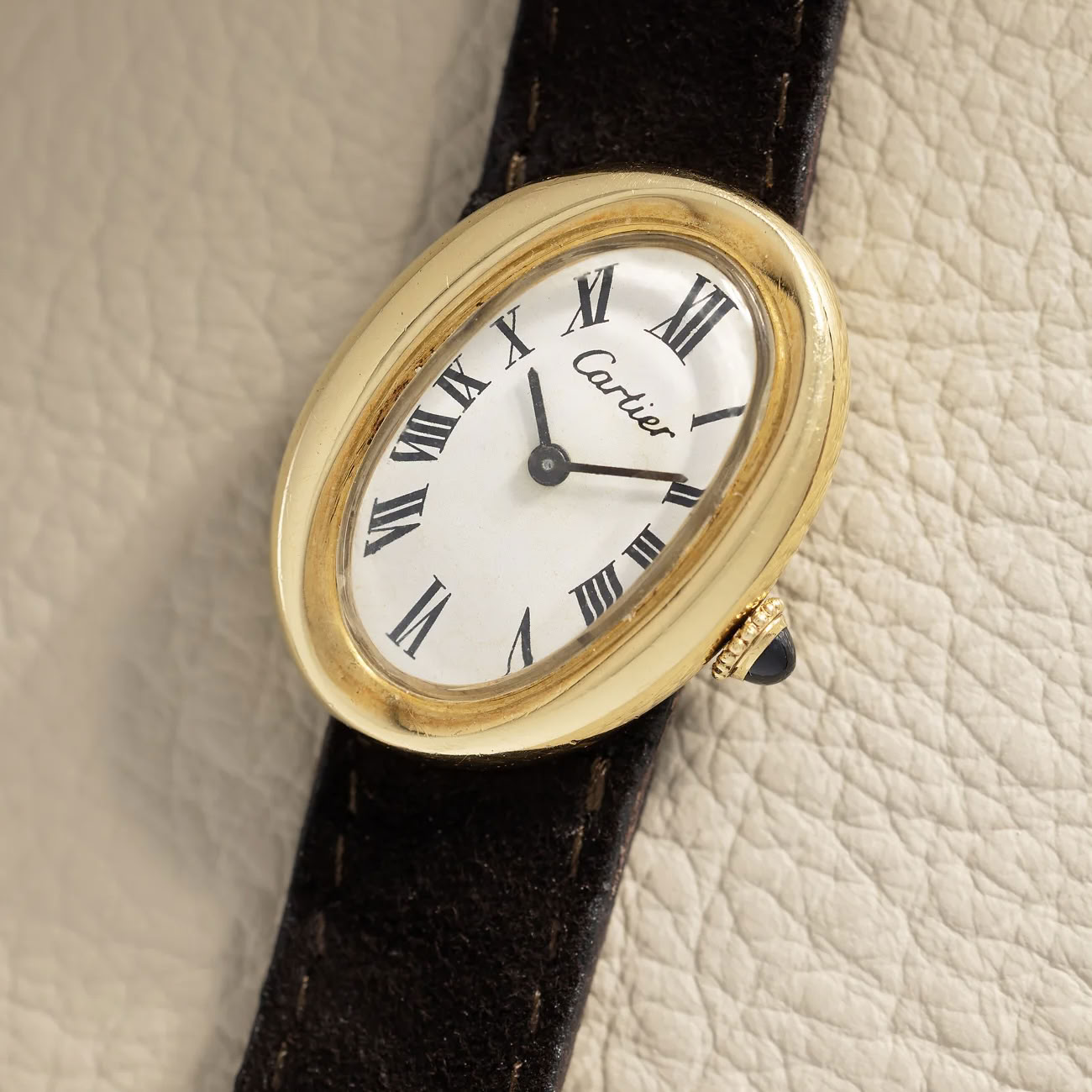
Amongst the key highlights is the Baignoire Oblique London, circa 1967, one of the rarest and most elusive Cartier London watches known today. Defined by its rotated “oblique” case, positioned approximately 30 degrees relative to the strap, the watch transforms the classical Baignoire into something far more sculptural and dynamic. According to current scholarship, only two other examples are known.
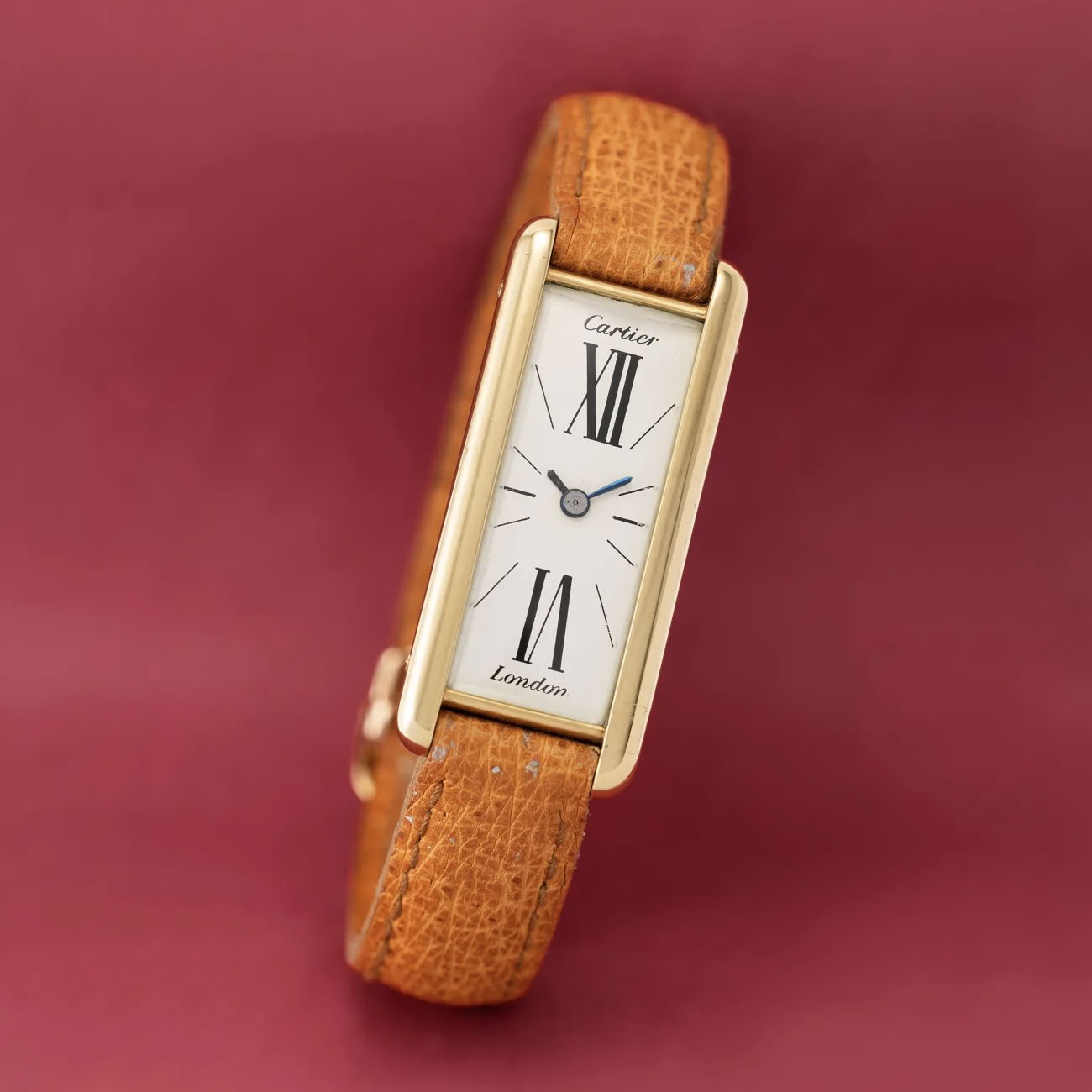
Equally important is the Tank Allongée London, circa 1970, distinguished by its elongated proportions and highly unusual rear-wound construction. By positioning the crown on the reverse of the case, Cartier London preserved the uninterrupted symmetry of the design, reflecting the workshop’s willingness to prioritise aesthetic purity over convention.
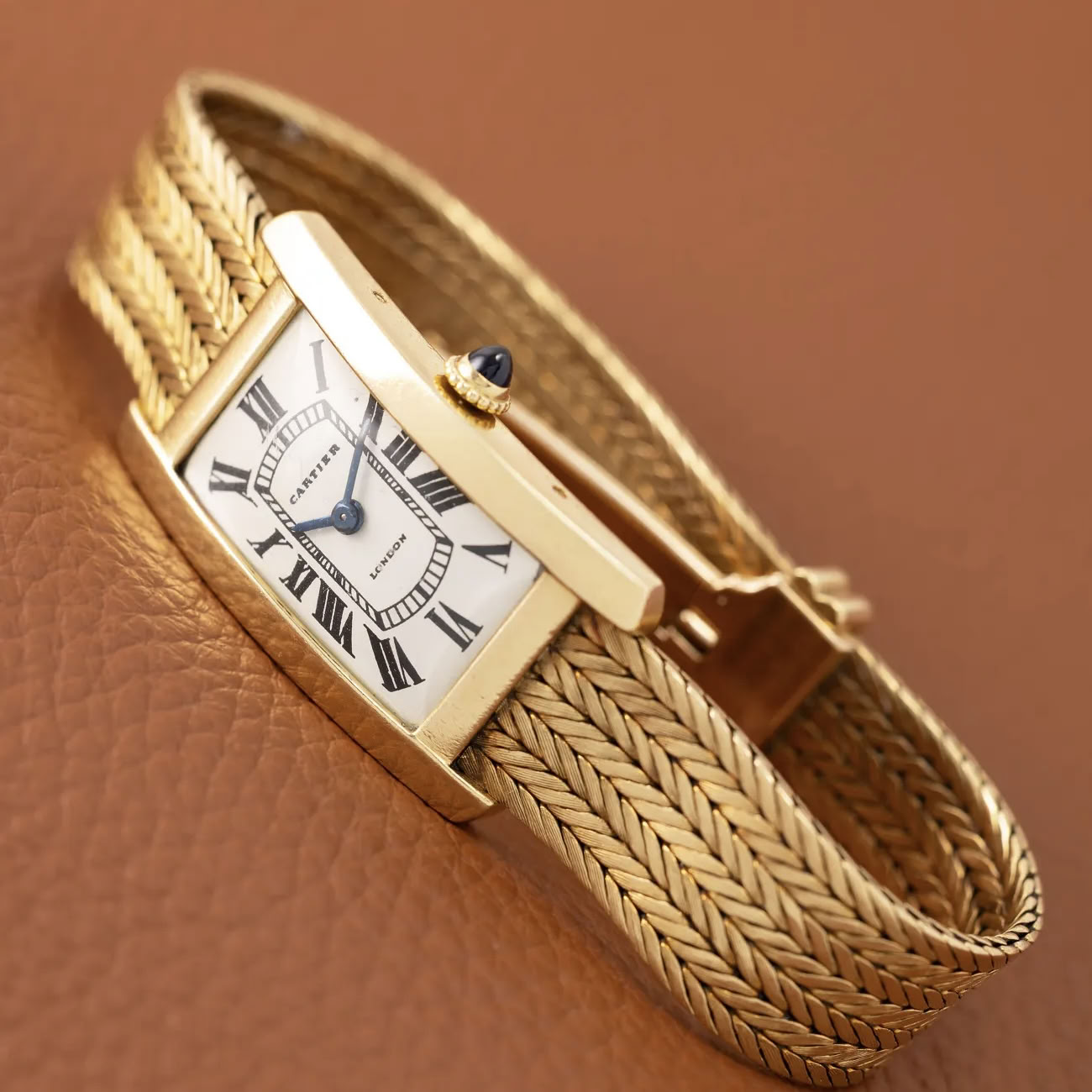
The Tank Cintrée London, circa 1969, fitted with its original Cartier bracelet, represents another key example of this period. London-signed Cintrée watches are already significantly rarer than their Paris counterparts, while examples retaining their original numbered bracelet are increasingly difficult to find. The elongated curved case remains one of the purest expressions of Cartier design language.
The London group extends further through several highly desirable examples.
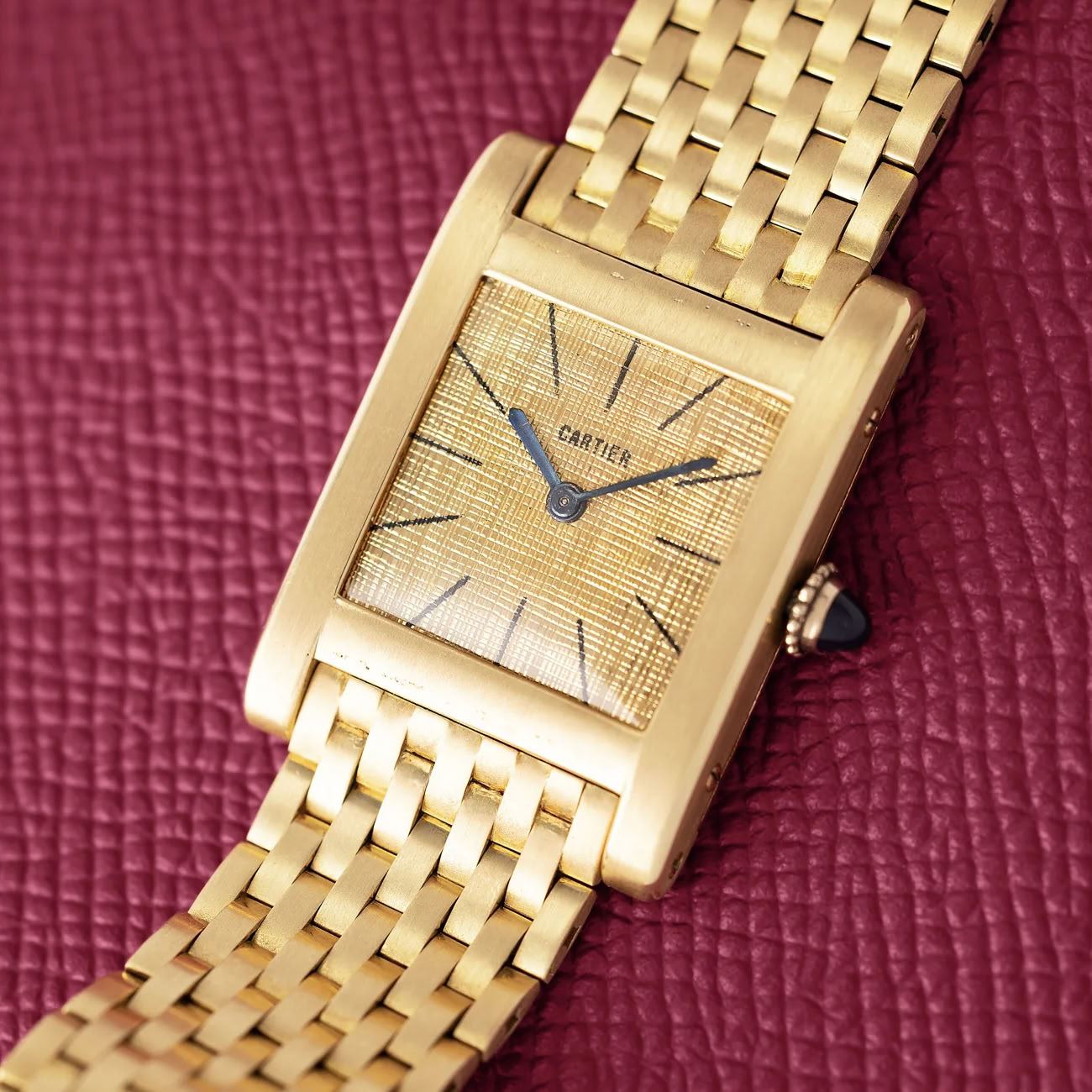
The Tank Normale London, with its remarkable crosshatch guilloché dial and original bracelet, may represent a unique configuration.
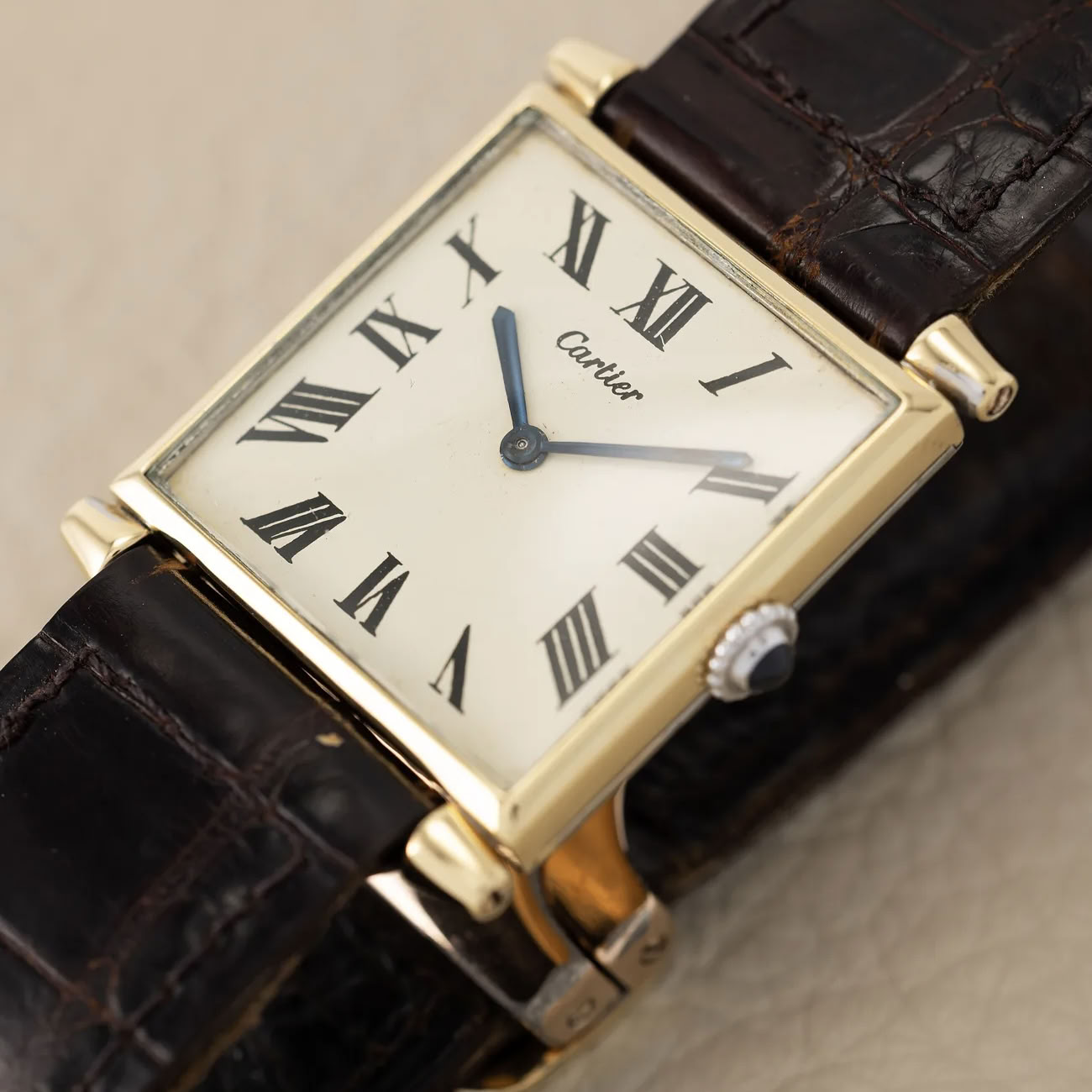
While the Tank Obus London demonstrates Cartier’s softer and more sculptural interpretation of the Tank form through its bullet-esque “Obus” lugs and beautifully aged ivory dial.
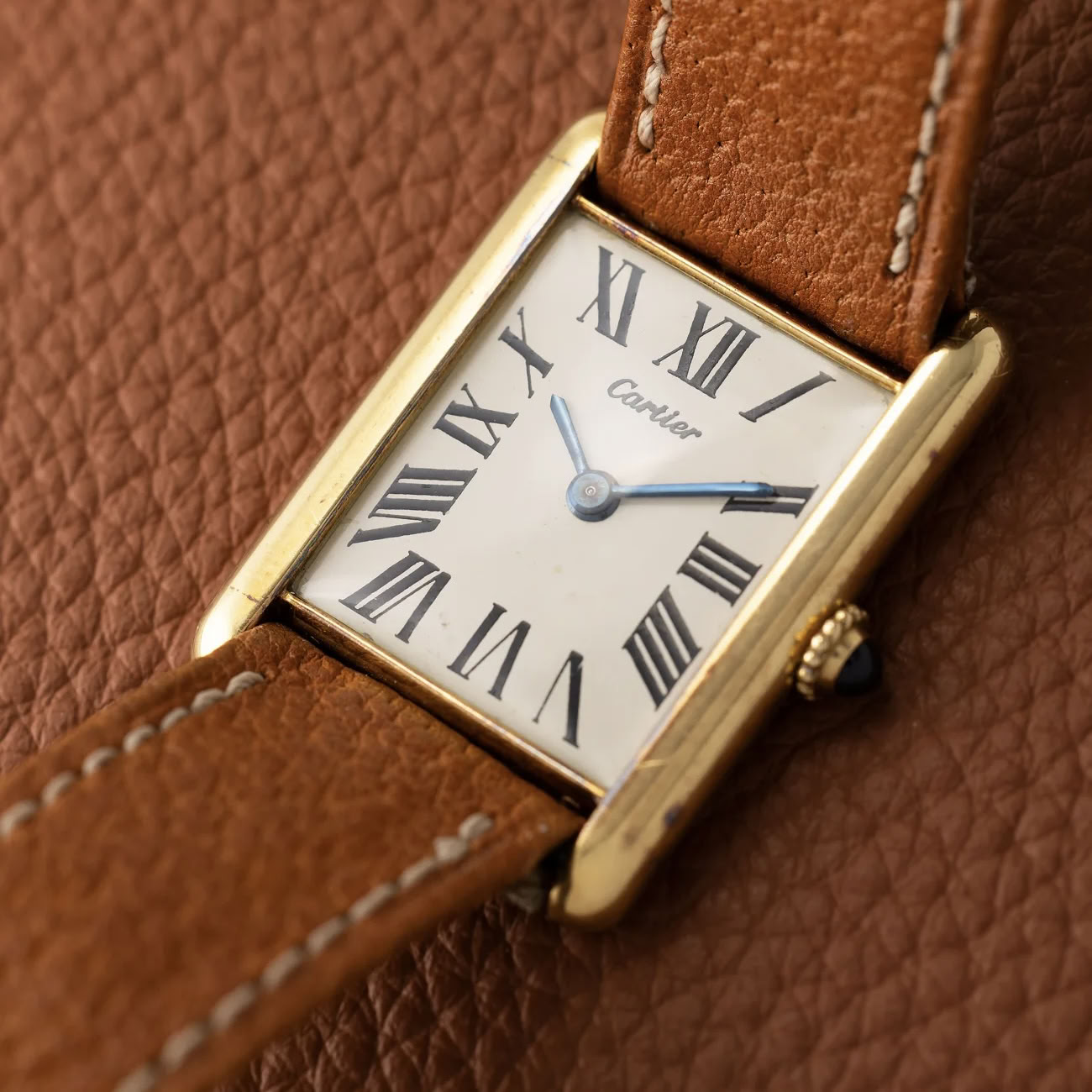
Completing the London section is the Tank Louis London, a classic early 1970s beautiful example retaining matching numbered clasp and hallmarks.
Cartier Paris
The sale also includes several important Cartier watches rooted in Paris production and early twentieth-century design.
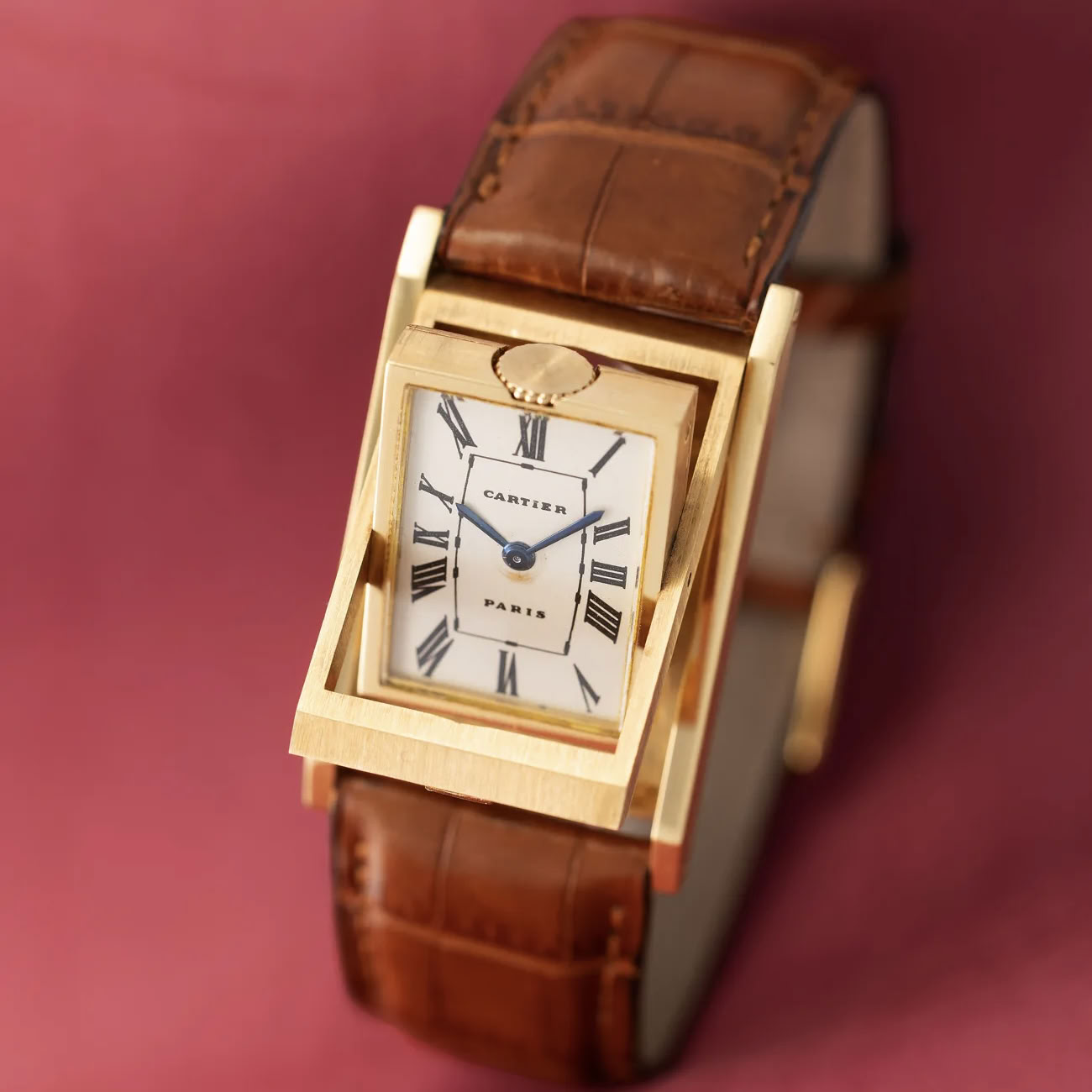
The Tank Basculante, with Paris dial and French-made case by Edmond Jaeger, remains one of Cartier’s most technically inventive designs. Introduced in 1932, the pivoting case mechanism allowed the dial to rotate inward for protection, representing Cartier’s own elegant answer to the practical sports watch solutions offered by Jaeger’s Reverso.
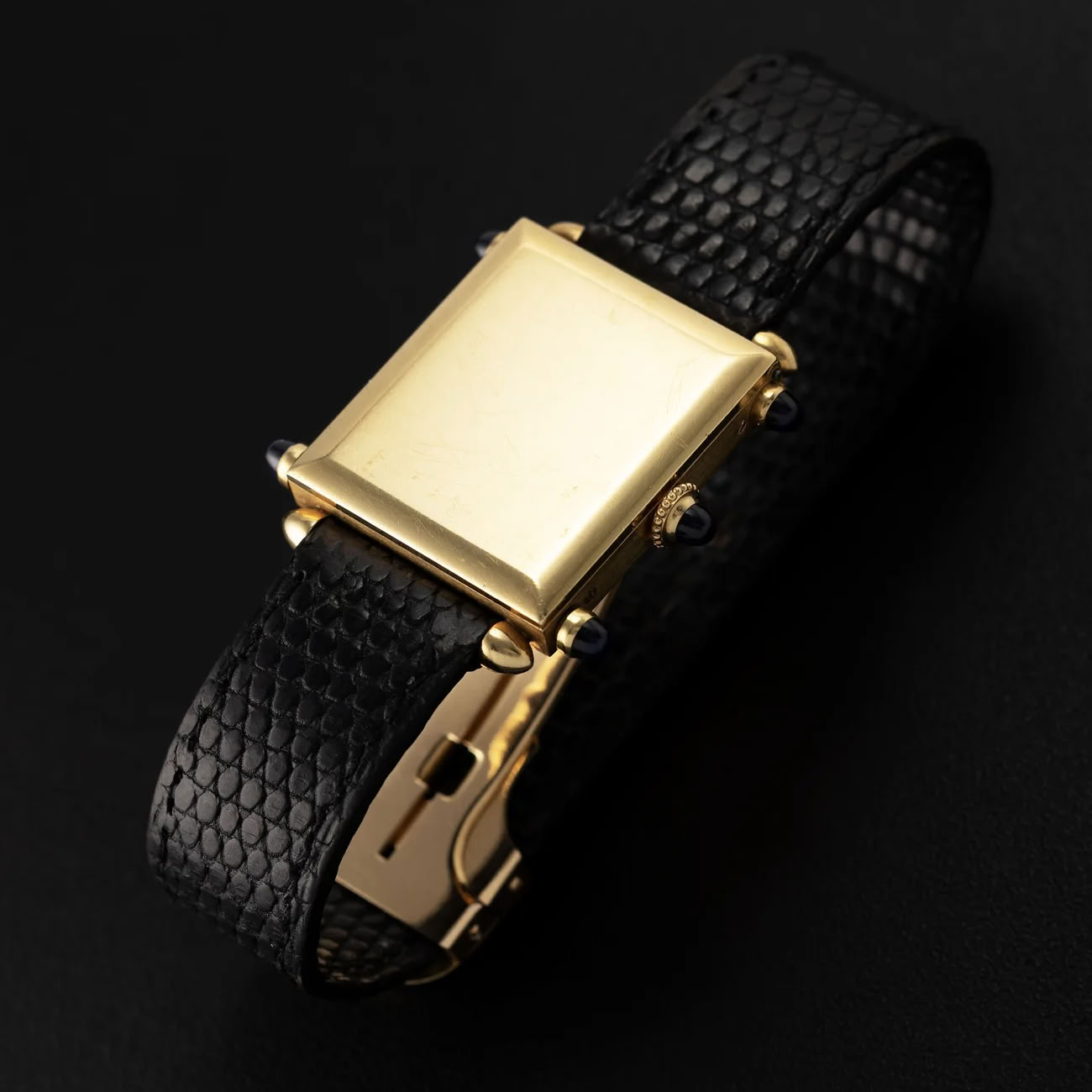
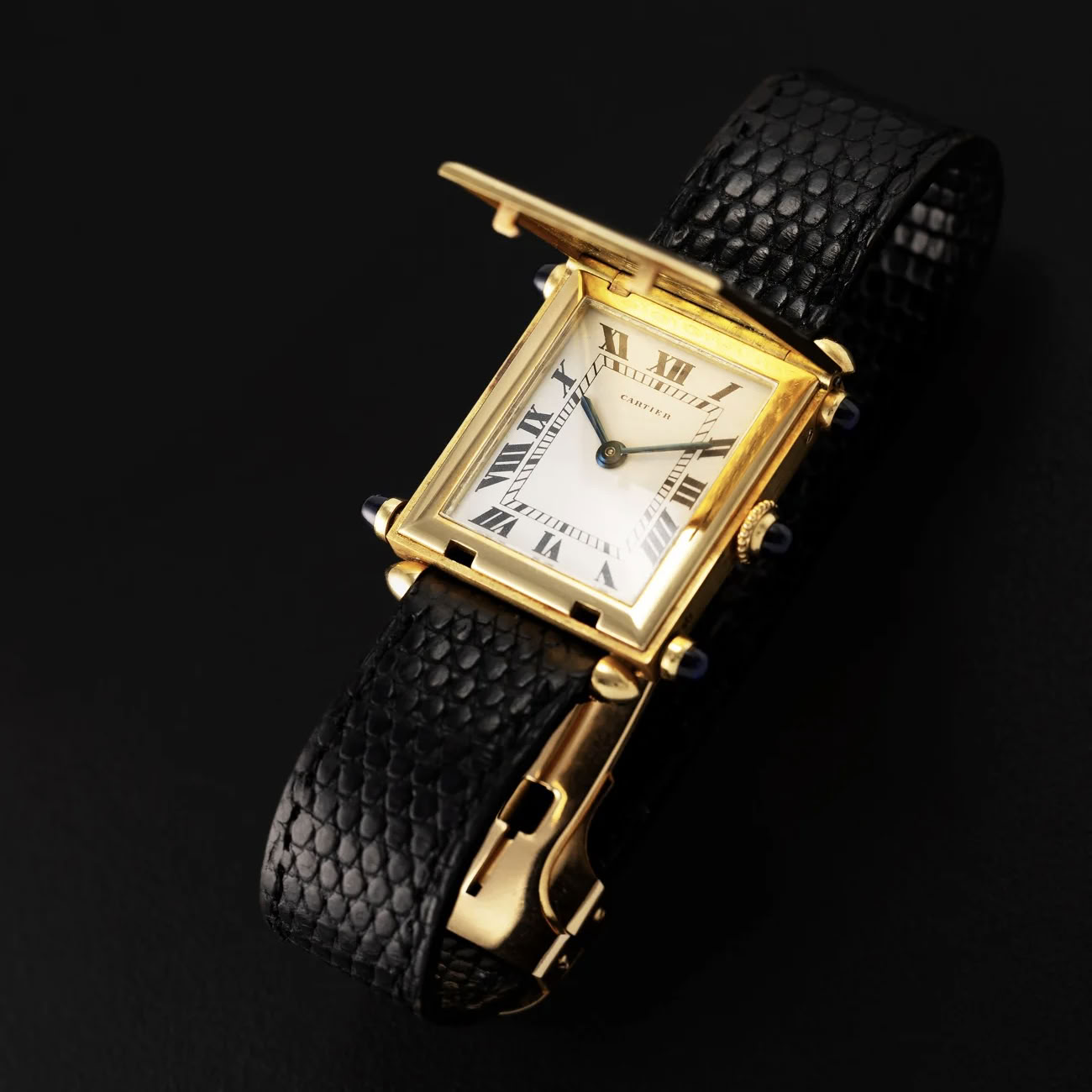
Equally unusual is the Tank Obus Savonette, combining the Obus case architecture with a hunter-style protective cover system. Produced in extremely small numbers, it stands among the most unconventional and mechanically distinctive Tank variations ever produced.
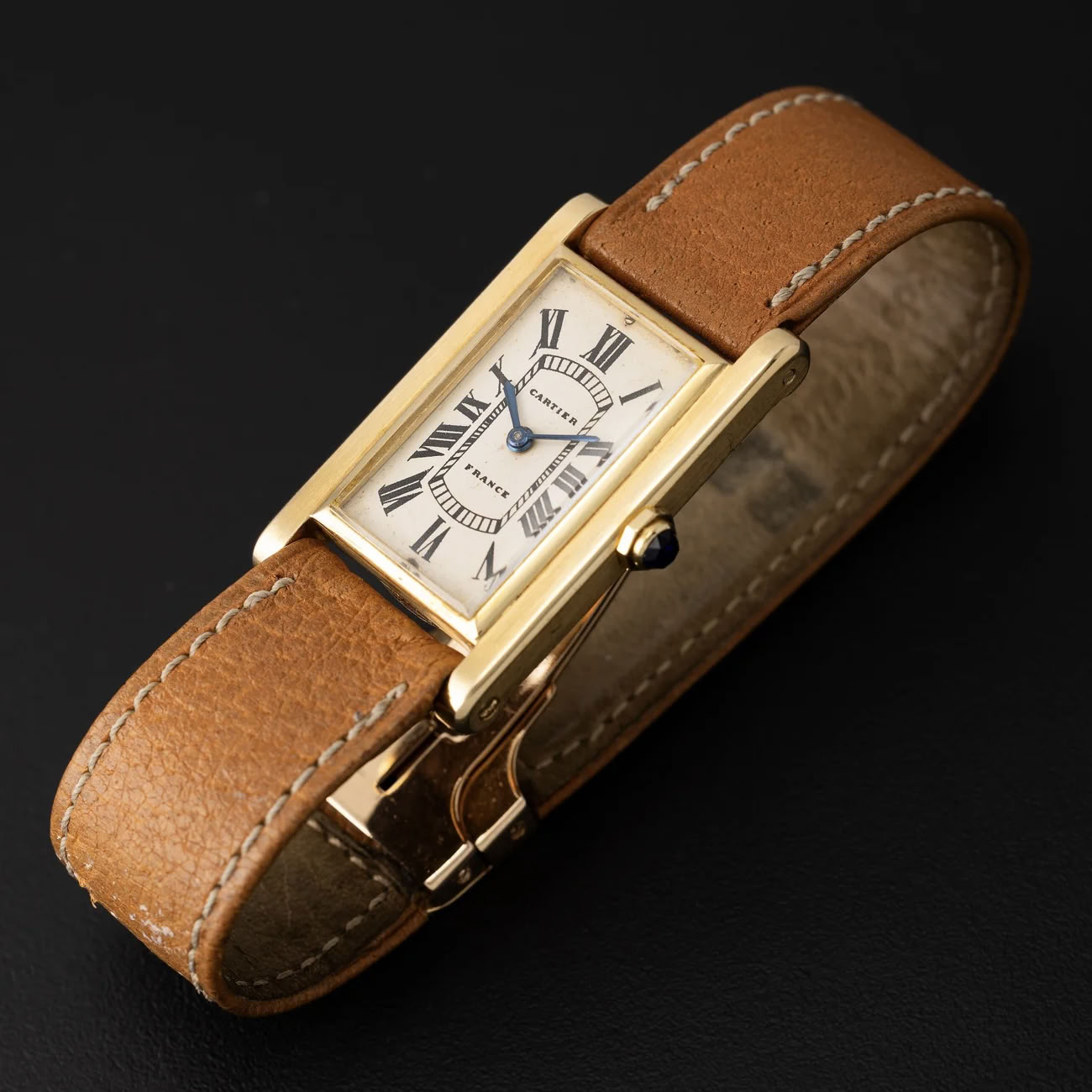
Earlier still is the Tank Allongée from the 1930s, which demonstrates Cartier’s fascination with elongated vertical proportions during the Art Deco period. The restrained rectangular case and rounded lugs create a watch that feels architectural yet remarkably modern even today.
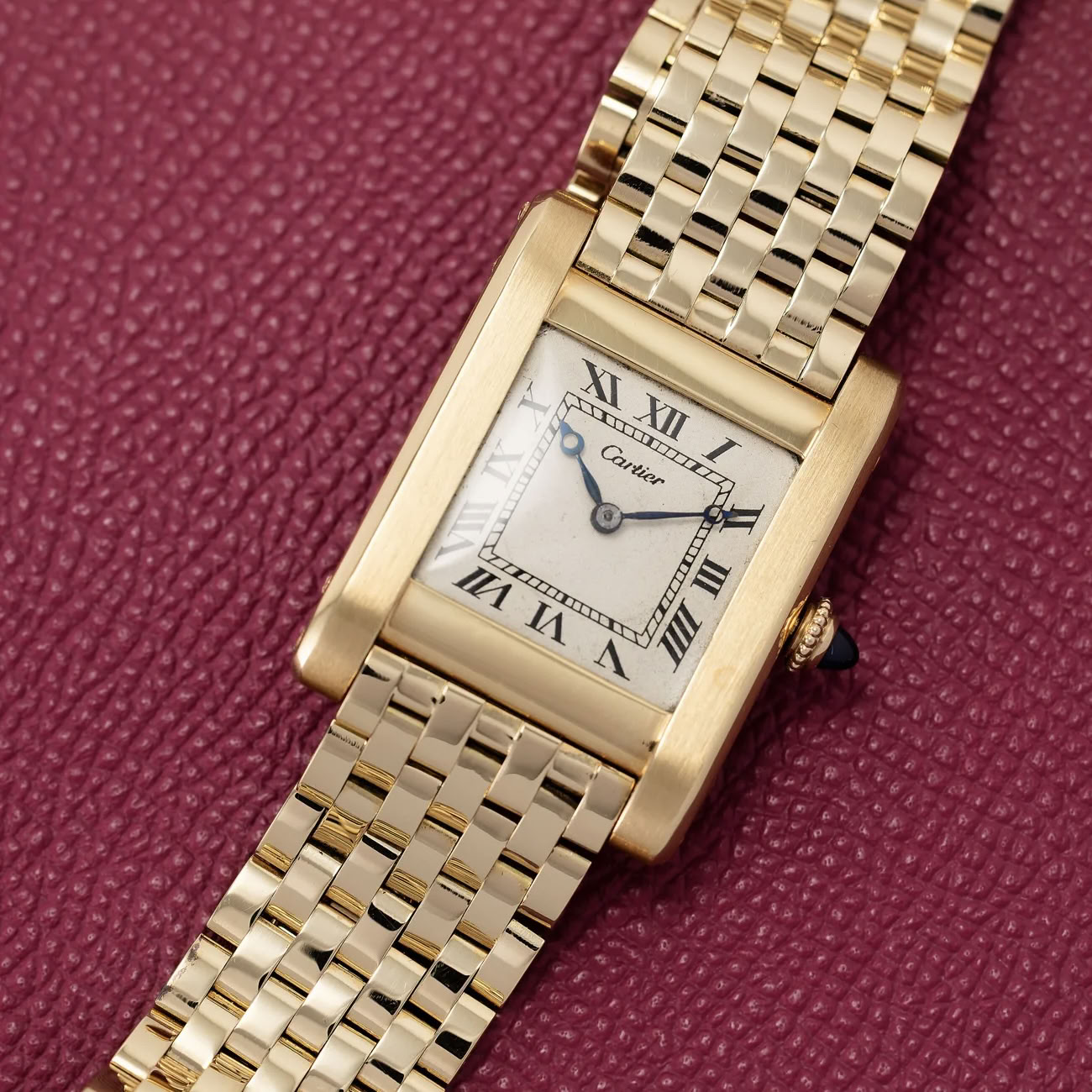
One of the most important early watches in the catalogue is the Tank Normale with original brick bracelet. More than perhaps any other Cartier design, the Tank Normale established the visual language that would define modern wristwatch design throughout the twentieth century. Preserved with its period bracelet, the watch becomes not only historically important, but exceptionally coherent as an object of design.
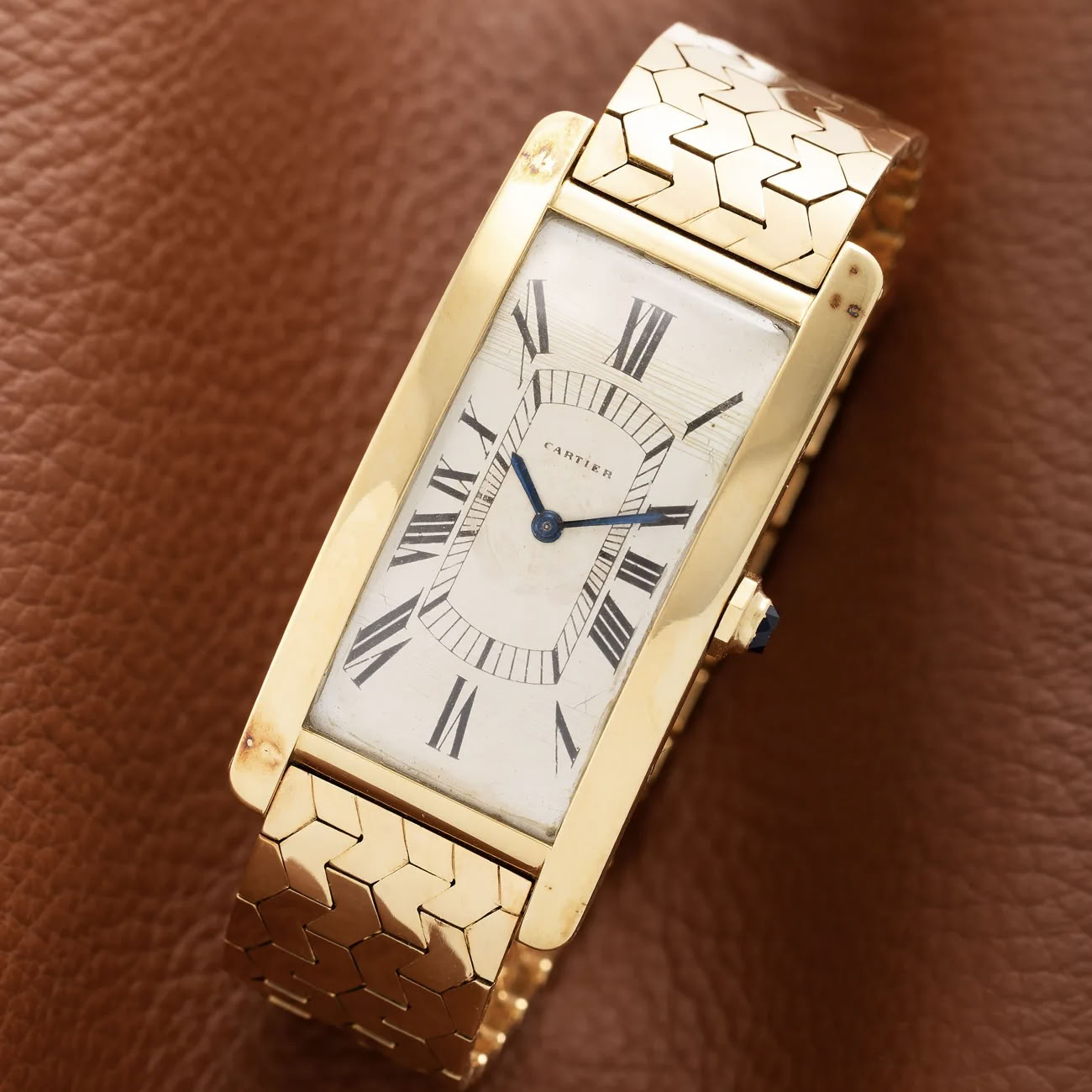
Talking about original bracelet, an exceedingly rare Cartier Tank Cintrée dating 1950's bearing its original herringbone style yellow gold bracelet, is truly outstanding. It is perhaps the first time we see a 1950's Tank Cintrée fitted bearing an original Cartier bracelet from the period.
Contemporary Era
The catalogue also reflects the growing collector interest in modern Cartier and special-order production.
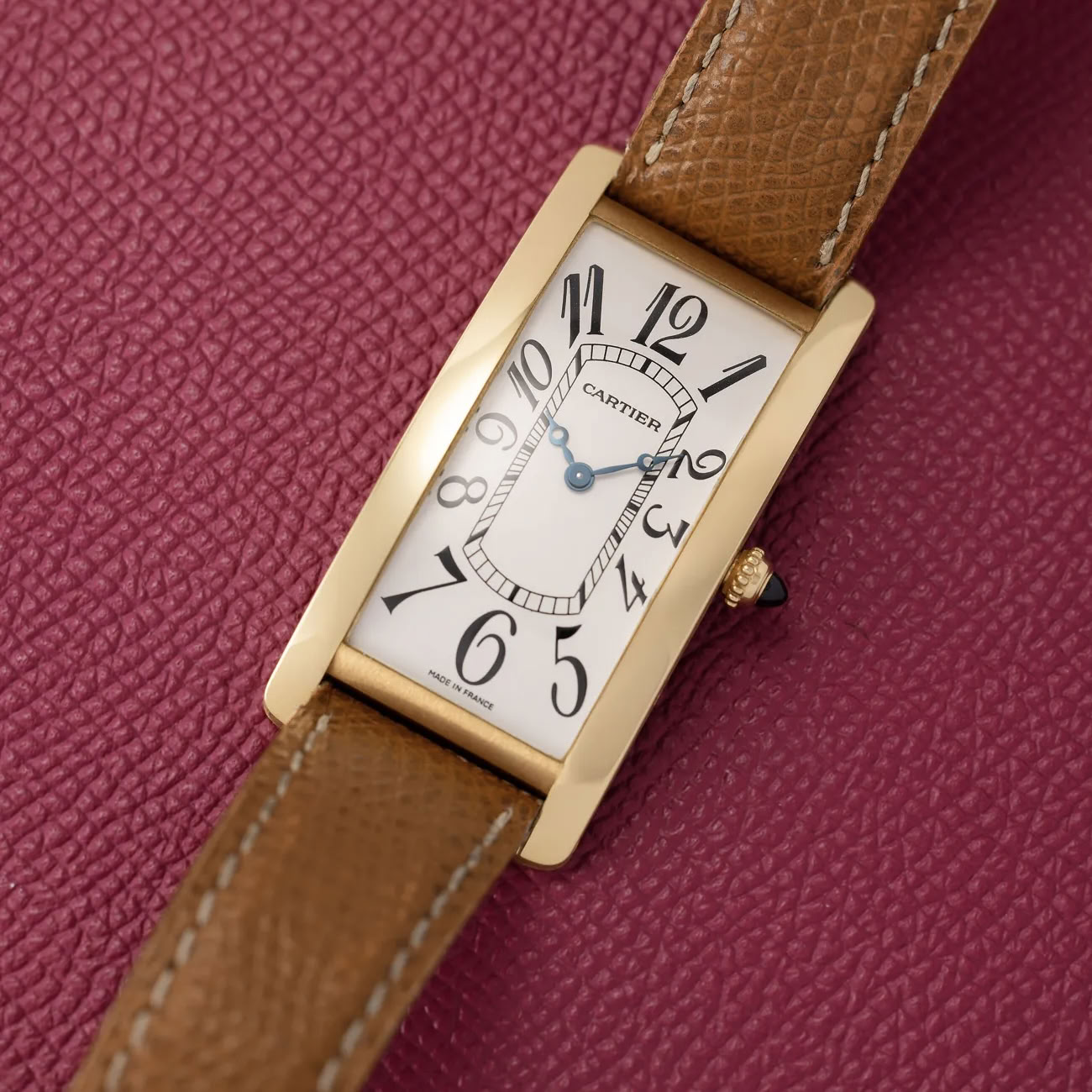
The Tank Cintrée CPCP, a limited edition of 150 pieces, belongs to the increasingly celebrated Collection Privée Cartier Paris series, now widely recognised as one of the most important modern eras of Cartier watchmaking.
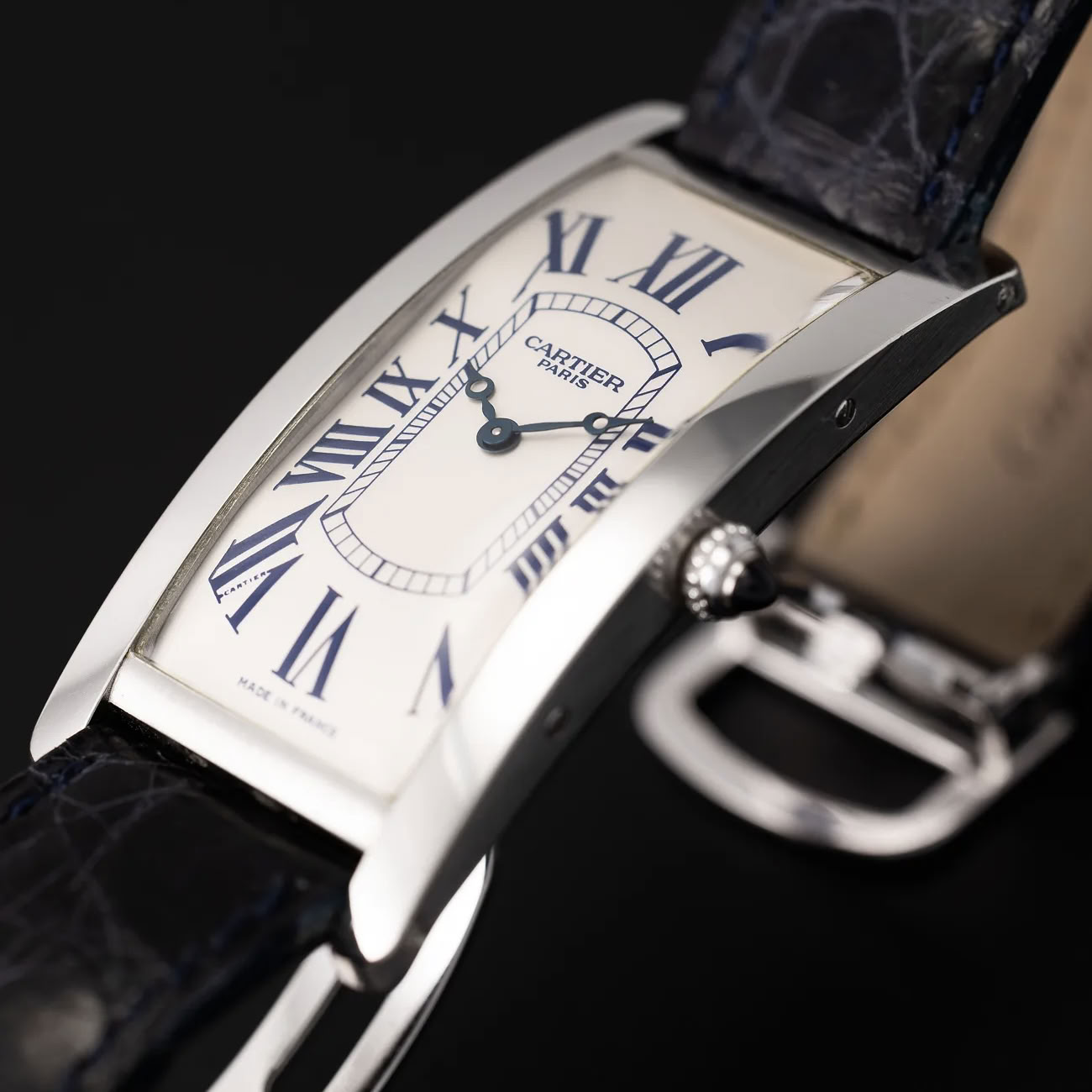
Meanwhile, the platinum special-order Tank Cintrée numbered “2” demonstrates the maison’s continued willingness to create highly individual watches for select collectors well into the modern period.
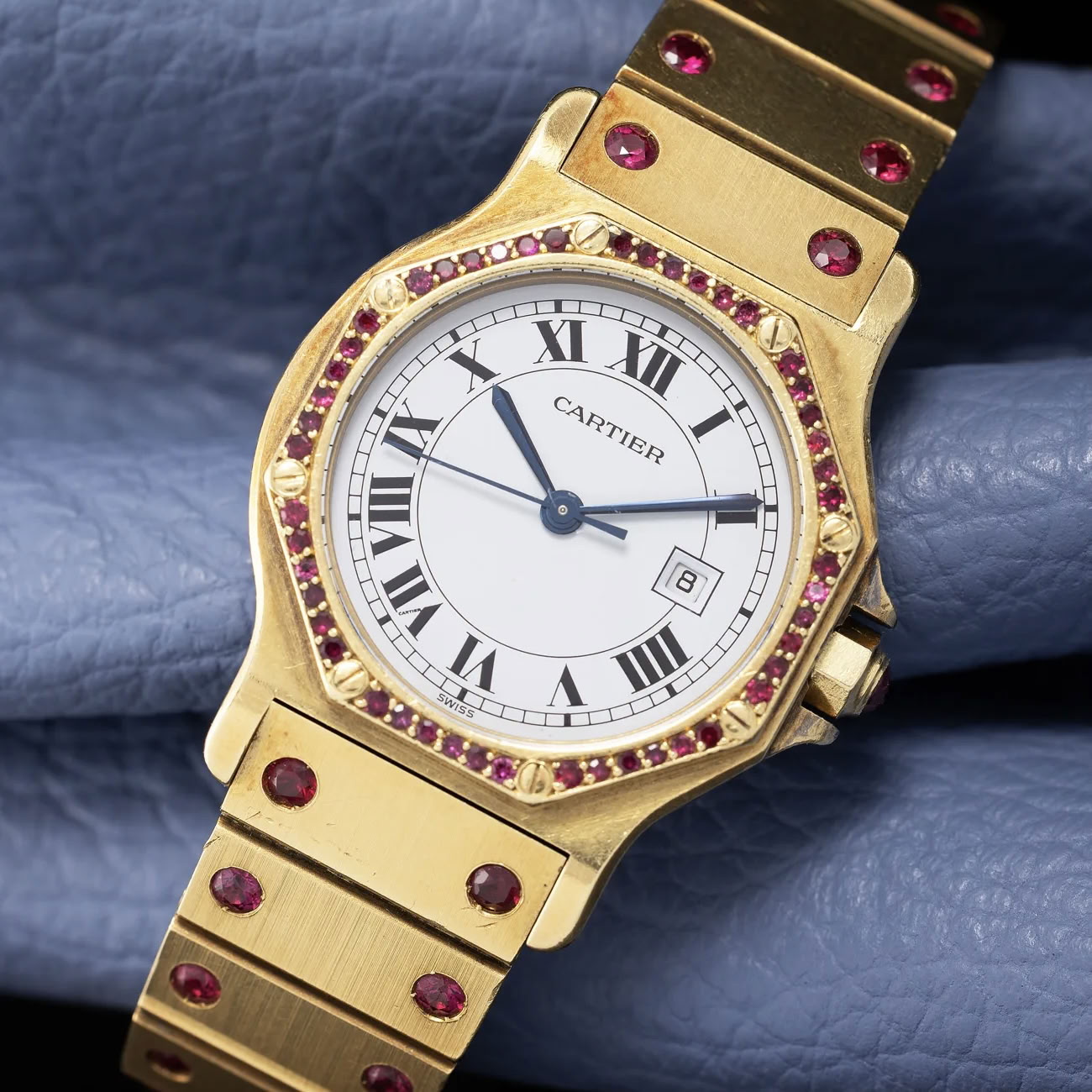
Elsewhere, the catalogue explores Cartier’s more decorative and expressive side. The ruby-set Santos Octagon, with matching ruby bracelet and “spider” dial, perfectly captures the bold glamour of 1980s Cartier.

While the platinum Santos with diamond-set bezel and bracelet transforms one of Cartier’s most recognisable sports watches into something far more substantial and jewelled.
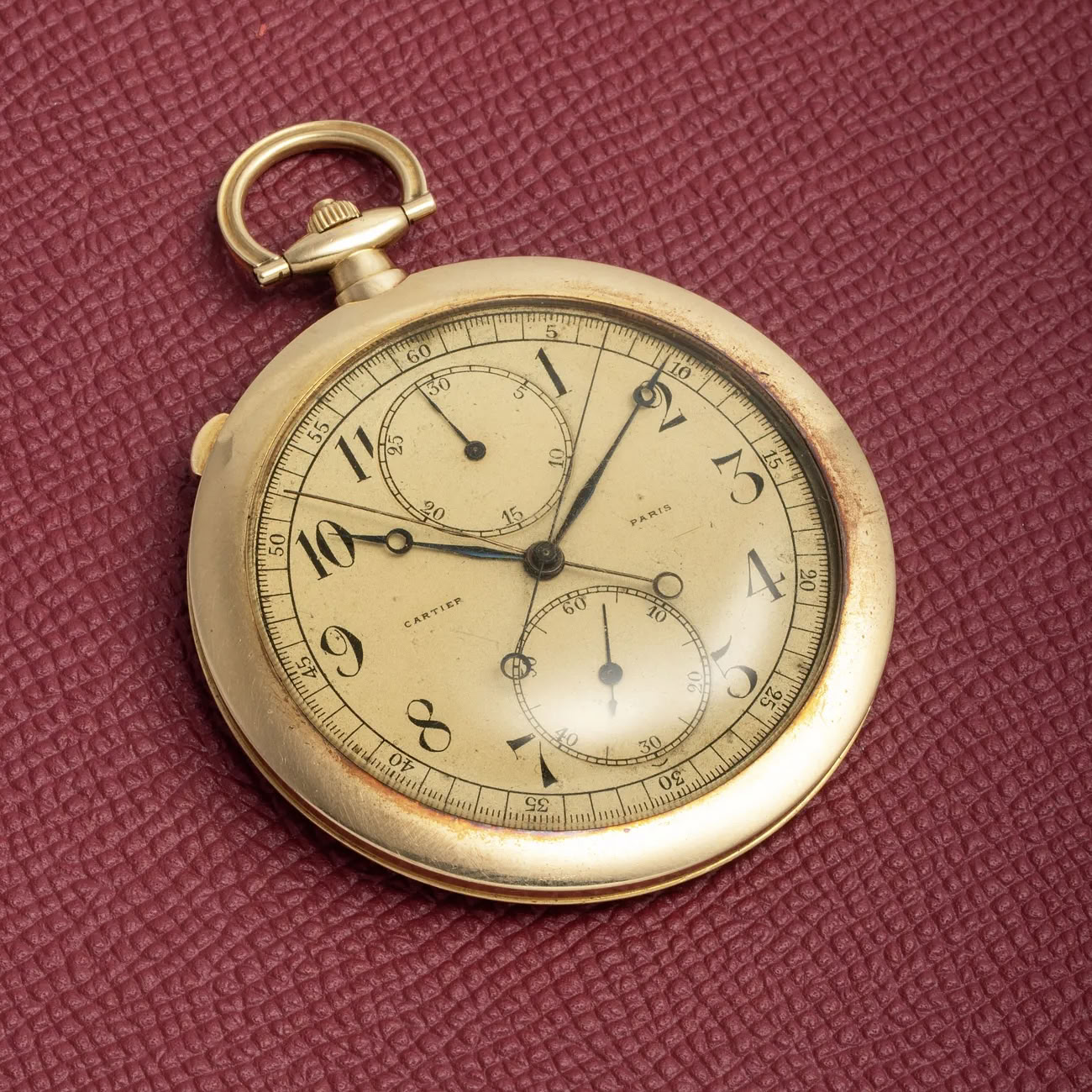
Finally, two particularly unusual pieces underline the extraordinary breadth of Cartier production. A split-seconds chronograph pocket watch combines discreet design with serious mechanical complexity.
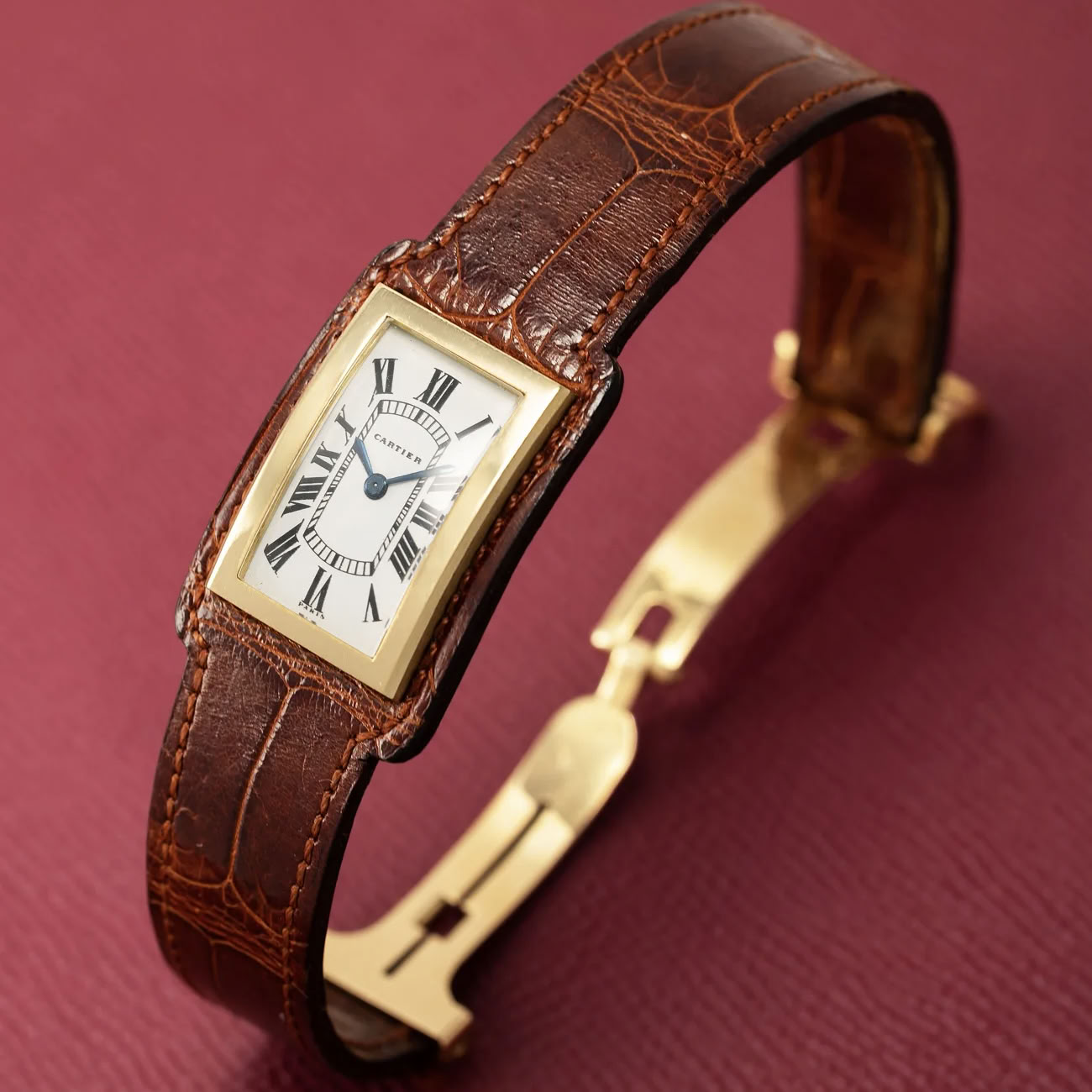
While the integrated strap Tank reimagines the relationship between case and bracelet entirely, producing one of the most unconventional Tank designs of the 1970s.
Taken together, the Lugano Cartier selection offers something increasingly difficult to assemble today. Not just simply rare watches, but pieces that demonstrate the full range of Cartier’s design intelligence across multiple decades and workshops.
These are watches defined by proportion, architecture, experimentation, and restraint. And increasingly, that is precisely what serious collectors are pursuing.
To view the full catalog, click the link below.
https://www.monacolegendauctions.com/auction/exclusive-timepieces-41