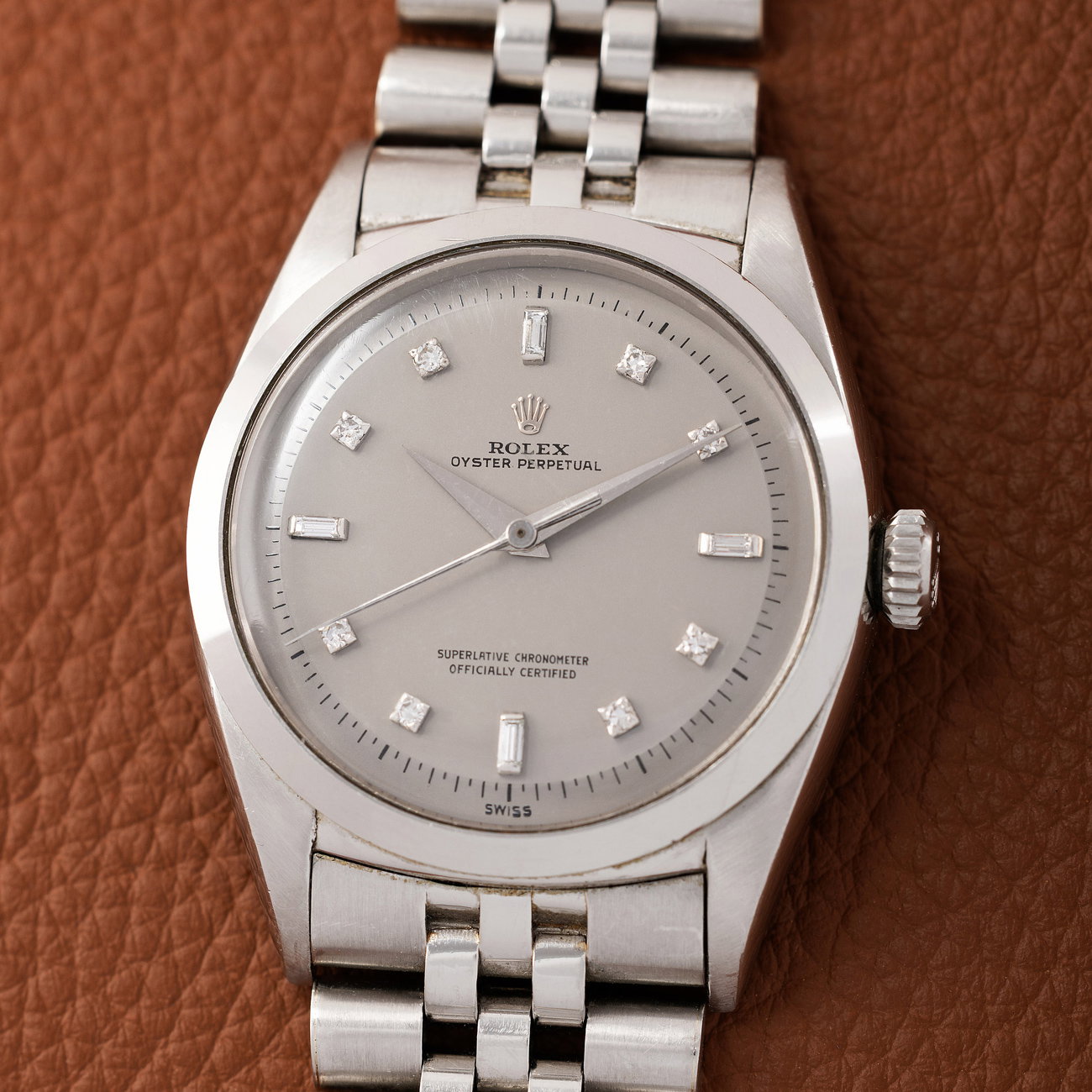
The First of Its Kind: A Platinum Rolex “Ovettone” That Rewrote History
The Monaco Exclusive Timepieces Auction is coming up this April 25 & 26 and in preparation of our catalog we were very lucky to be contacted by an American family for the expertise of their platinum Rolex watch.
The Noblest of Metals
Platinum has occupied an exceptionally rarefied position within the history of Rolex since the earliest days of its wristwatch production. Unlike gold or steel, platinum was never widely introduced across multiple series; its use was reserved almost exclusively for highly special, experimental, or commemorative executions.
The earliest notable platinum examples appear in the Rolex Prince, produced in extremely small examples during the 1930s. In the 1940s, the only platinum Rolex wristwatches known are a handful of exceptionally rare Lady “Cocktail” dress watches, often lavishly set with diamonds. Significantly, none of the chronograph models produced during that decade are known to have been cased in platinum.
In 1950, Rolex introduced two extraordinary commemorative watches marking a milestone: the creation of the first automatic wristwatch in platinum. These pieces were not part of standard production, but rather special commissions executed in the most precious interpretation of the brand’s flagship Datejust of the period, reference 6074. Each was engraved on the caseback: “The Rolex Jubilee – Custom Made – The Noblest of Metals.” These two exceptional platinum Oyster Perpetual “Ovettone” models stand as powerful testimony to Rolex’s historic ambition — to unite technical precision with majesty and splendor. One of the two examples is published in 100 Superlative Rolex Watches by John Goldberger.
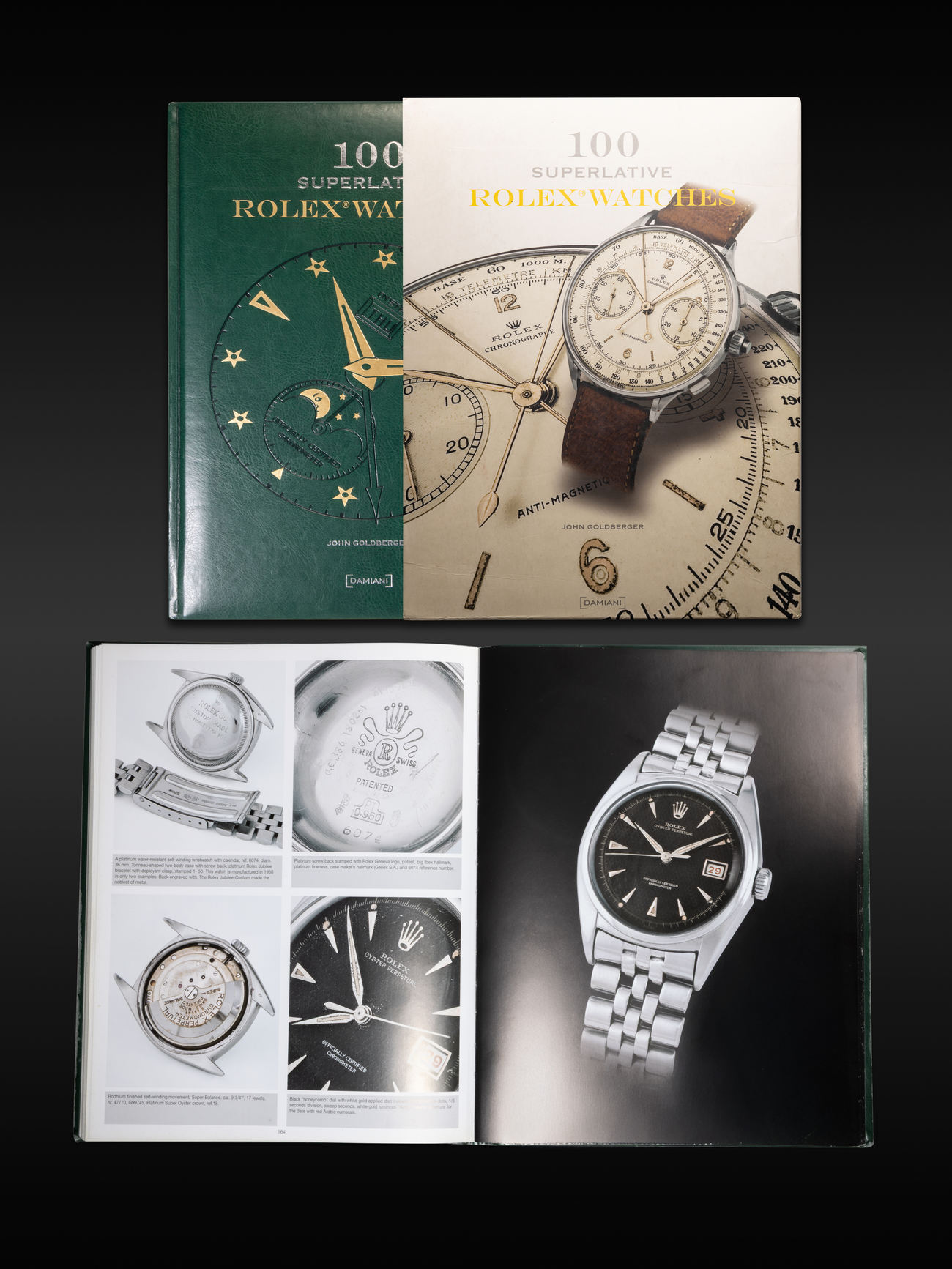
Understanding the extreme scarcity of platinum in Rolex’s early and mid-20th century production is essential to appreciating how remarkable this newly discovered “Ovettone” truly is. In 1955, platinum cases were not part of any regular production lineage. The only known examples from this period are a very small number of early Datejust reference 6304s — exceedingly rare variations, most likely special orders — of which only a few are known to survive.
It was not until 1957 and 1958 that platinum cases formally entered serial production within the Day-Date line, with references 6612B and 6613.
A Recent Discovery
In April 2024, we had the privilege of selling an extraordinarily rare 1950s Rolex Datejust “Ovettone” reference 6304 in platinum, retailed by Serpico y Laino of Caracas. The watch achieved an impressive €734,000 — a testament to both its rarity and historical importance.
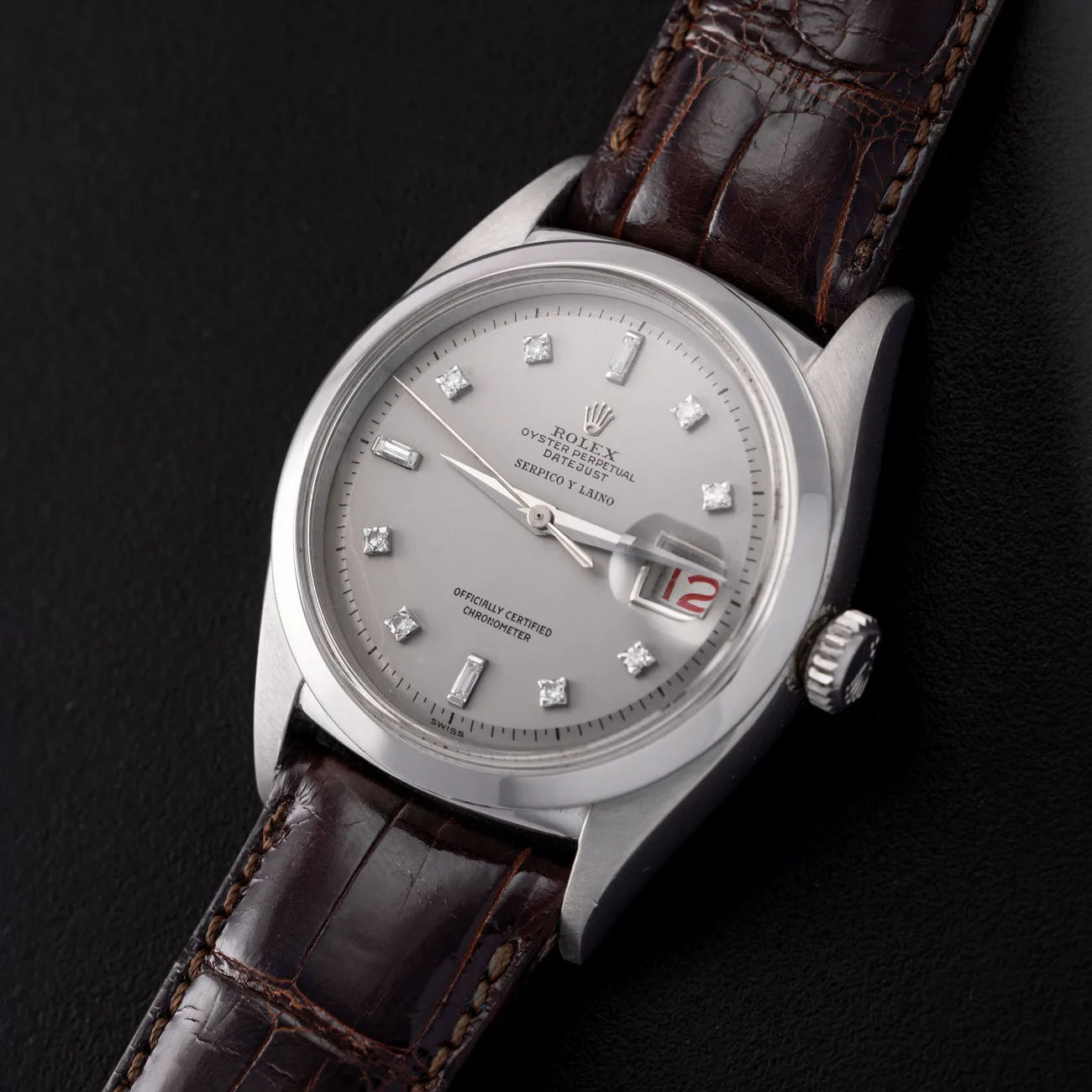
Shortly thereafter, we were approached by an American family seeking our expertise regarding a platinum Rolex they believed to be another example of the ultra-rare “Ovettone” 6304. What followed led us to consider the possibility that this was not merely another rare watch, but perhaps one of the most extraordinary and unique Rolex wristwatches ever encountered.
Another Historical Benchmark
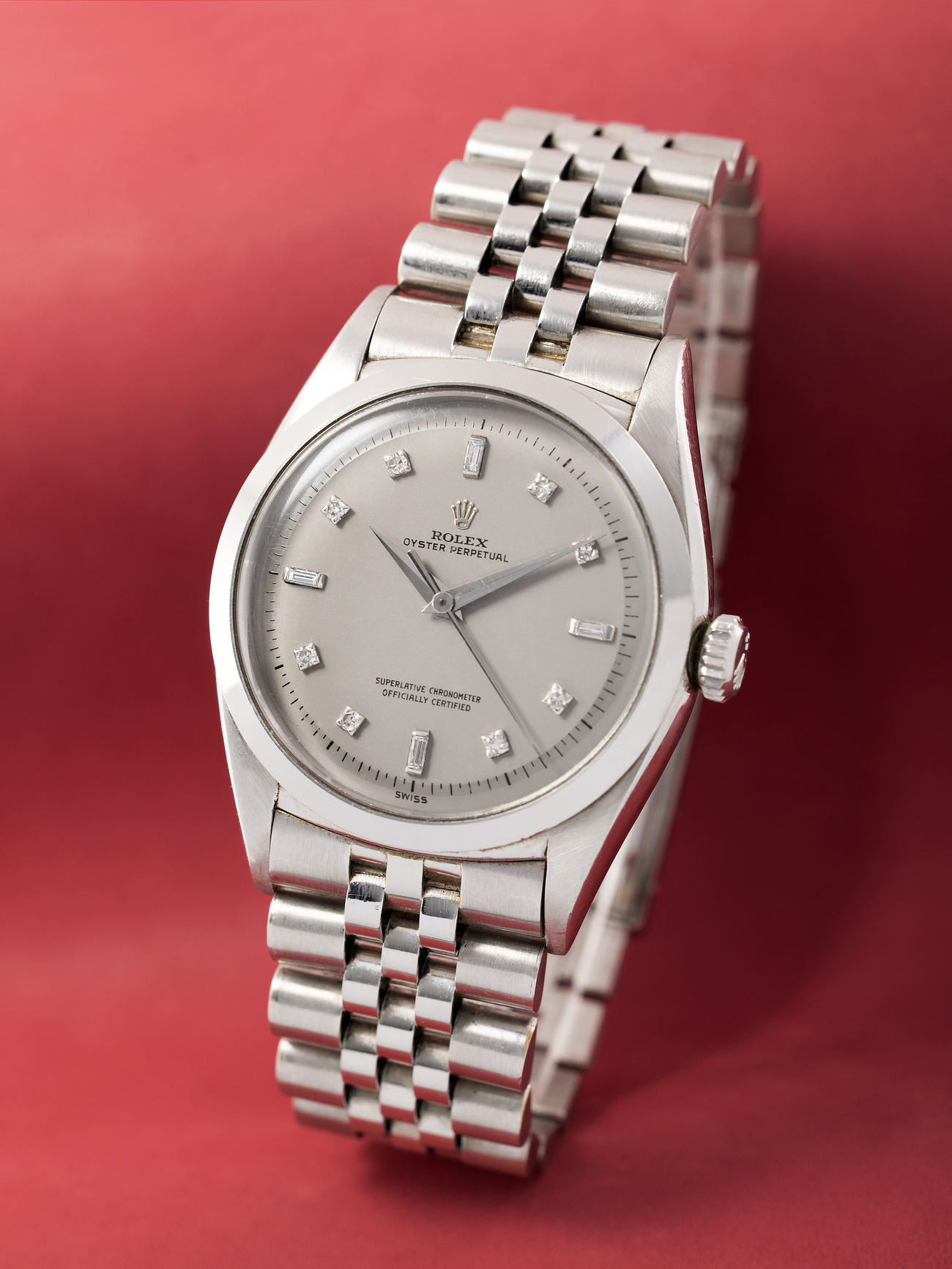
Never before had we seen — nor documented — a reference 6304 without a date window. The absence of the date aperture immediately raised questions. Could this have been a test piece or special commission — an experiment exploring the aesthetic impact of the model without its defining complication?
In place of the date window sits a fourth baguette-cut diamond index, restoring perfect symmetry to the dial and enhancing its visual harmony. The absence of the “Datejust” signature further supports the theory that this configuration was intentional and purposeful rather than incidental. Yet a more compelling question soon emerged: what if the removal of the date window served a far greater purpose?
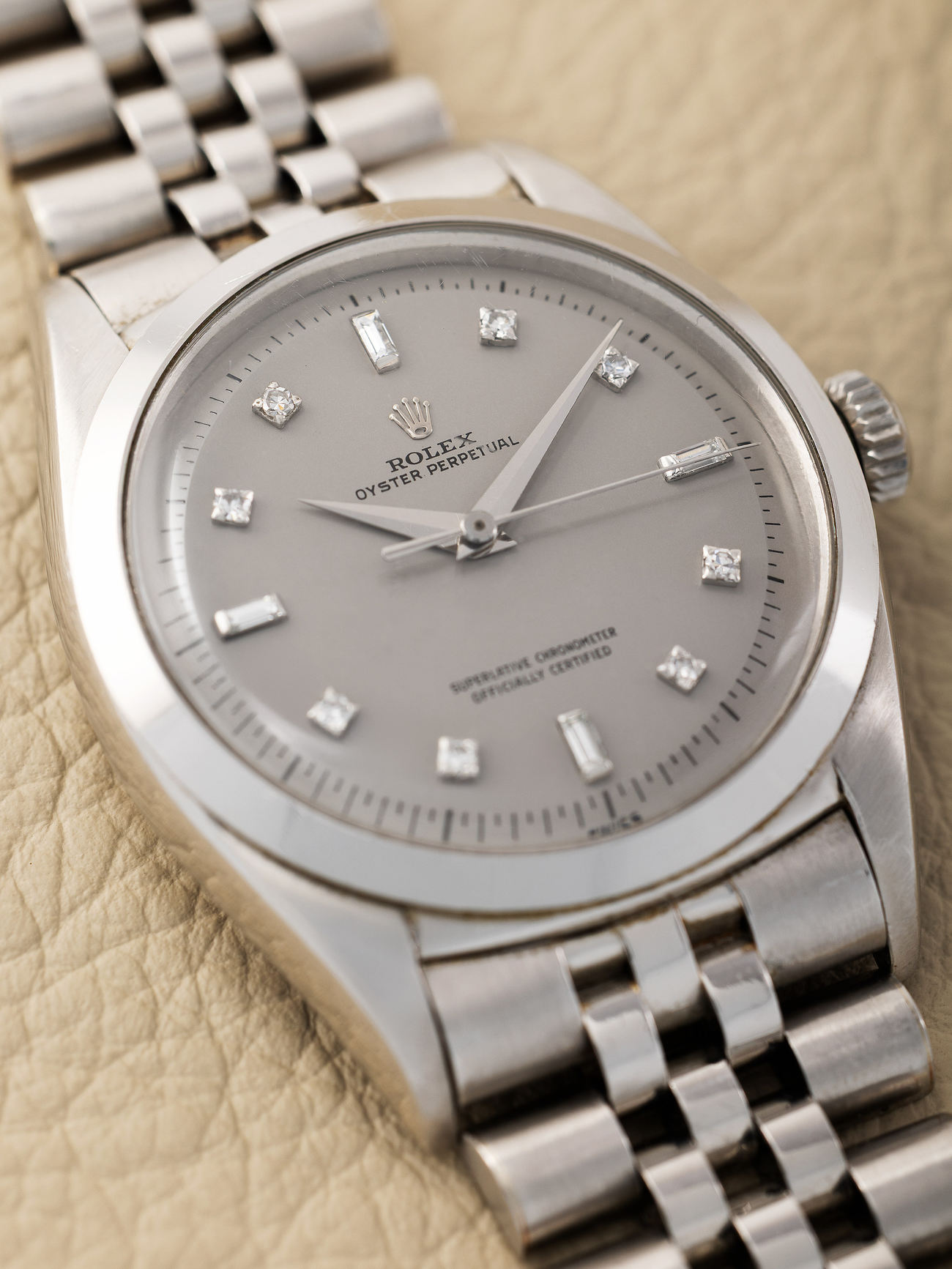
It took careful study to recognize that this watch, unlike all other known 6304 examples, is not signed “Officially Certified Chronometer,” but instead bears the designation “Superlative Chronometer Officially Certified.”
In 1955, Rolex reinforced its commitment to precision by adopting the “Superlative Chronometer Officially Certified” (SCOC) signature — a powerful technical and marketing statement underscoring the brand’s pursuit of excellence beyond standard chronometer certification.
The movement itself presents further intrigue: the rotor has been modified and does not bear the customary “OCC” engraving. The case and interior caseback markings correspond correctly with the reference and production period, further supporting the watch’s authenticity and singularity.
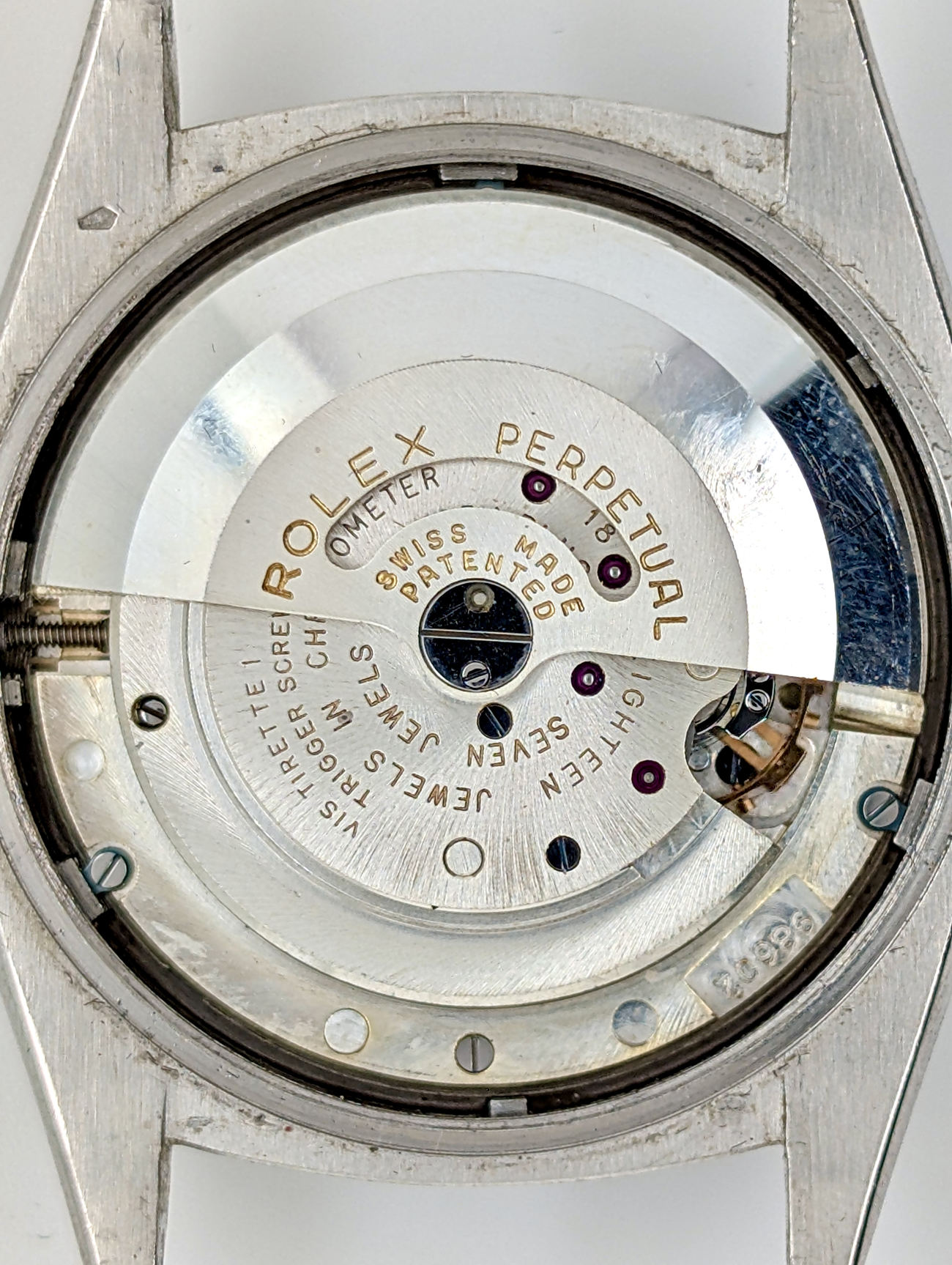
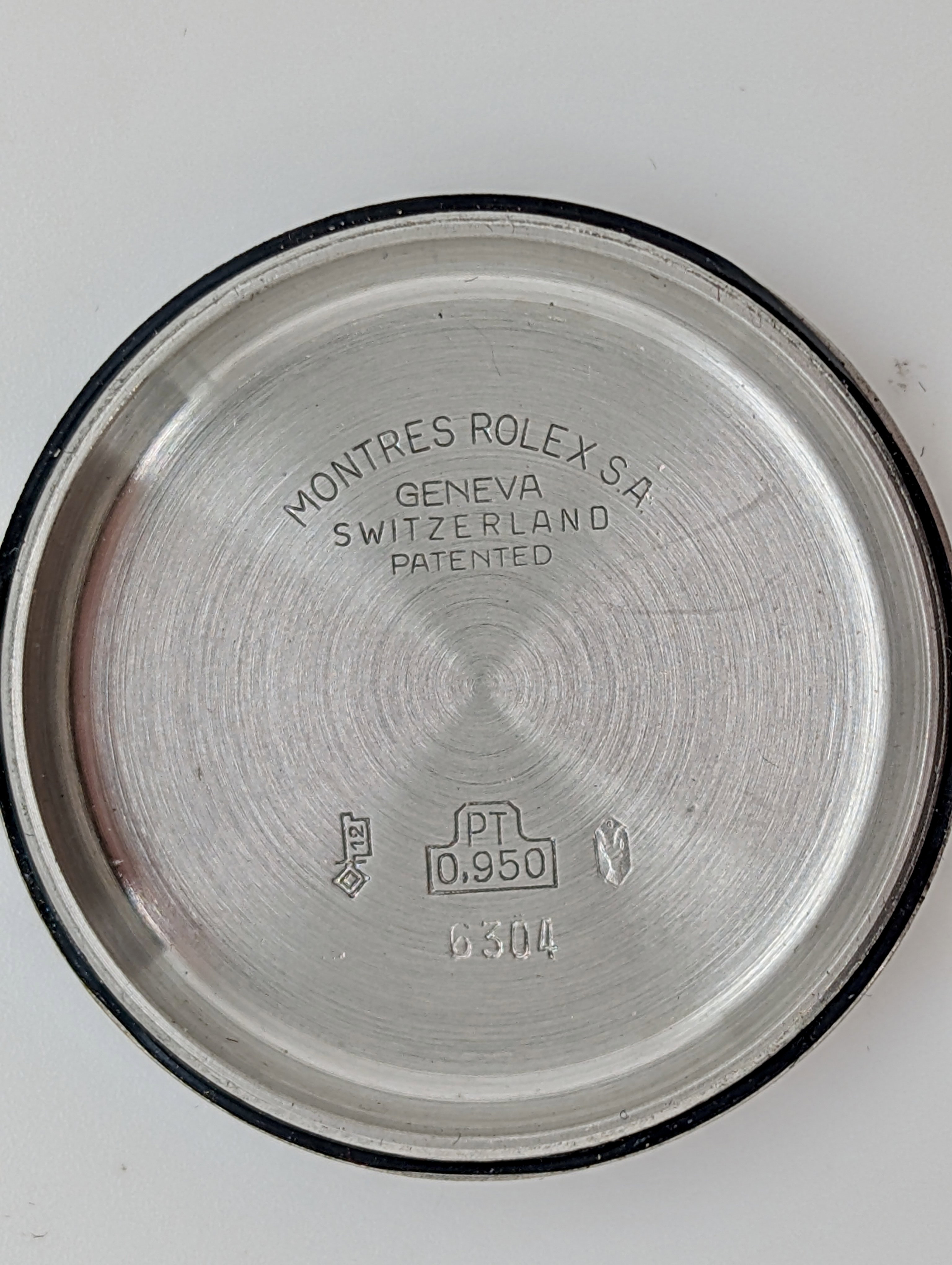
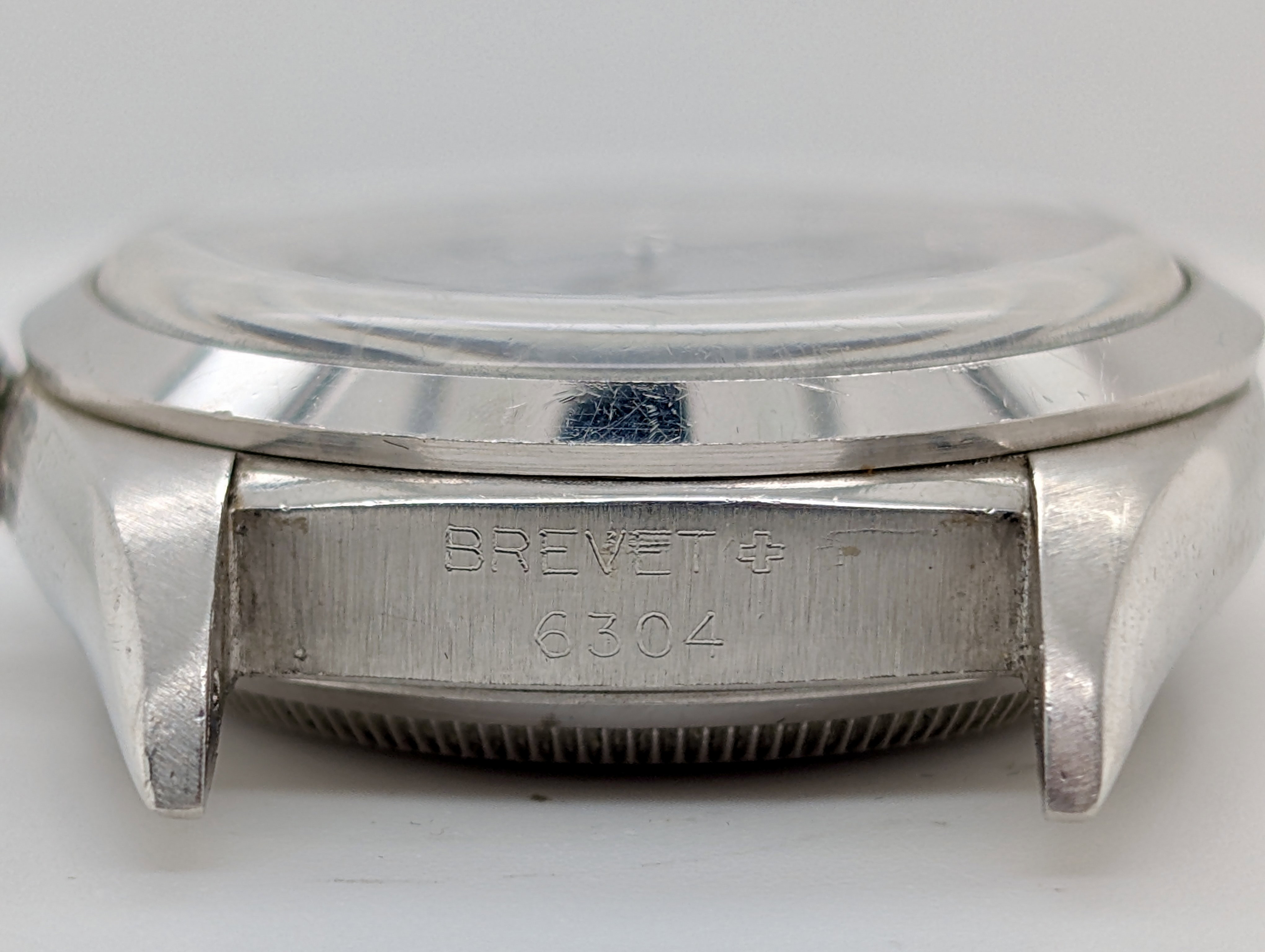
The serial number dates the watch precisely to 1955 — a detail of profound importance. If this dating is correct, this platinum “Ovettone” 6304 may represent the very first Rolex wristwatch ever to bear the SCOC designation on its dial. This realization offers a compelling explanation for the absence of the date window. Its removal would have created additional space and visual emphasis for the newly introduced and highly significant SCOC signature. If Rolex intended to highlight this milestone achievement, what better canvas than one of its most prestigious and noble models — a platinum 6304 “Ovettone” adorned with diamond indexes?
Therefore, it was never meant as a prototype test but perhaps as an inaugural one off. Such a watch would have served as the perfect inaugural ambassador for the new designation. It is entirely conceivable that it was produced for exhibition at the Basel Fair before eventually being released to the public.
Original Owner Provenance
The consignor has been the watch’s custodian for decades, having received it as a gift from his father upon graduating from high school. The family has always resided in the United States, and the watch was worn sparingly for special occasions and meticulously preserved.
Although the current owner cannot recall where his father originally purchased the watch — suggesting it may have been acquired abroad during his travels — its continuous ownership within the same family for nearly seventy years significantly enhances its charm, integrity, and historical importance.
A Unique Chapter in Rolex History
While definitive archival confirmation may remain elusive, the evidence strongly suggests that this watch is far more than a rare variation. It may represent a pivotal transitional moment in Rolex history — a bridge between two eras of dial signatures, embodied in a singular and breathtaking creation. In the world of vintage Rolex collecting, where nuance defines value and detail shapes legacy, discoveries such as this remind us that history still holds secrets — waiting patiently to be uncovered.
We are deeply honored to present for sale this possibly unique 1955 Rolex Oyster Perpetual “Ovettone” reference 6304 in platinum, consigned by its original owner family, as a top lot in our upcoming Exclusive Timepieces auction in Monaco on April 25–26.
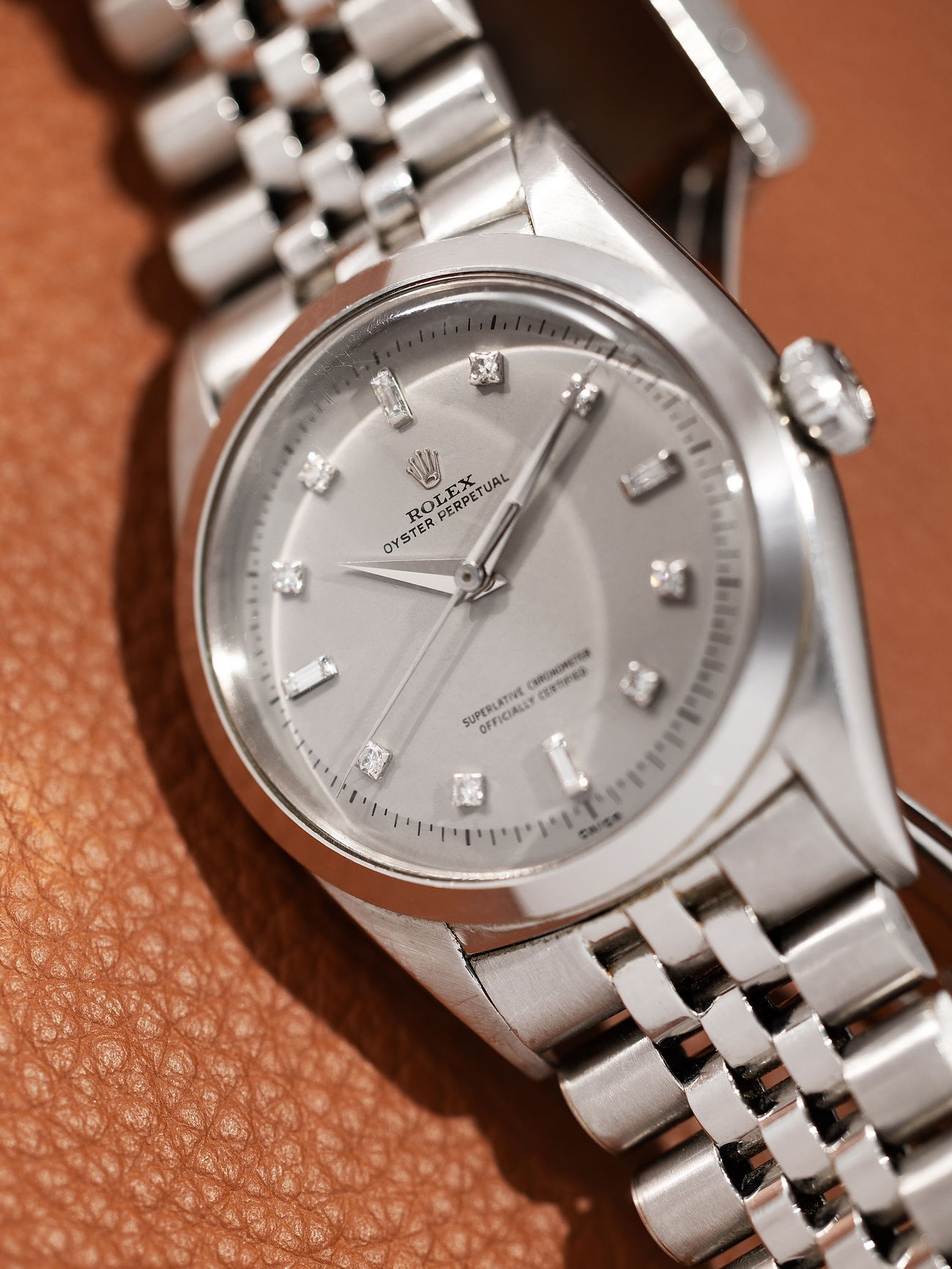
Impeccably preserved in untouched, unrestored condition, this remarkably important Rolex offers a rare opportunity to acquire one of the brand’s most fascinating creations — a watch that may testify to one of the most significant milestones in its watchmaking history. In our opinion, it stands as the most beautiful and exceptional platinum “Ovettone” known to date.
Estimate: €500,000 – €1,000,000
To request further information about this watch contact us at: info@monacolegendgroup.com