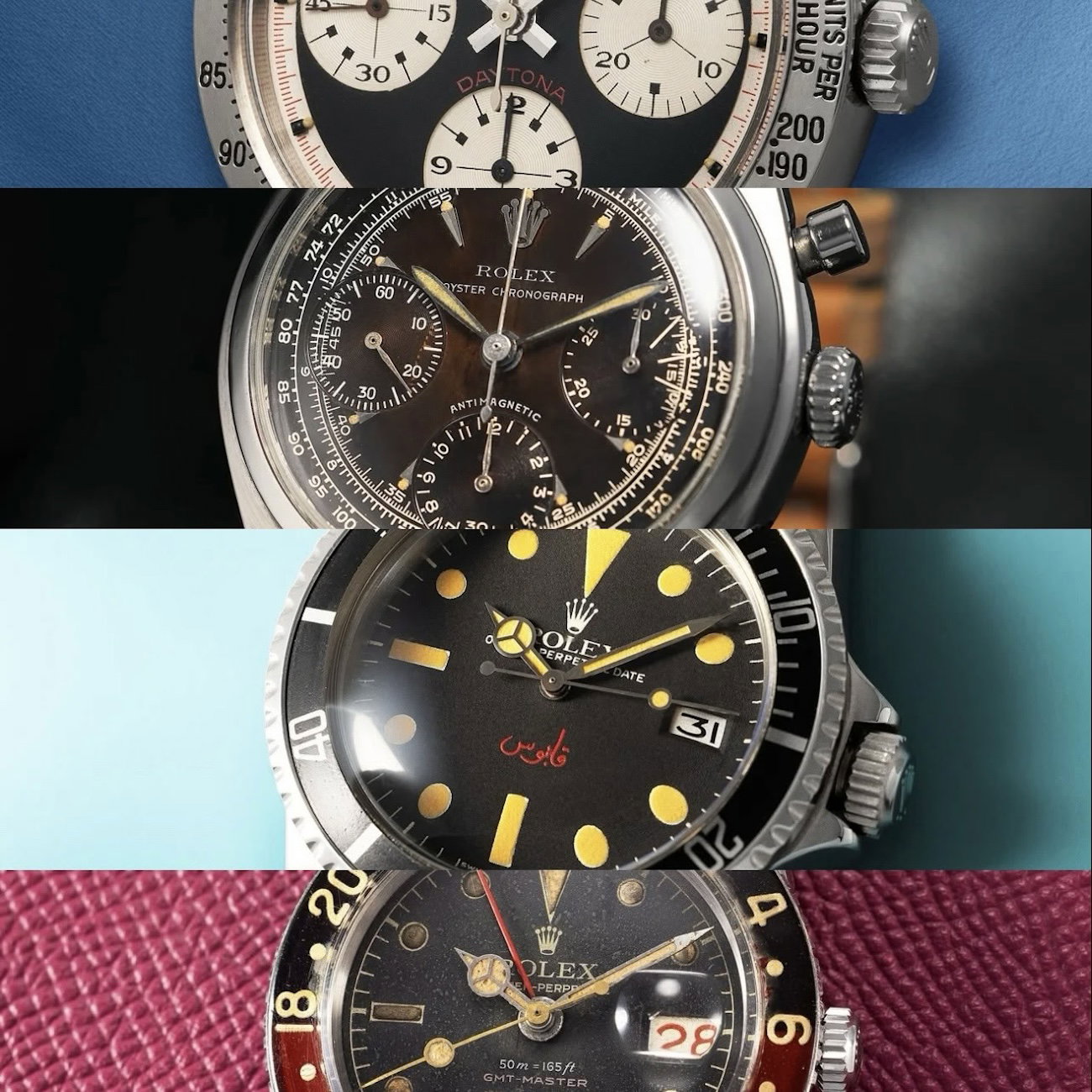
Rolex Specials This October In Monaco
Vintage Rolex collecting has never been simply about reference numbers. At the highest level, the details of an individual watch are what separate an important example from an exceptional one. This can include the dial configuration, case material, serial number, provenance, condition and, occasionally, a combination of characteristics that is almost impossible to encounter.
Six watches appearing in Monaco Legend Group's October 31st Exclusive Timepieces auction illustrate this particularly well. Spanning from a pink-gold chronograph of the late 1930s to one of the most historically significant special-order Sea-Dwellers of the 1970s, they also trace several important chapters in Rolex's development. Each is an important Rolex in its own right. It is their individual details, however, that make these five watches particularly worthy of attention.
Reference 3330: before the Oyster chronograph
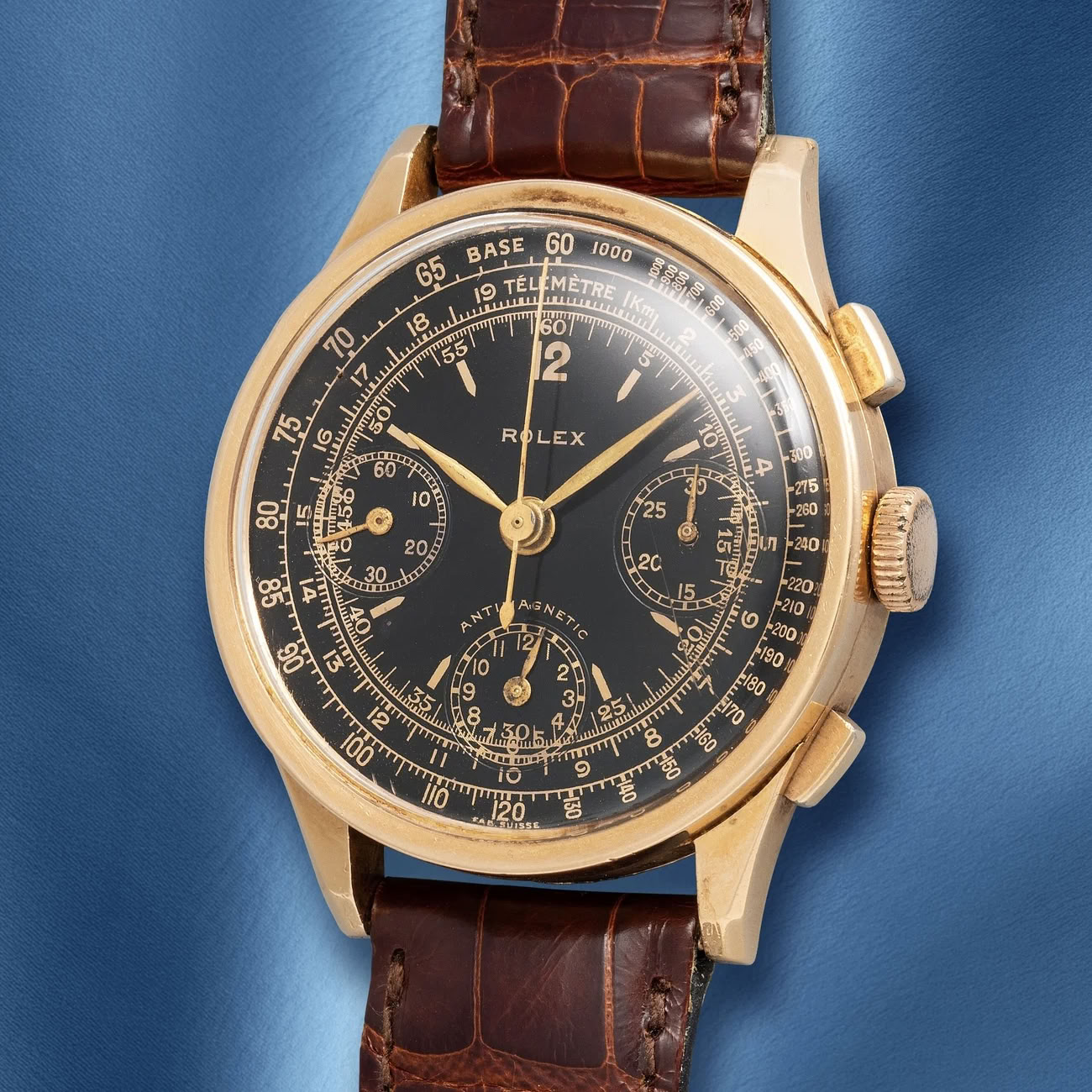
Long before the Cosmograph and Daytona became synonymous with the Rolex chronograph, the manufacture was already experimenting with increasingly sophisticated wrist chronographs. Dating to circa 1938, this reference 3330 belongs to that formative period and is regarded as one of Rolex's rarest and most important pre-Oyster chronograph wristwatches. Produced in very limited numbers, it was also remarkably substantial for its era, its very large size case gives it a presence that remains surprisingly contemporary almost ninety years later.
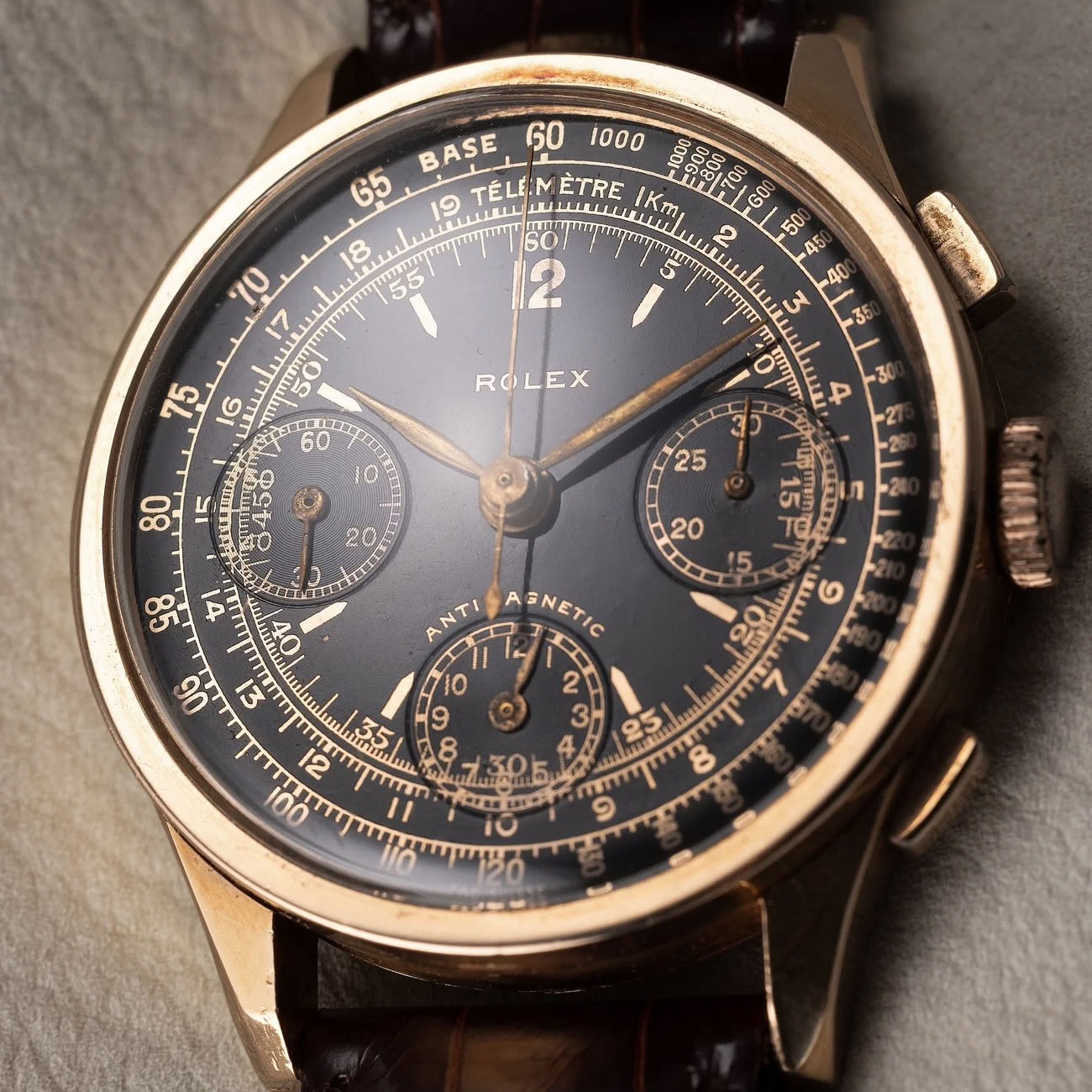
The present watch combines that important reference with an especially compelling configuration. Its case is made from 18K pink gold and retains the characteristic square chronograph pushers of the model. Against the warmth of the case sits the best and rarest dial configuration of black gilt incorporating both tachymeter and telemeter scales. It is this combination that makes the watch particularly striking. The gilt printing and multi-scale layout provide considerable information without compromising the balance of the dial, while the pink-gold case represents a considerably more luxurious interpretation of what was still fundamentally a functional chronograph.
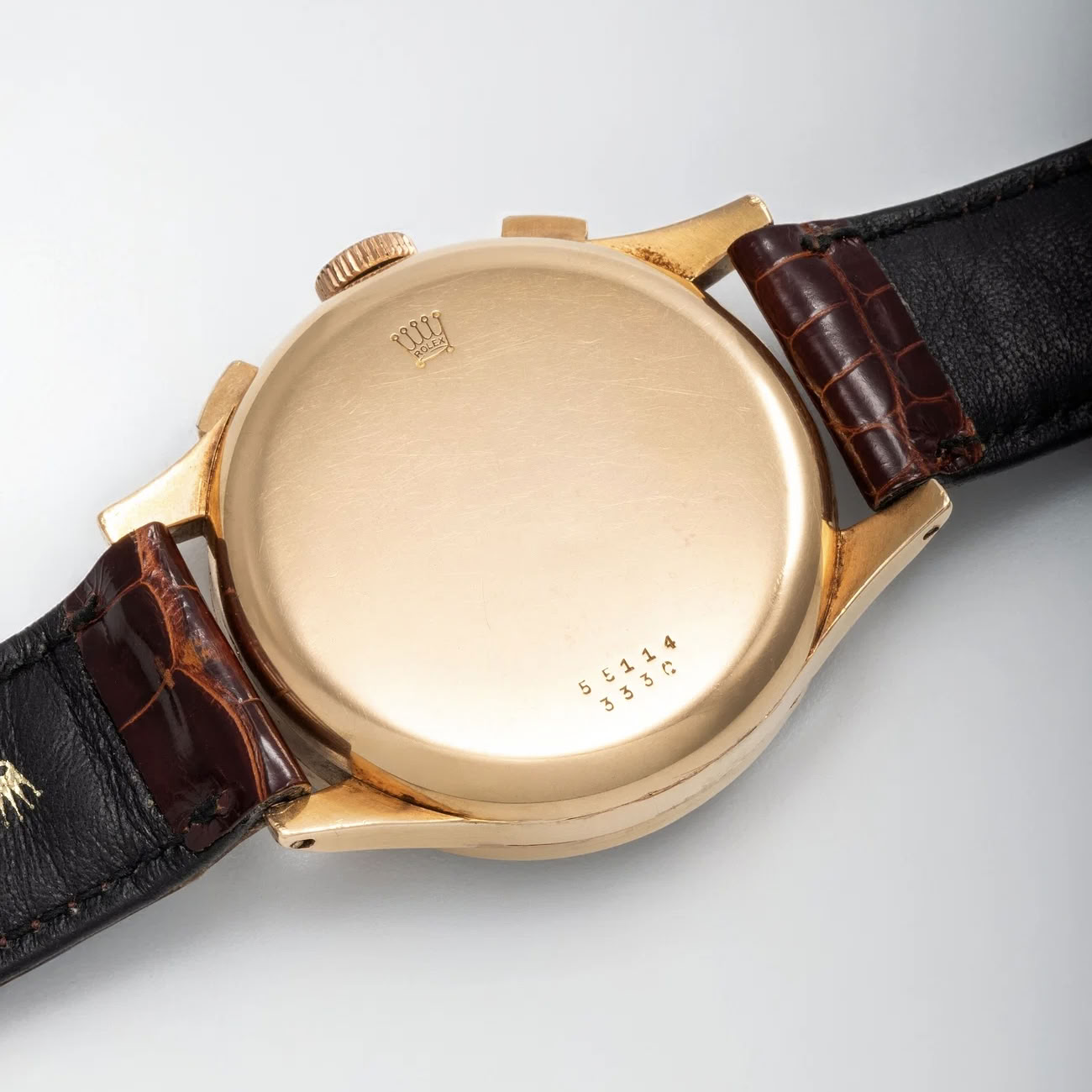
The reference 3330 is one of the most sought after vintage Rolex chronographs for its scarce production and very attractive large size. To find such an example, perfectly preserved, and in such astonishing configuration is quite a relic.
Reference 6034: approaching the Daytona
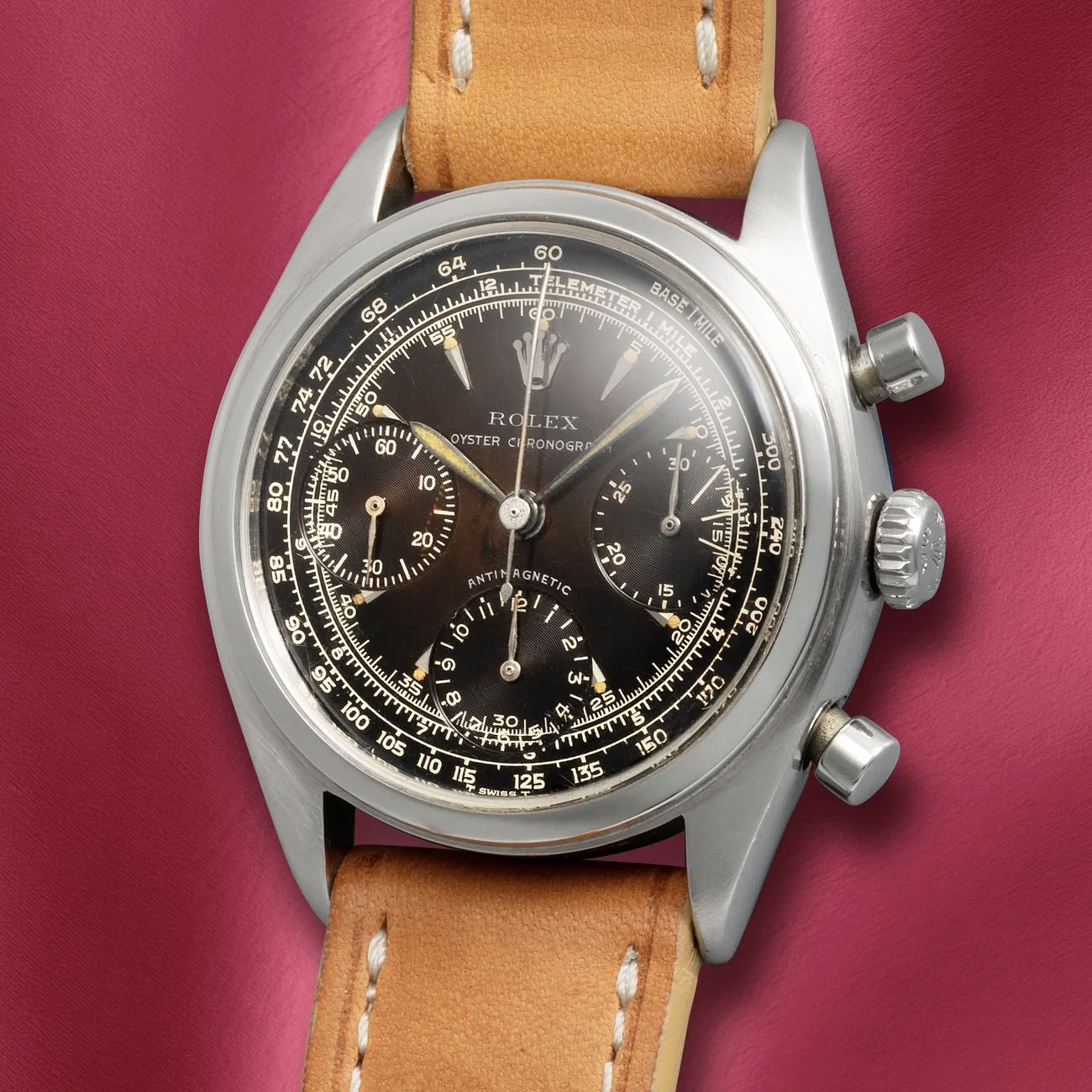
Move forward into the 1950s and the evolution becomes increasingly apparent. Reference 6034 occupies an important position between Rolex's earlier chronographs and the Cosmograph watches that followed. Its familiar three-register chronograph layout and Oyster case architecture make the relationship with later Rolex sports chronographs clear, yet it belongs to a period before the Daytona name existed. The present stainless-steel example, dating to circa 1951, is distinguished above all by its dial.
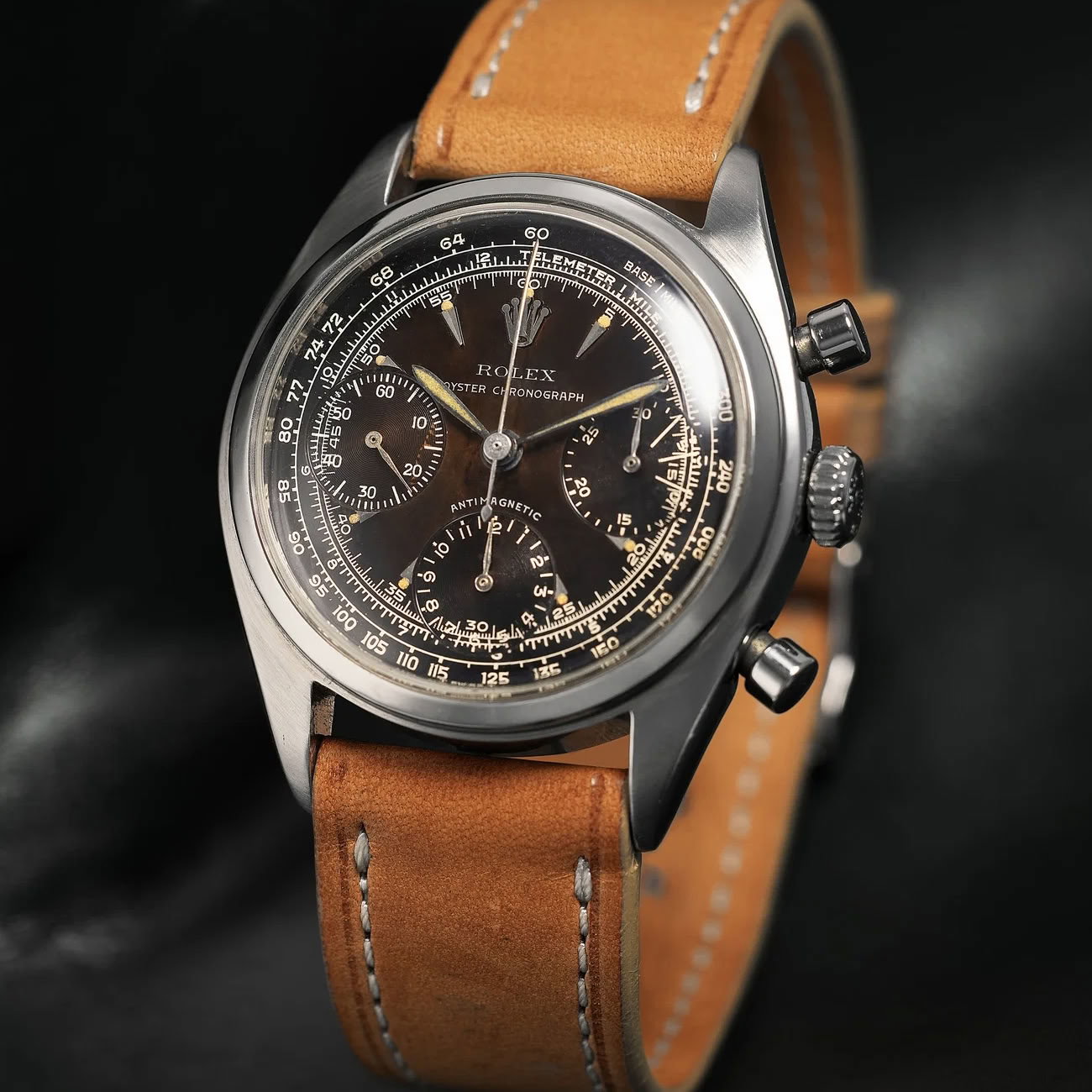
Originally gilt black, the surface has aged naturally over the decades to produce an extraordinary tropical brown effect. Rather than changing uniformly to a single shade of brown, the dial displays a pronounced gradient, moving through warm tobacco and deep chocolate tones while areas of the original black remain visible. No two naturally tropical dials age in precisely the same way, which makes condition and appearance particularly important when judging them. Here, the transformation has created a dial with considerable depth while the luminous indexes and hands retain the purposeful character expected of an early Rolex chronograph.
Reference 6034 can sometimes be overshadowed by the Cosmograph references that succeeded it. Yet that is precisely what makes it interesting. It shows Rolex's chronograph evolving towards the design language that would shortly produce one of the most famous families of watches ever made.
Reference 6239: the Daytona “ Paul Newman”
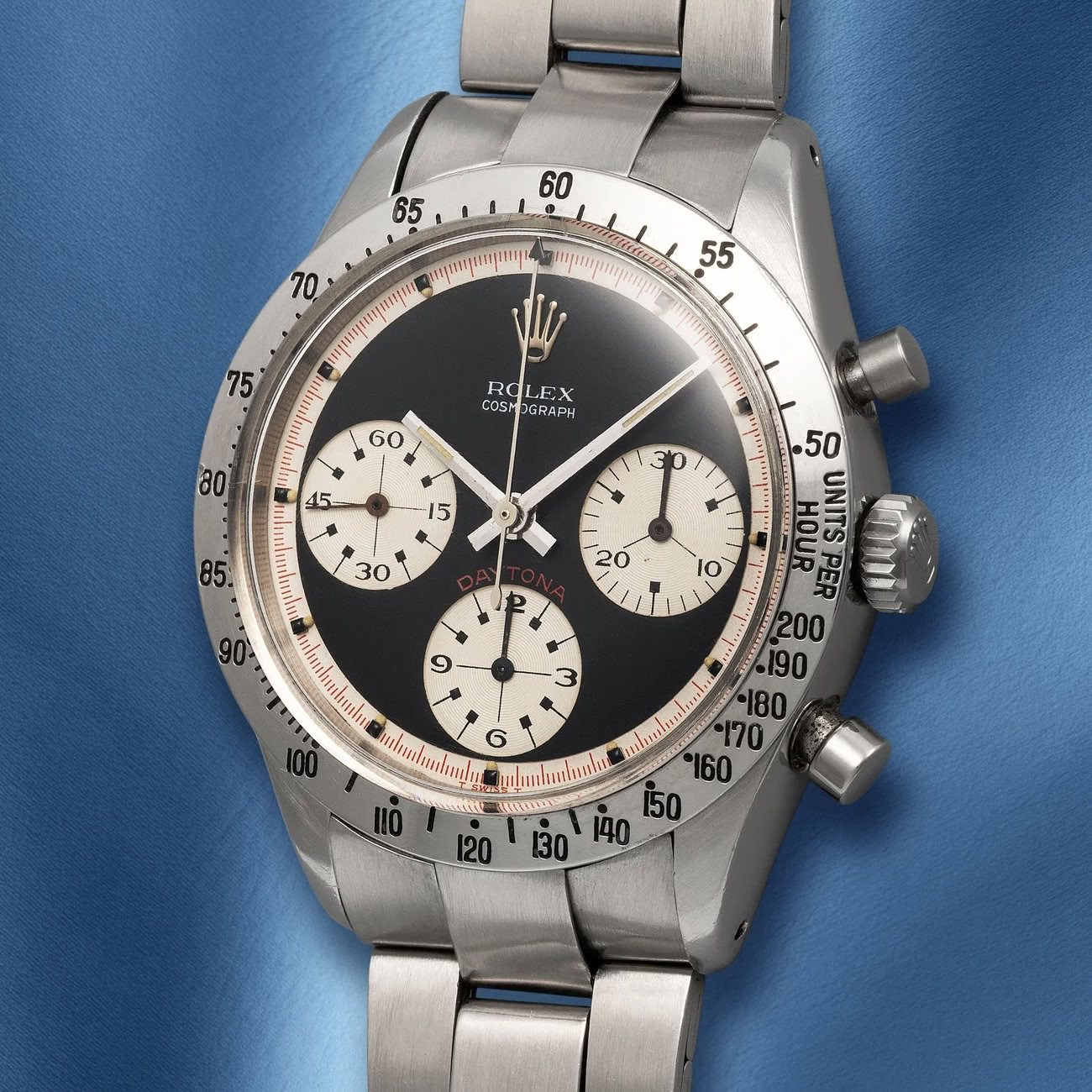
By the 1960s, that evolution had reached the Cosmograph. Introduced in 1963, reference 6239 established many of the characteristics collectors immediately associate with the earliest Daytona: the Oyster case, three subsidiary registers, pump chronograph pushers and, crucially, a fixed metal bezel carrying the tachymetric scale. The present watch dates to circa 1967 and belongs to an especially important moment in that story. It is fitted with the three-colour exotic dial that would eventually become universally known by another name: the Paul Newman.
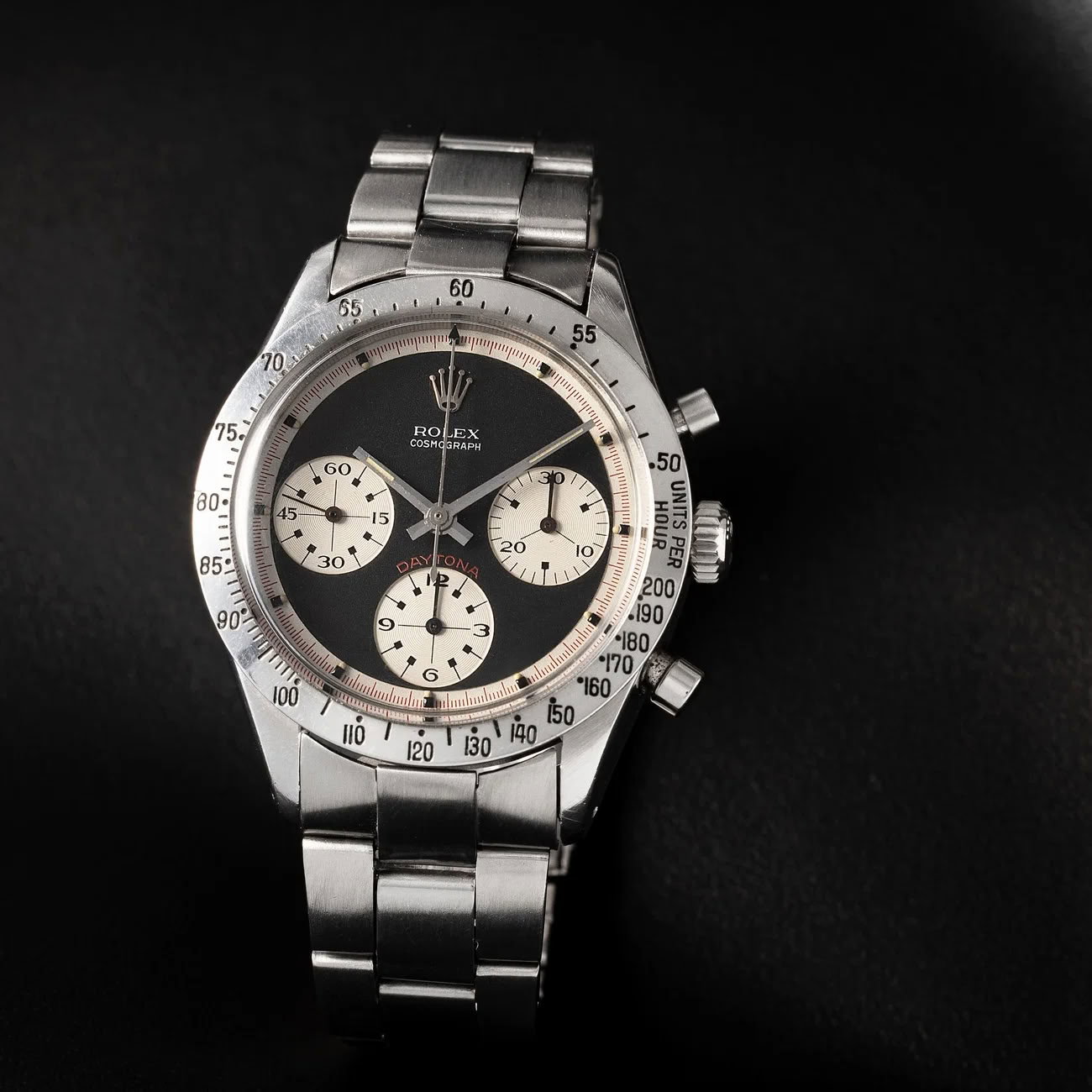
Against the black main dial are three contrasting cream-coloured subsidiary registers with the characteristic Art Deco-style numerals and square markers. Red detailing on the outer scale is joined by the red DAYTONA signature positioned above the six o'clock register. These exotic dials began appearing on reference 6239 during this period, making the watch an early example of a configuration that would ultimately become one of the most recognisable and sought-after designs in vintage Rolex collecting.
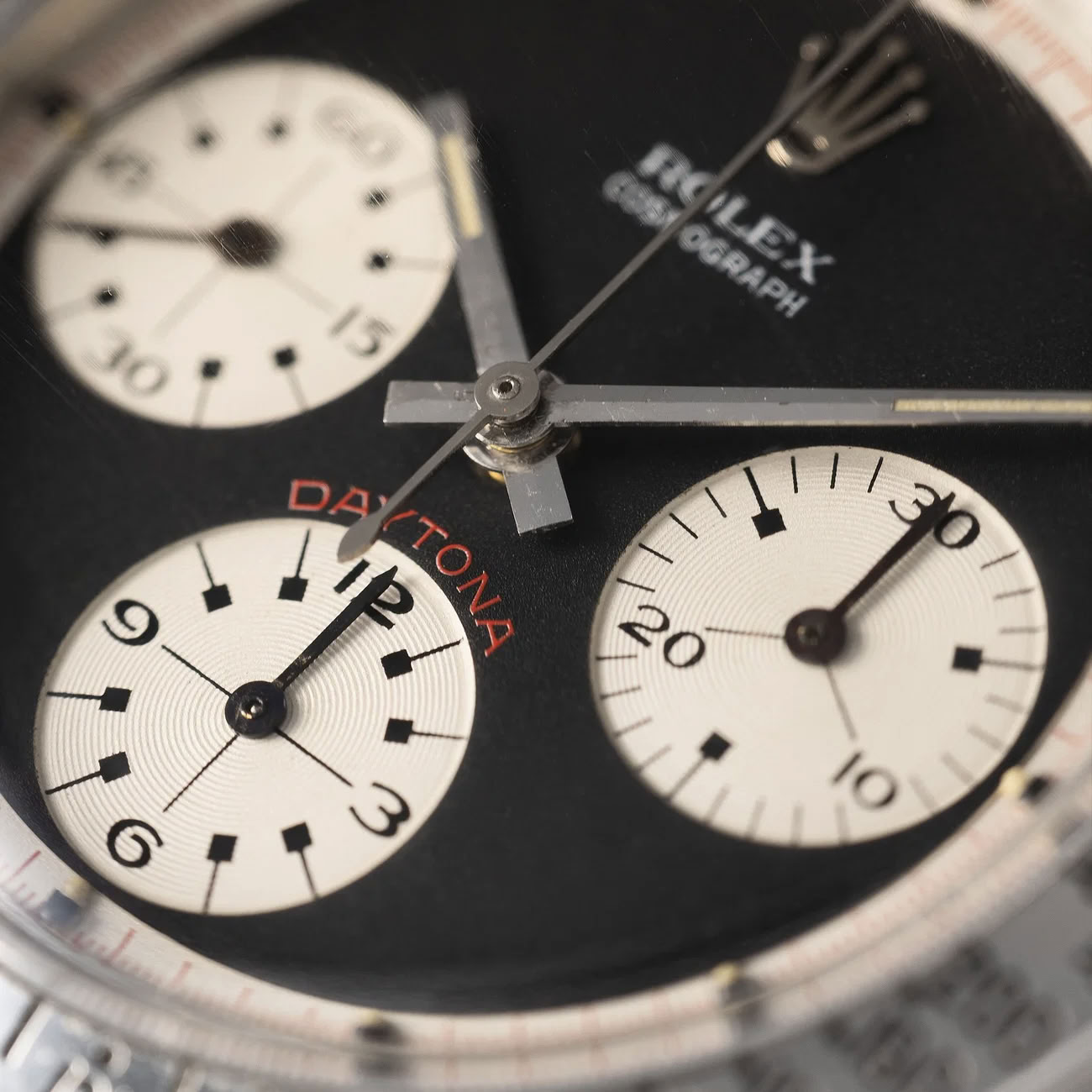
There is an additional point of importance with this particular watch. Serial number 1,626,226 is registered in the Archivio Pucci Papaleo, the independent archive created by Pucci Papaleo, whose research and publications have played an important role in documenting vintage Rolex chronographs and, in particular, the Daytona.
For a collector seeking an early Paul Newman Daytona, it is the combination that matters: reference 6239, circa 1967 production, the three-colour exotic dial incredibly preserved, and an established archival record.
Reference 6542: an exceptional early GMT-Master
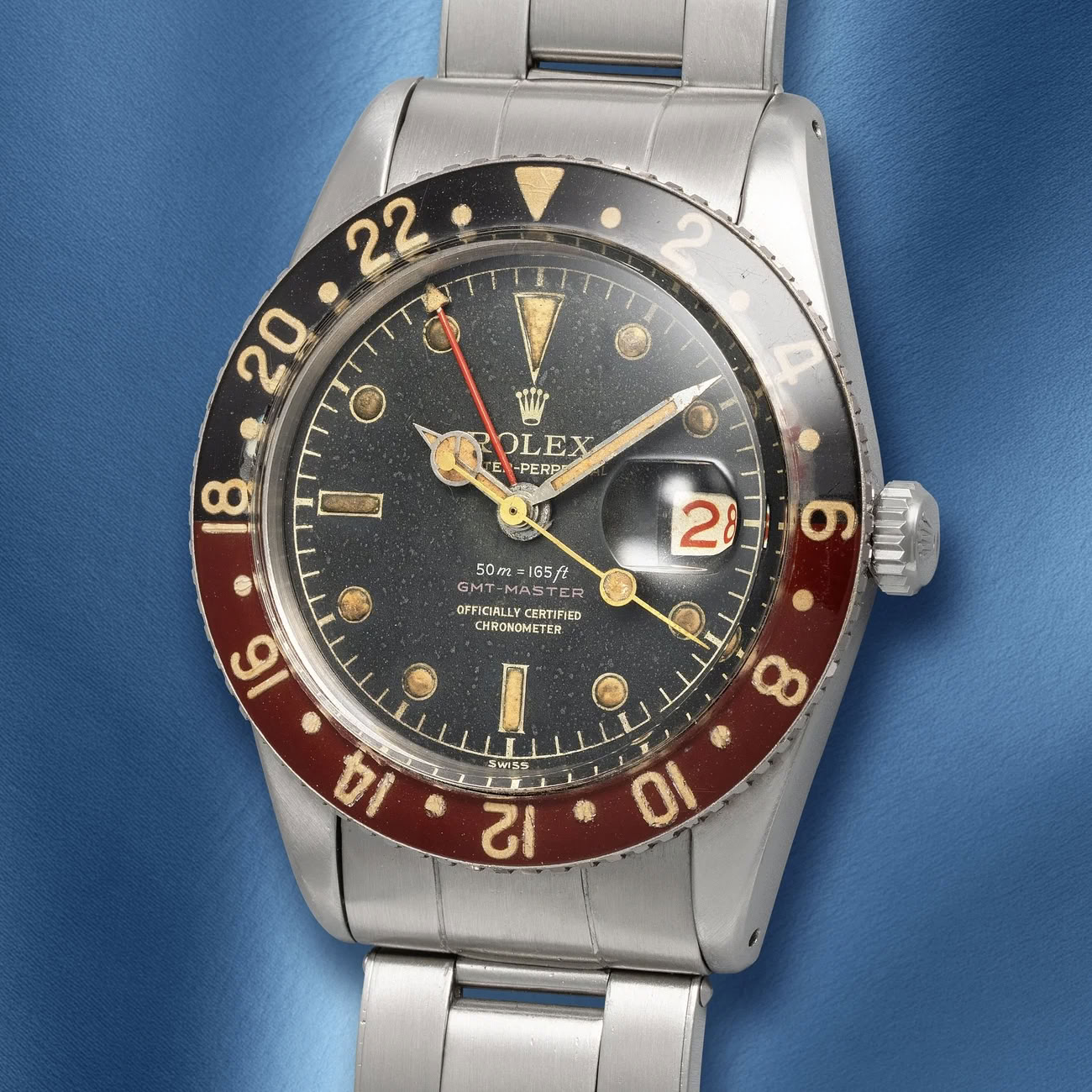
The GMT-Master reference 6542 represents an entirely different chapter of Rolex history. Introduced during the 1950s, the reference established the essential formula of the GMT-Master, allowing its wearer to read another time zone through the combination of an additional 24-hour hand and rotating bezel. Early watches were fitted with the now celebrated red-and-blue Bakelite bezel, a material whose fragility makes surviving examples particularly prized today.
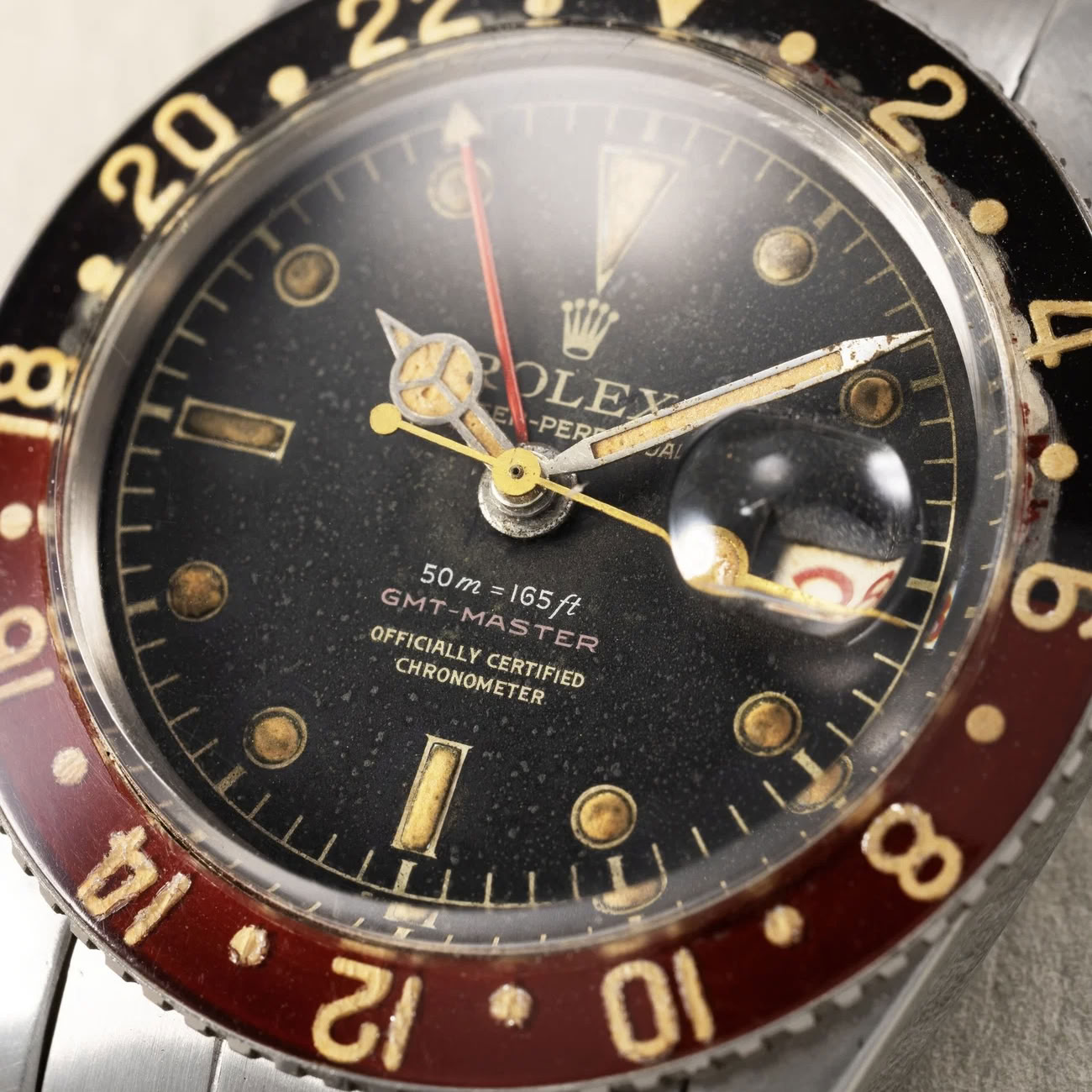
This 1955 example possesses considerably more than its early Bakelite bezel. Its glossy black gilt dial carries the GMT-MASTER designation in red. More unusually still, immediately above six o'clock appears the depth designation “50m = 165ft”. It is the coexistence of these details that elevates the watch. The red GMT-Master signature is itself a rare characteristic of early examples, while the depth rating represents another scarce dial feature. Finding the two together creates a configuration seen on only a handful of watches.
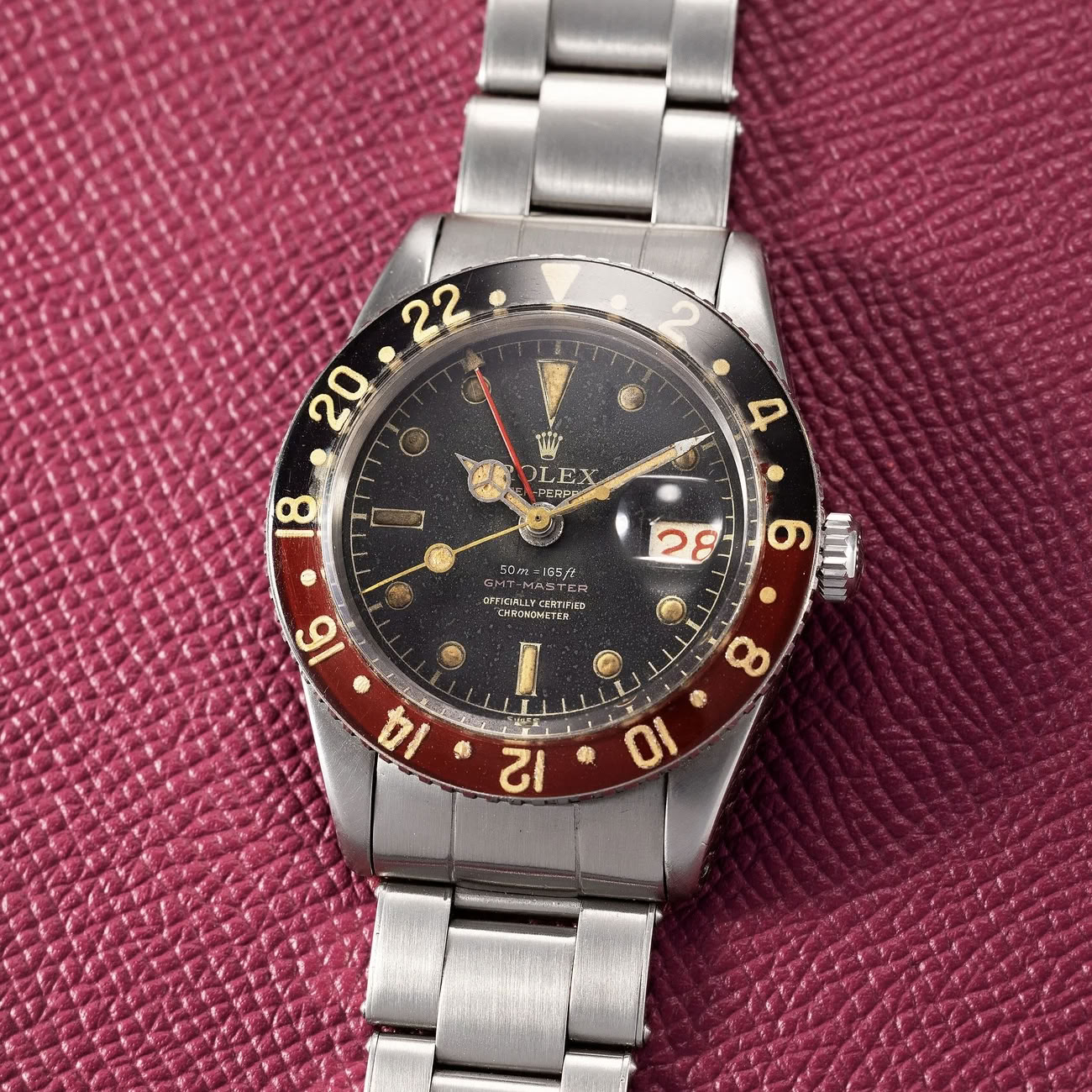
The 6542 is already one of the defining Rolex sports references of the twentieth century. This example demonstrates why, within even the most collectible references, the precise dial configuration can make an enormous difference. This present example if further extraordinary and collectable for its original state of preservation bearing its original bezel of course, but also its original radium indexes and hands, original oyster steel bracelet, and overall a true gem of GMT-Master “Bakelite”.
Reference 1665: an exceptionally early Qaboos Sea-Dweller
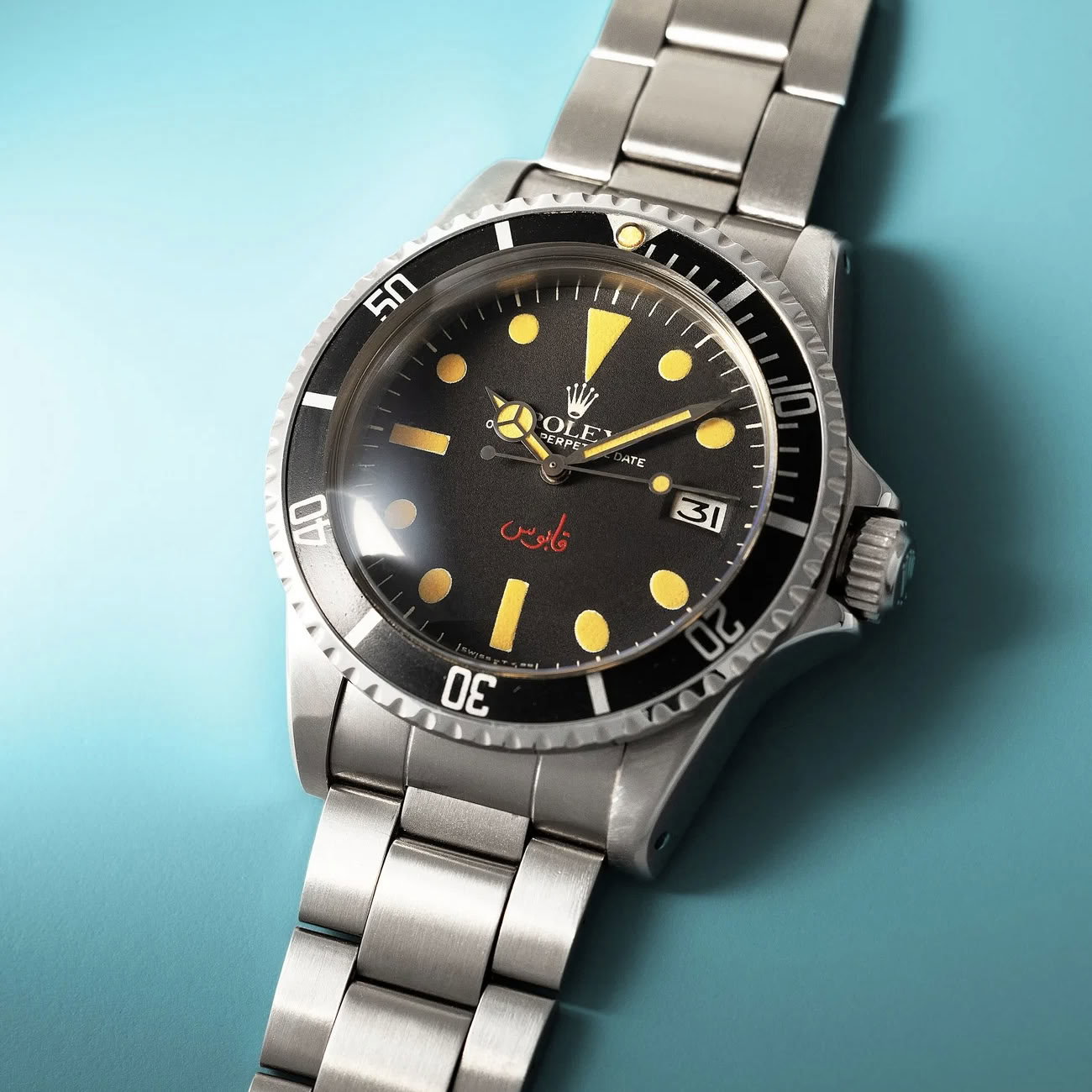
The final watch moves from commercial Rolex production into the fascinating world of special commissions. Rolex watches associated with Sultan Qaboos bin Said Al Said of Oman occupy a special position among collectors. Commissioned during his reign, these watches were presented as gifts, and some of the most historically significant examples are connected with British servicemen who served in Oman during the Dhofar Rebellion.
The present Sea-Dweller reference 1665, dating to circa 1973, is distinguished immediately by its dial. In place of the normal Sea-Dweller inscriptions appears the Sultan's name, “Qaboos”, prominently printed in red.
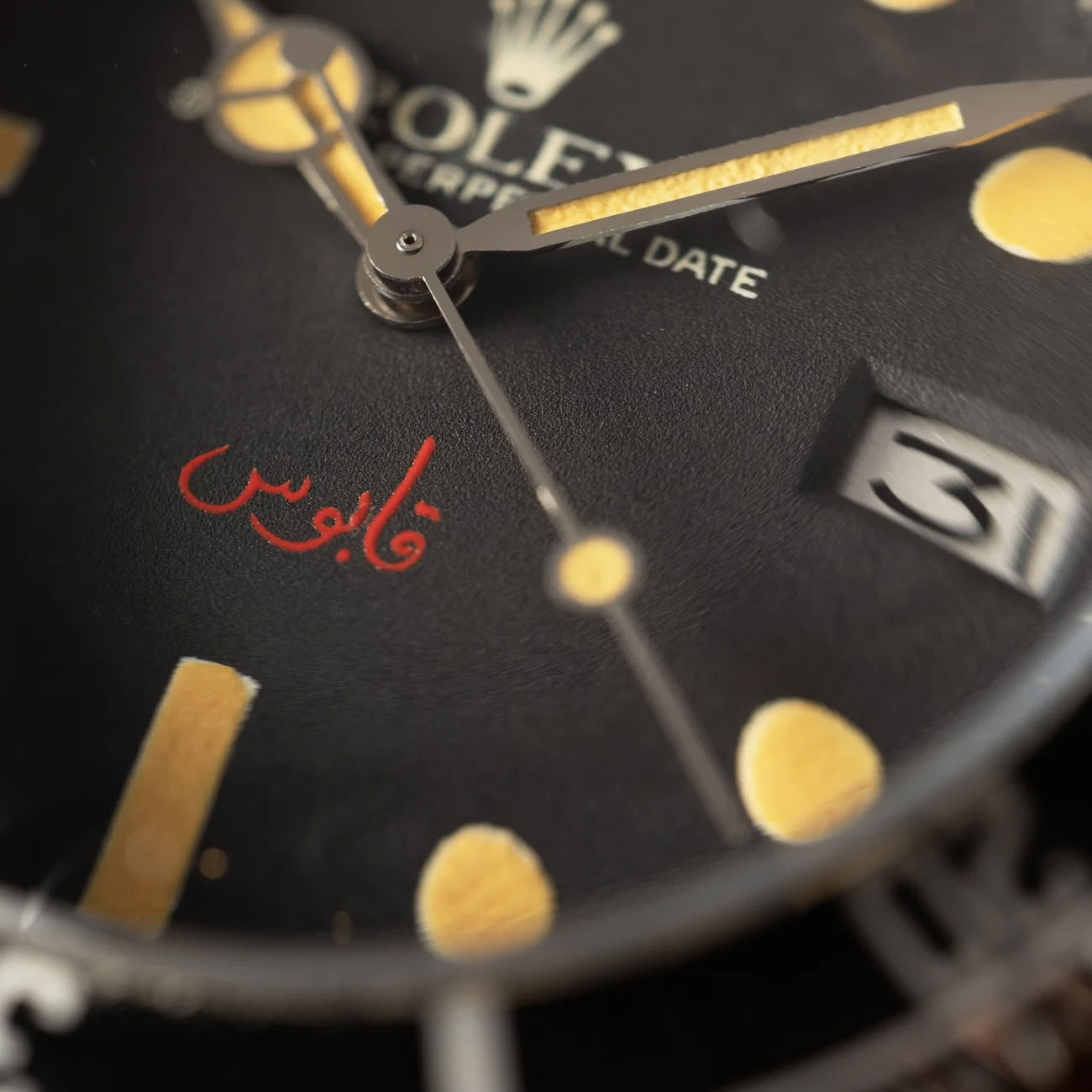
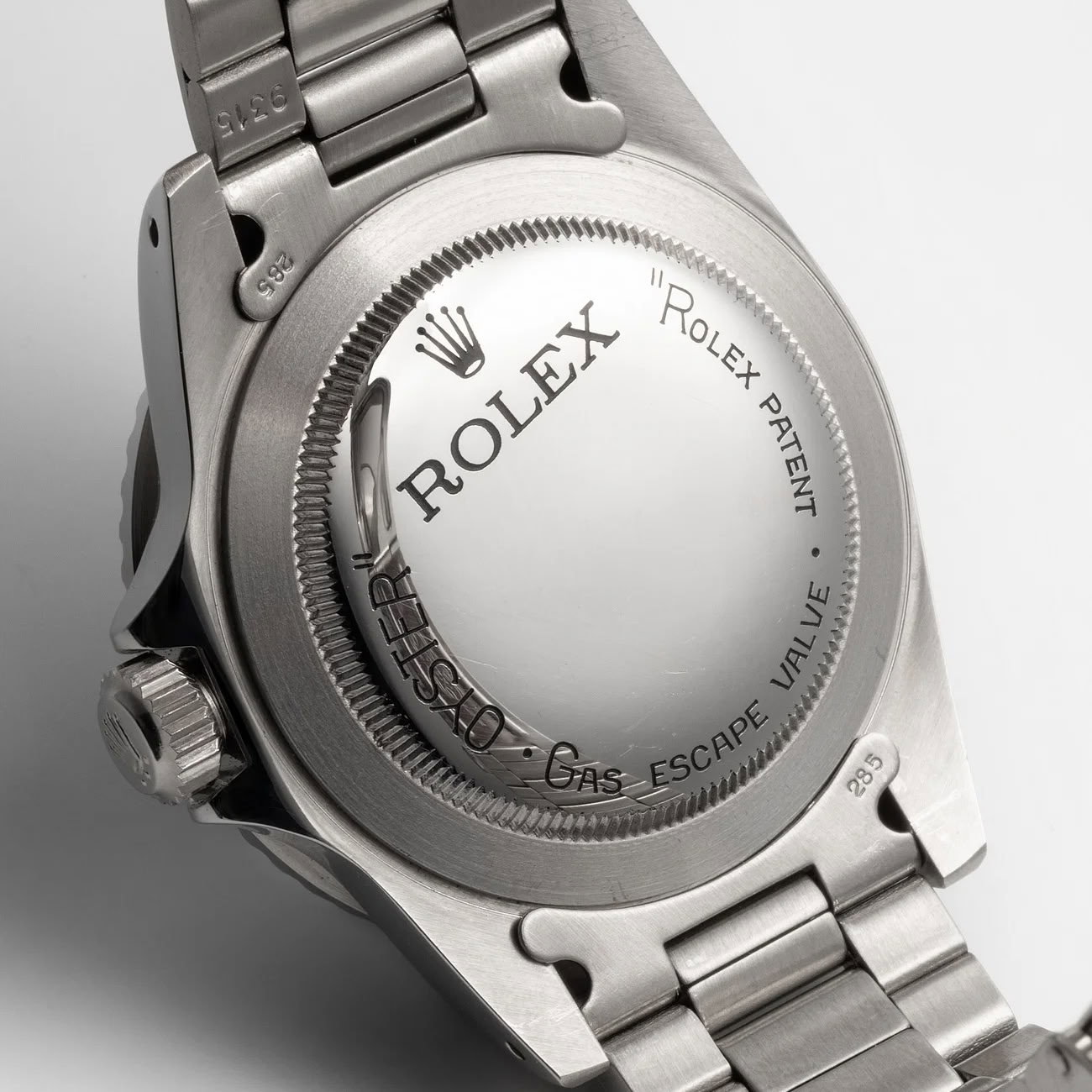
Its serial number makes the watch still more significant. At 3,543,270, it is, to the best of current knowledge, the earliest serial-numbered Qaboos Sea-Dweller identified. It predates generally associated examples with the later Omani-Asprey order around the 3.56-million serial range.
There are further details supporting its unusually early position. The watch is not Asprey-signed externally on the case back and only the final three digits of its serial number appear inside. Later examples, from approximately the 3.55-million range onwards, carry the complete serial number inside the case back. Together, these characteristics suggest that the present watch may belong to the first batch of red Qaboos reference 1665s, preceding the better-known later order.
Then there is its condition. More than fifty years after it was produced, this professional diving watch survives in remarkably New Old Stock condition. The stainless-steel case remains totally untouched and bearing its original sharpness, while the dial, hands and luminous material have aged so perfectly that testify of the comfortable life the watch has lived, secured away for its entire life.
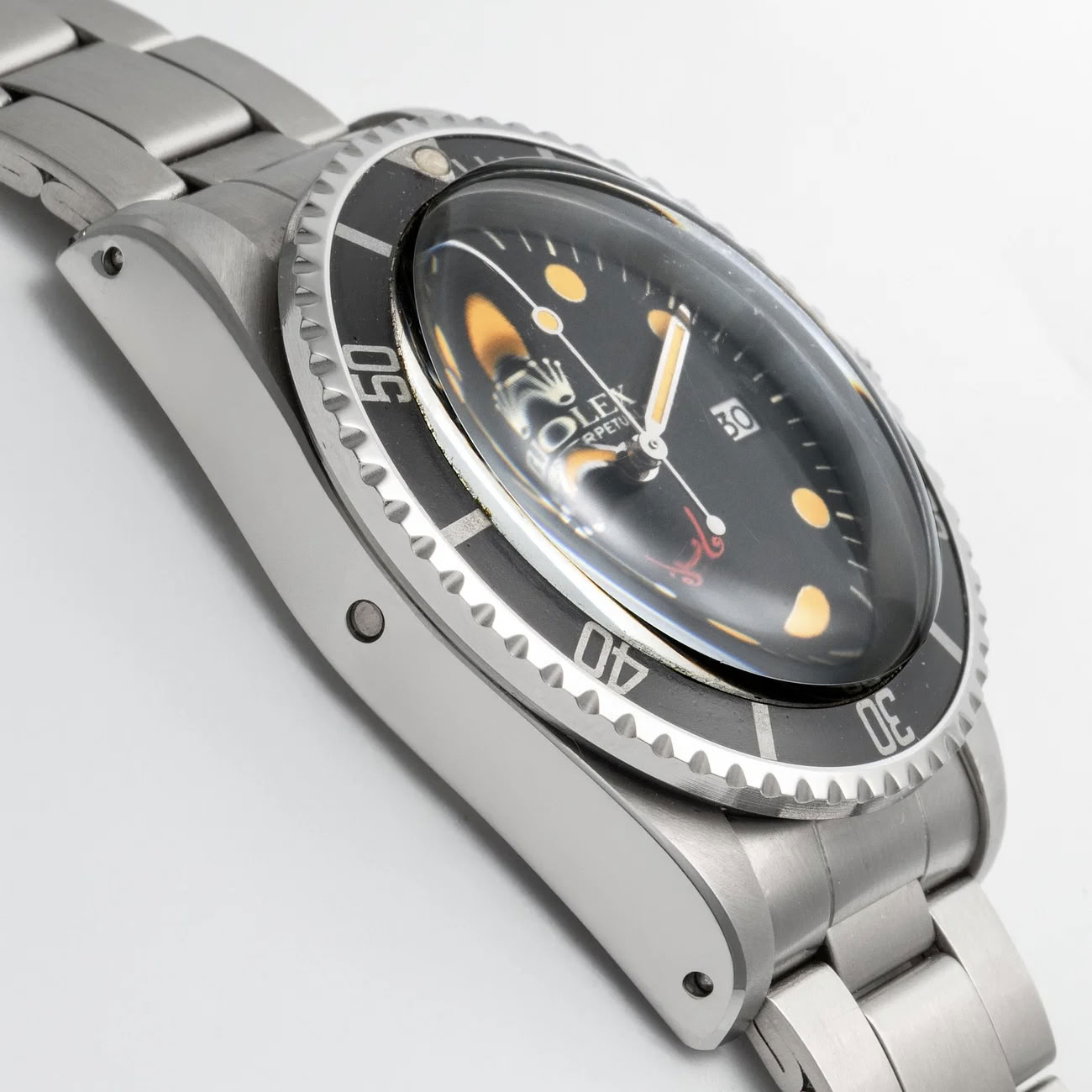
For an ordinary reference 1665, such preservation would already be very significant, but when combined with a special order red Qaboos signature dial, it becomes considerably an important time capsule of one of the most important chapters in Rolex history.
Reference 16520: a Daytona few collectors have seen
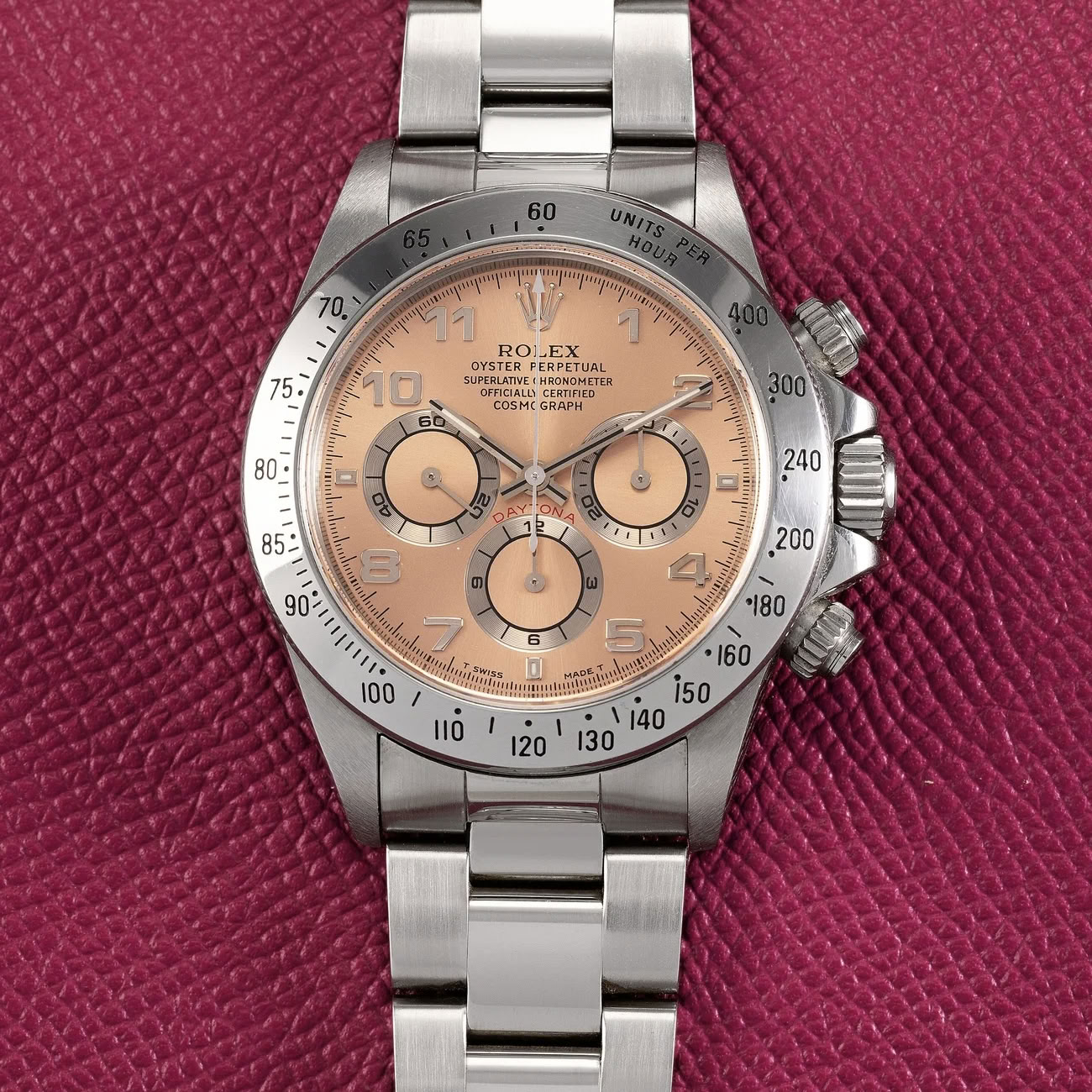
Introduced in 1988, the reference 16520 was the first automatic Daytona, powered by the calibre 4030, Rolex’s extensively modified version of the Zenith El Primero movement. Remaining in production for over a decade, it represents one of the defining chapters in the evolution of the Cosmograph.
The present watch, dating to circa 1998, is something altogether more unusual. Its salmon-coloured dial with applied Arabic numerals is an exceptionally rare configuration, with only three stainless-steel examples known to have surfaced publicly at auction. A further four examples are known in white-gold reference 16519 cases, placing this dial among the rarest variations associated with the Zenith-era Daytona.
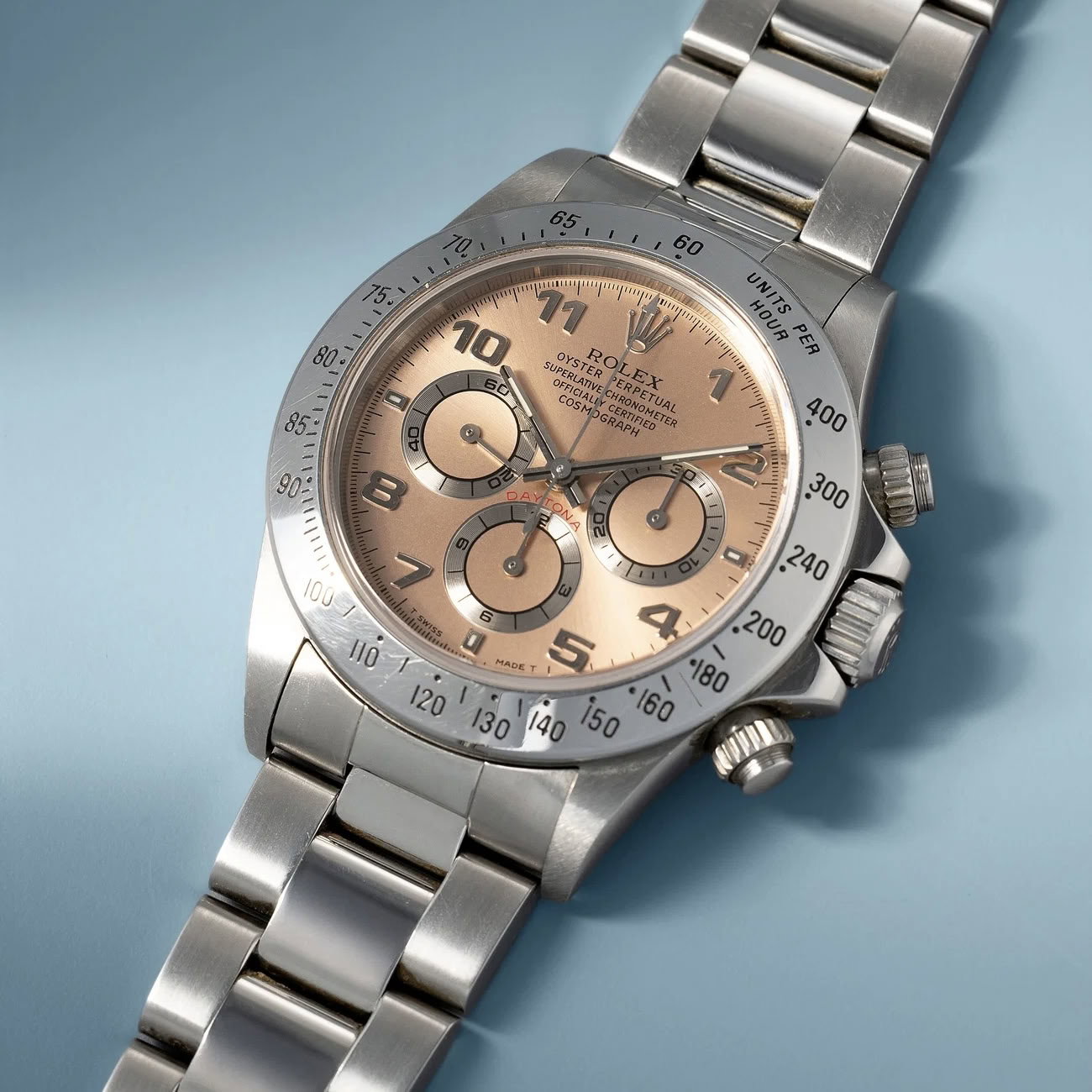
Exactly why these dials were produced remains uncertain. One theory suggests a special commission for important clients or friends of Rolex or another that they were experimental or test dials manufactured by Singer but never intended for regular production. What is certain is that their scarcity has long been recognised by collectors. The few examples to have reached the market have been highly sought after and achieved considerable results at auction, establishing the salmon dial firmly within the collecting landscape surrounding the reference 16520.
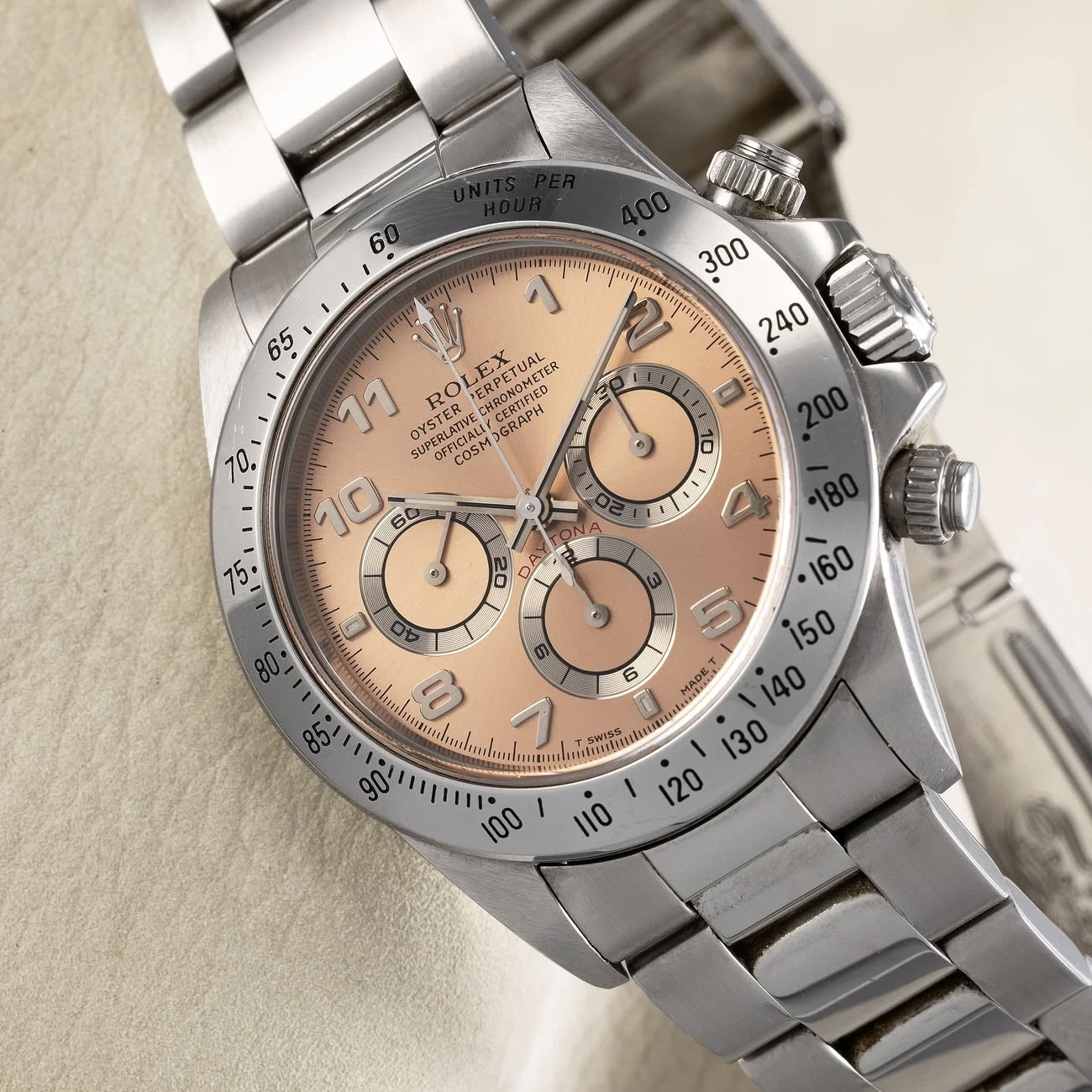
In this respect, it occupies similar territory to other highly prized special Daytona dials of the period, including the blue so-called “Chairman” dial. These are watches that sit outside regular production and continue to generate fascination precisely because so little is definitively known about their origins. For the seasoned Daytona collector, that combination of rarity, distinctive appearance and enduring mystery makes this salmon-dial 16520 particularly compelling.
The details make the difference
Taken together, these six watches demonstrate what separates the finest vintage Rolex from the rest. Their importance lies not simply in the references, but in their special details: exceptional dials, unusual configurations, remarkable and perfect preservation and, in some cases, important provenance. These are the characteristics that elevate an individual watch beyond its reference and make the opportunity to acquire it - potentially unique.