Prized Pateks this October in Monaco
Few manufacturers occupy quite the same position in serious watch collecting as Patek Philippe. Its history encompasses some of the most technically ambitious wristwatches ever produced, yet its appeal extends far beyond complications. Exceptional case design, unusual configurations, traditional decorative arts and the smallest production details can be equally important in determining the significance of an individual watch.
These Patek Philippes presented in Monaco Legend Group’s Exclusive Timepieces auction on 31 October and 1 November 2026 illustrate this extraordinary diversity. Spanning almost eight decades, each possesses characteristics that distinguish it from the wider production of its reference.
In-House 4th Series
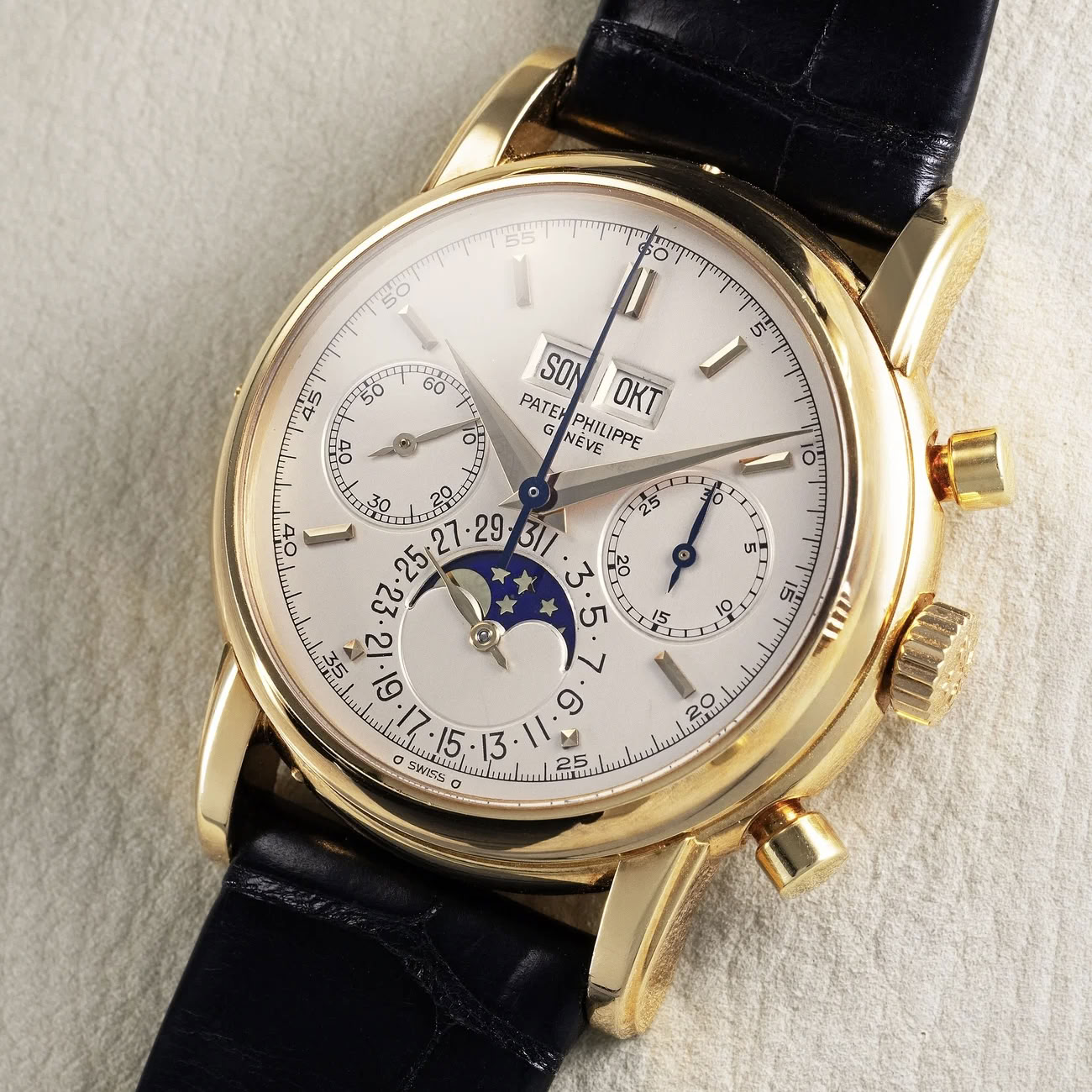
Few Patek Philippe references command the respect afforded to the perpetual calendar chronograph reference 2499. Produced between 1950 and 1985, with approximately only 349 examples believed to have been made across four different series, it represents one of the defining achievements of complicated wristwatch design.
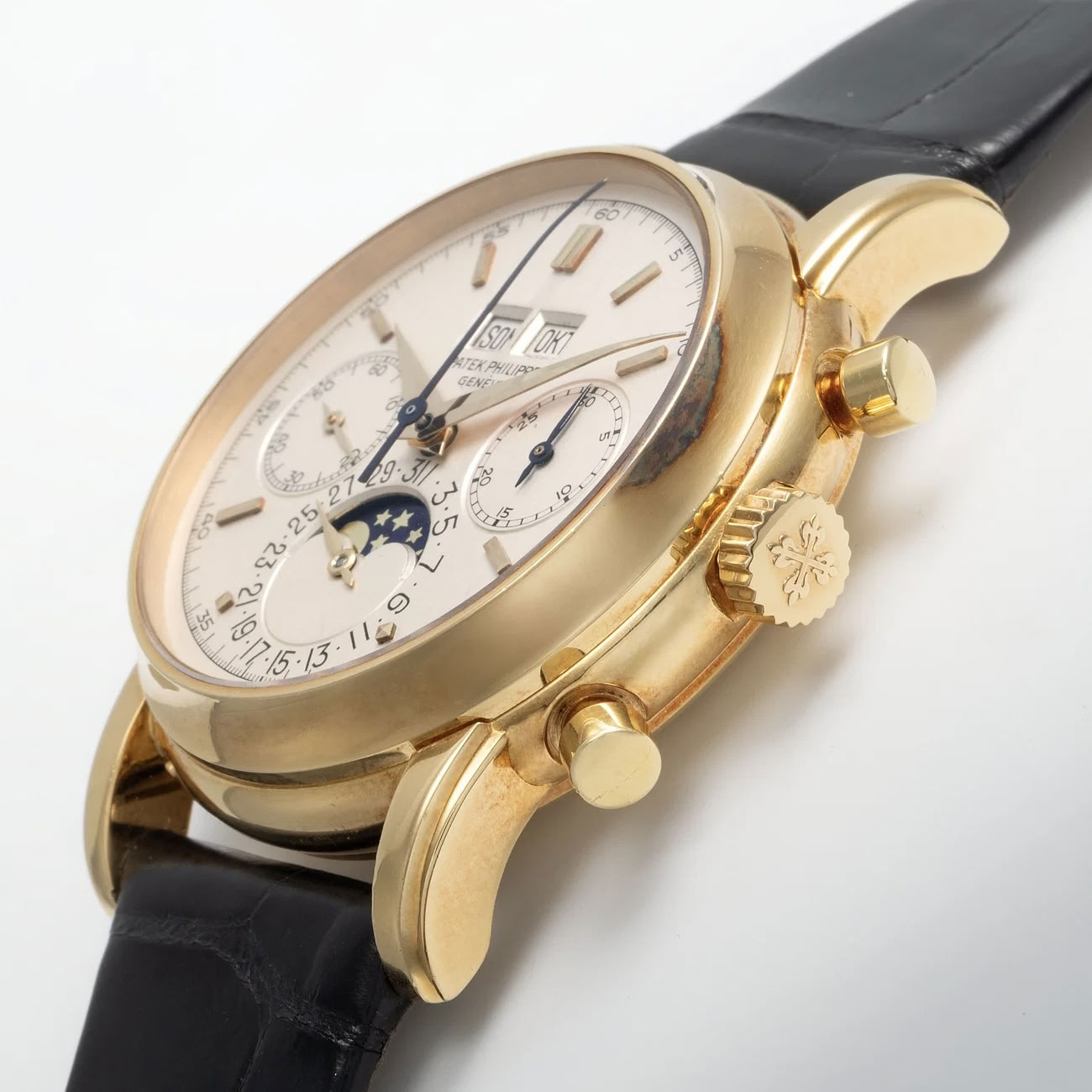
Yet the present fourth series yellow-gold reference 2499, dating to 1982, is significant for a reason extending beyond its celebrated beauty and rarity. Its case, numbered 2,792,095, is believed to be the first reference 2499 case manufactured by Patek Philippe’s own Ateliers Réunis, marking a decisive transition away from independent casemakers. Earlier examples had been cased by Emile Vichet and subsequently, and exclusively for the 4th series, by Wenger, but the establishment of Ateliers Réunis brought this crucial element of production under Patek Philippe’s direct control.
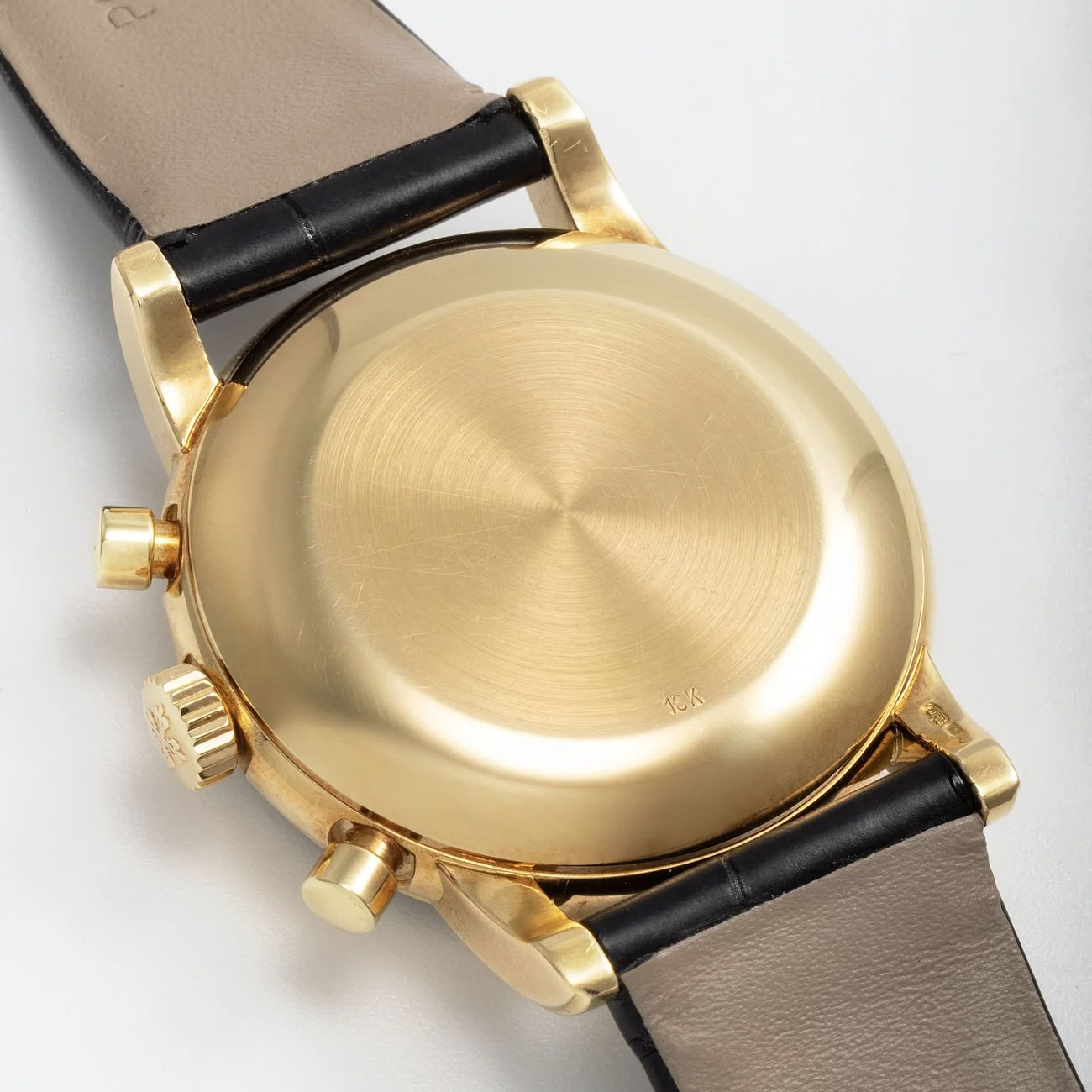
Delivered to the United States featuring a German calendar, this watch represents an important milestone in the manufacture’s evolution towards integrated production. Other than its very significant history, it is by far one of the best preserved examples of 4th series 2499 we have ever encountered.
Bracelet Makes The Difference
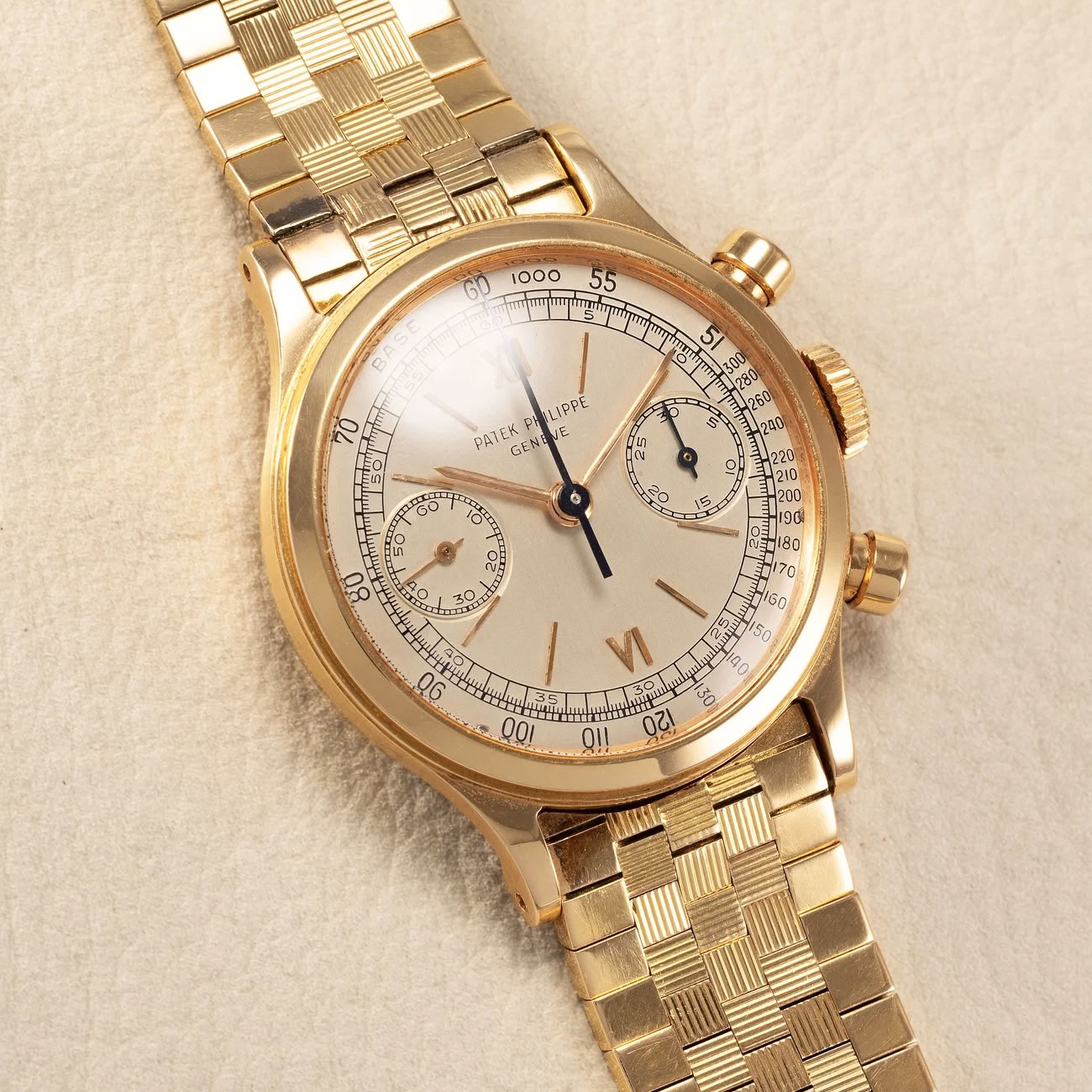
Introduced in 1940, the reference 1463 was Patek Philippe’s first water-resistant chronograph wristwatch. Its distinctive round pushers earned it the Italian nickname Tasti Tondi, while its screw-down case back distinguished it from earlier chronographs.
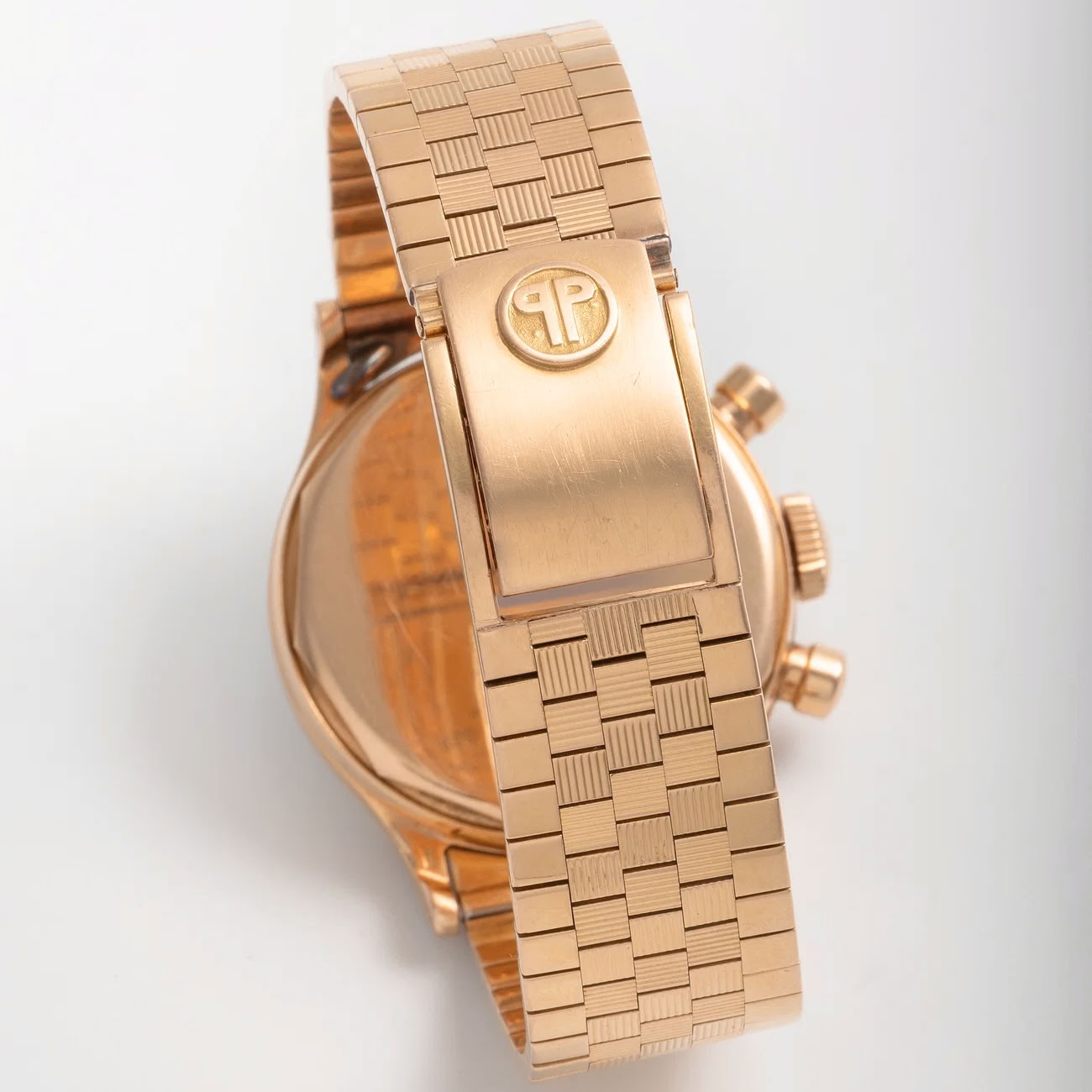
The present example, manufactured in 1949, is particularly appealing for its gorgeously preserved pink-gold case. Of approximately 720 examples believed to have been produced, only around 140 were made in pink gold. Its 35mm case was manufactured by Taubert & Fils, the celebrated Geneva casemaker associated with the François Borgel tradition, and displays the characteristic stepped bezel and pronounced lugs.
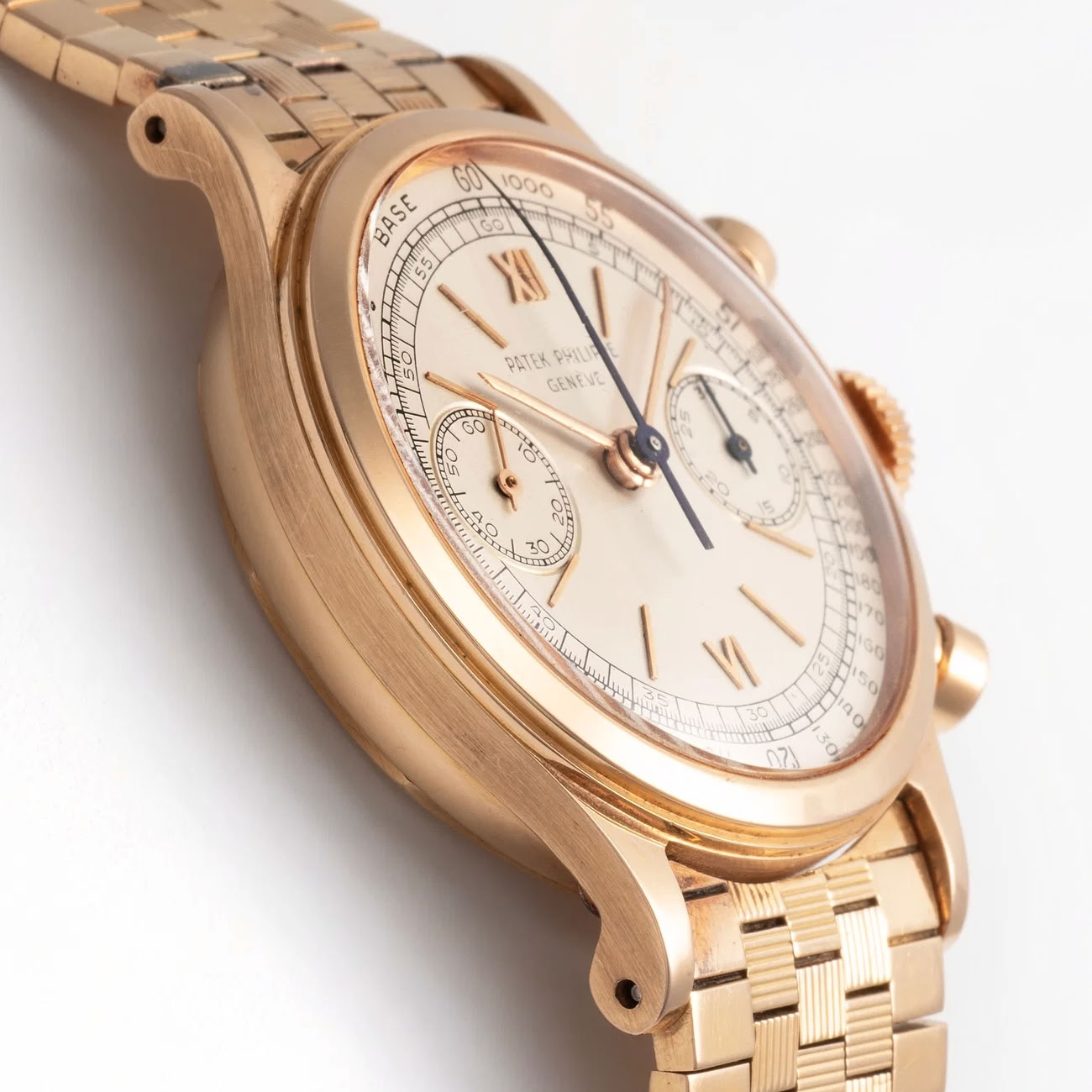
What makes this exceptional Tasti Tondi especially compelling is its original Patek Philippe Tasti Tondi pink-gold brick bracelet. The combination creates a wonderfully coherent appearance, transforming an already rare chronograph into something considerably more unusual.
3700 With A Twist
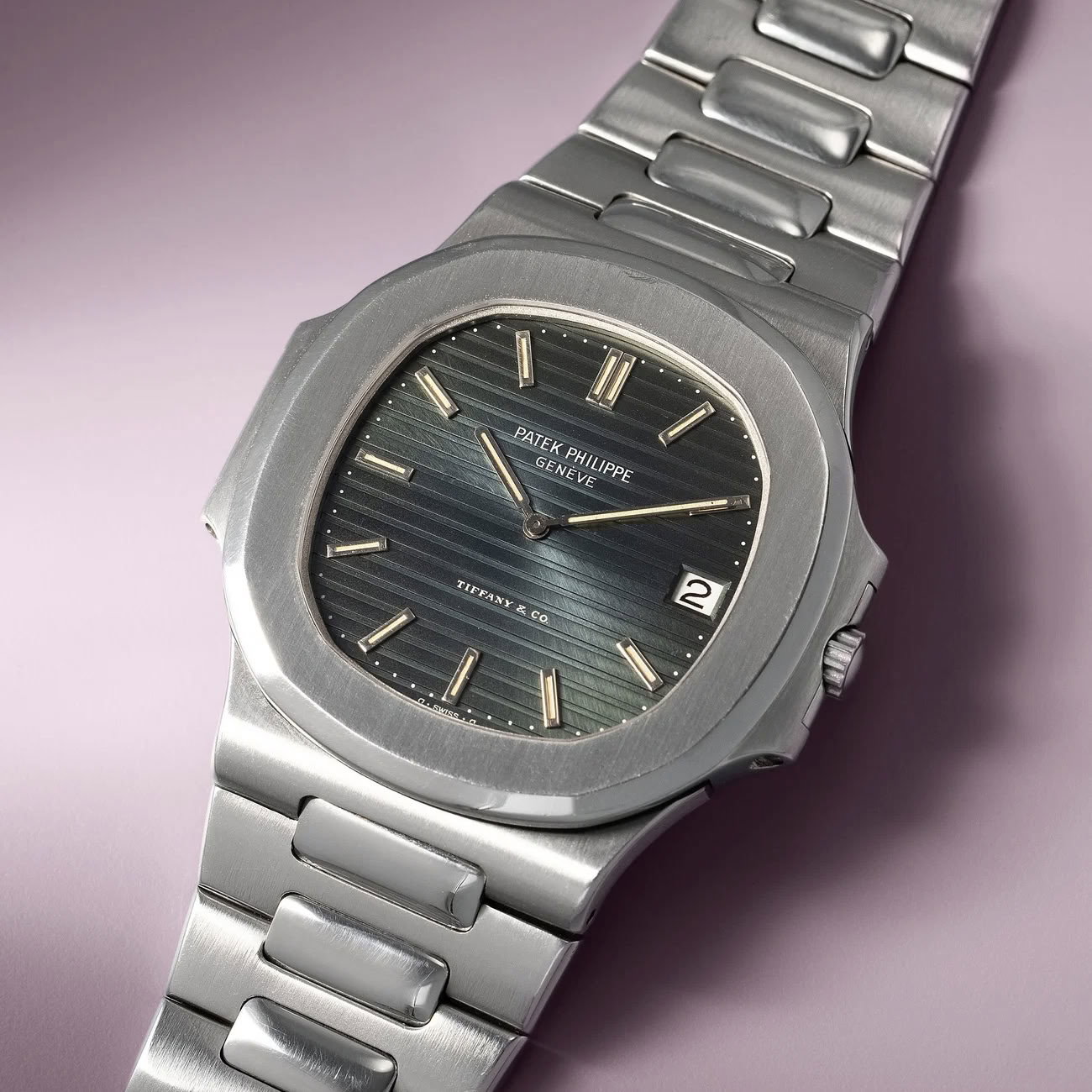
The introduction of the Nautilus in 1976 fundamentally changed perceptions of luxury sports watches. Designed by Gérald Genta, its distinctive porthole-inspired construction and integrated bracelet established an entirely new aesthetic within Patek Philippe’s collection.
This stainless-steel reference 3700/1, sold in December 1981, combines this important design with Tiffany & Co. retail provenance. Its double-signed dial reflects the longstanding relationship between the companies, while Tiffany inventory numbers engraved between the lugs provide another important connection to the American retailer.
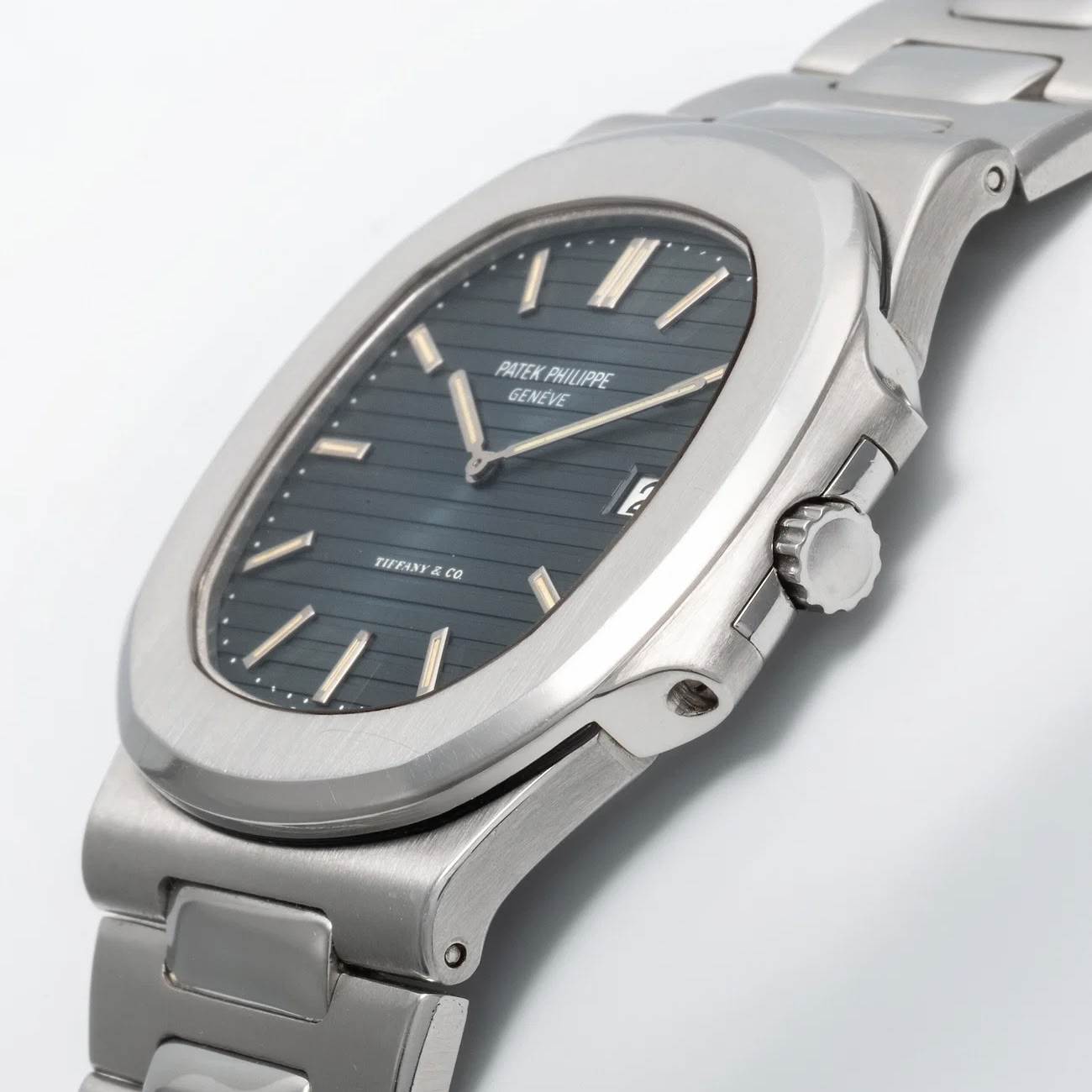
Particularly interesting is its documentation. An Extract from the Archives issued in 2017 records the movement as having been manufactured in 1973, predating the Nautilus’s introduction by three years. This refers to the movement rather than the completed watch, offering an intriguing insight into Patek Philippe’s production chronology.
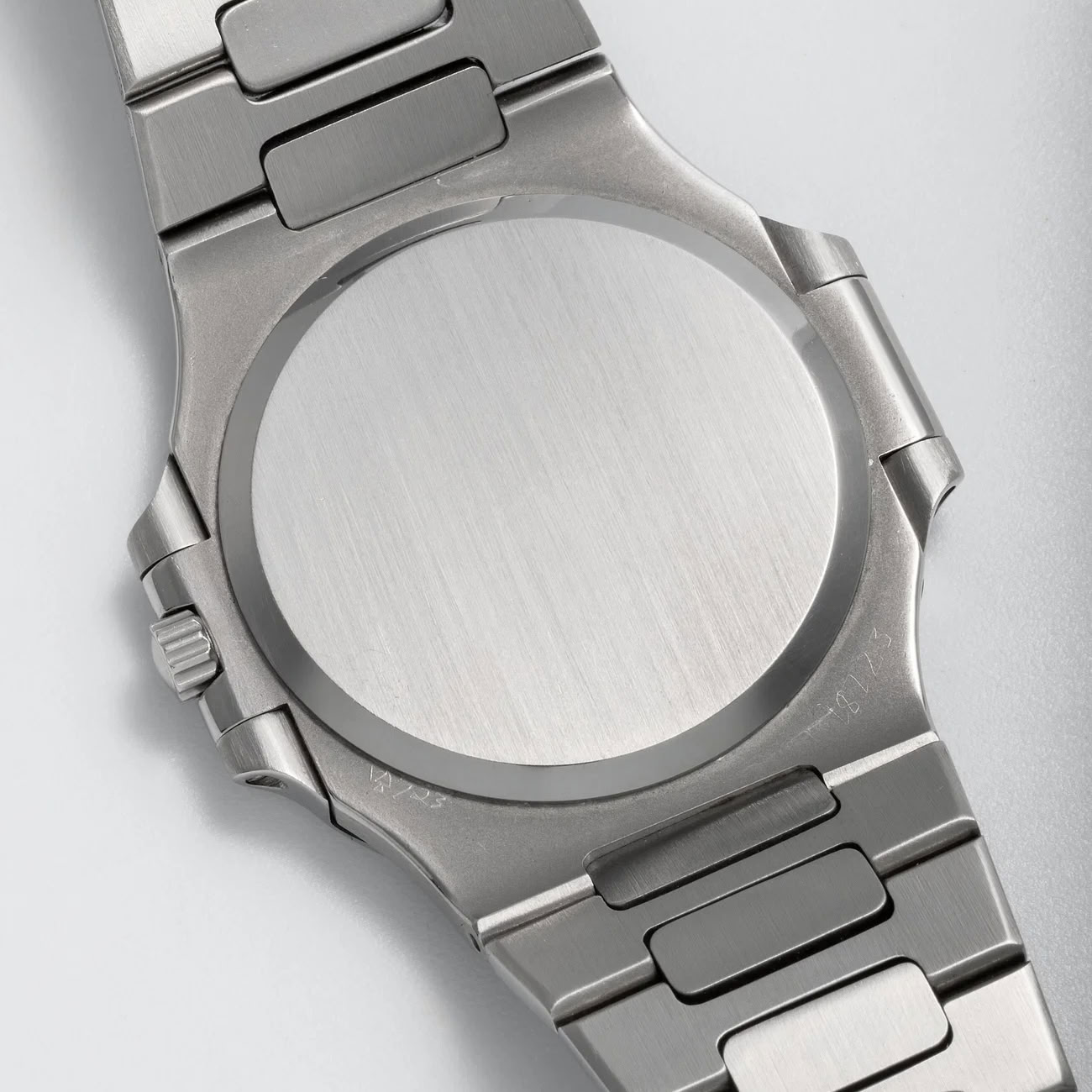
Accompanied by two Patek Philippe Extracts and extensive Tiffany archival documentation, this is an unusually well-provenanced example of the original Nautilus.
Sporty With A Bling
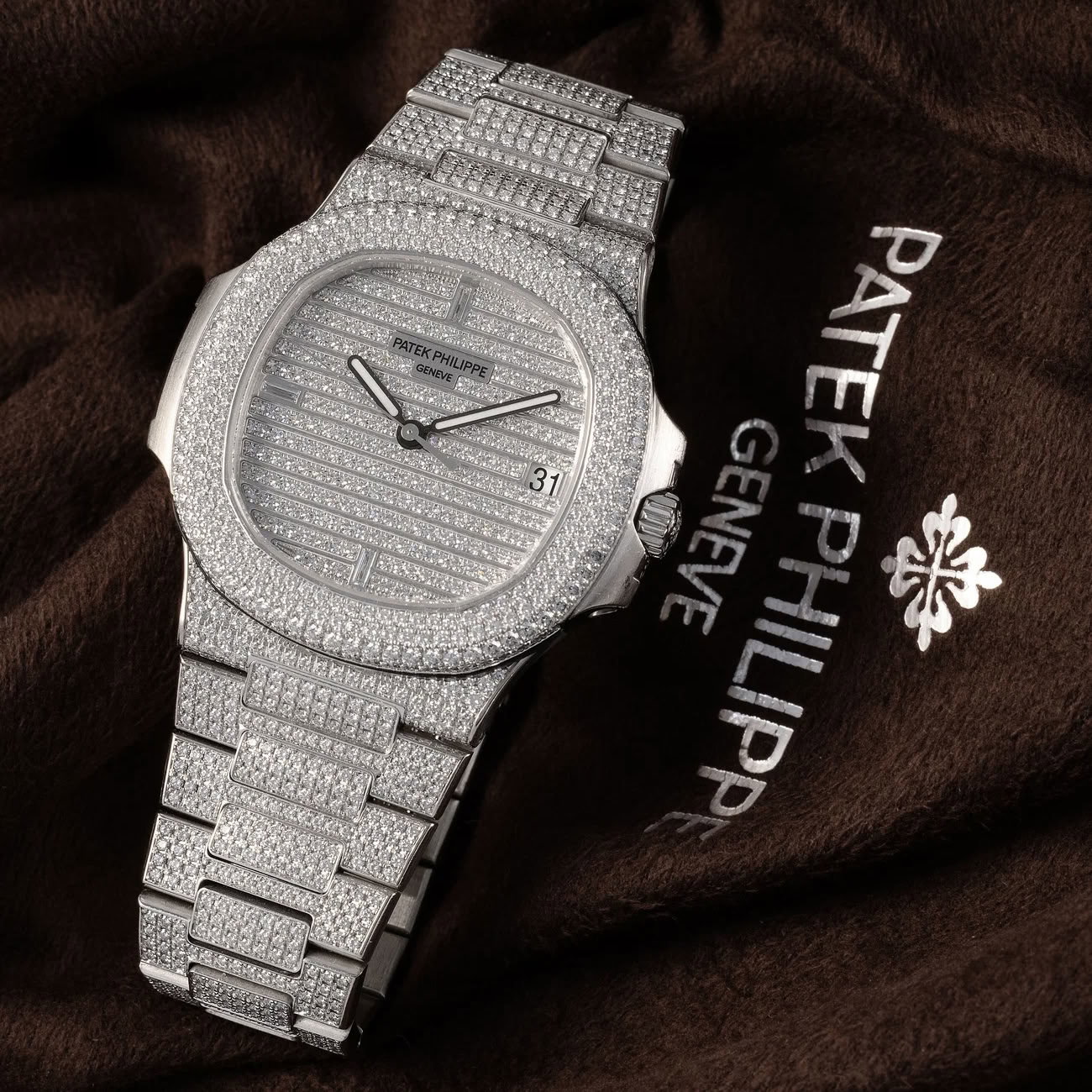
While the Nautilus was conceived as a luxury sports watch, its architecture has proved remarkably adaptable. Few interpretations demonstrate this more dramatically than the reference 5719/1G-001.
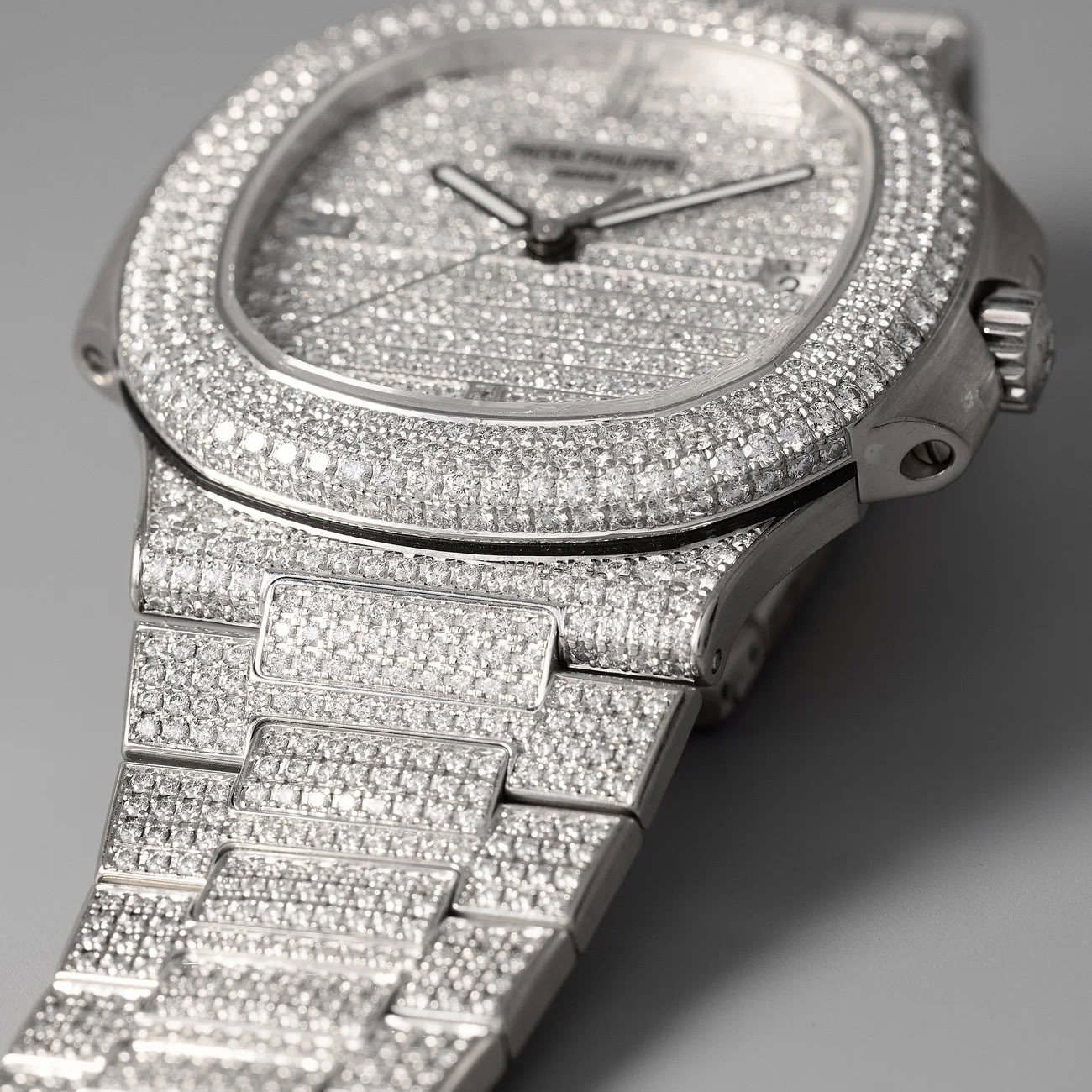
Dating to 2008, the present example transforms the familiar Nautilus silhouette through an extraordinary application of diamonds. Crafted in 18K white gold, the watch retains the unmistakable porthole-inspired case and integrated bracelet, but virtually every visible surface is dedicated to gem-setting. Brilliant-cut diamonds follow the contours of the bezel, cover the dial and extend across the articulated bracelet.
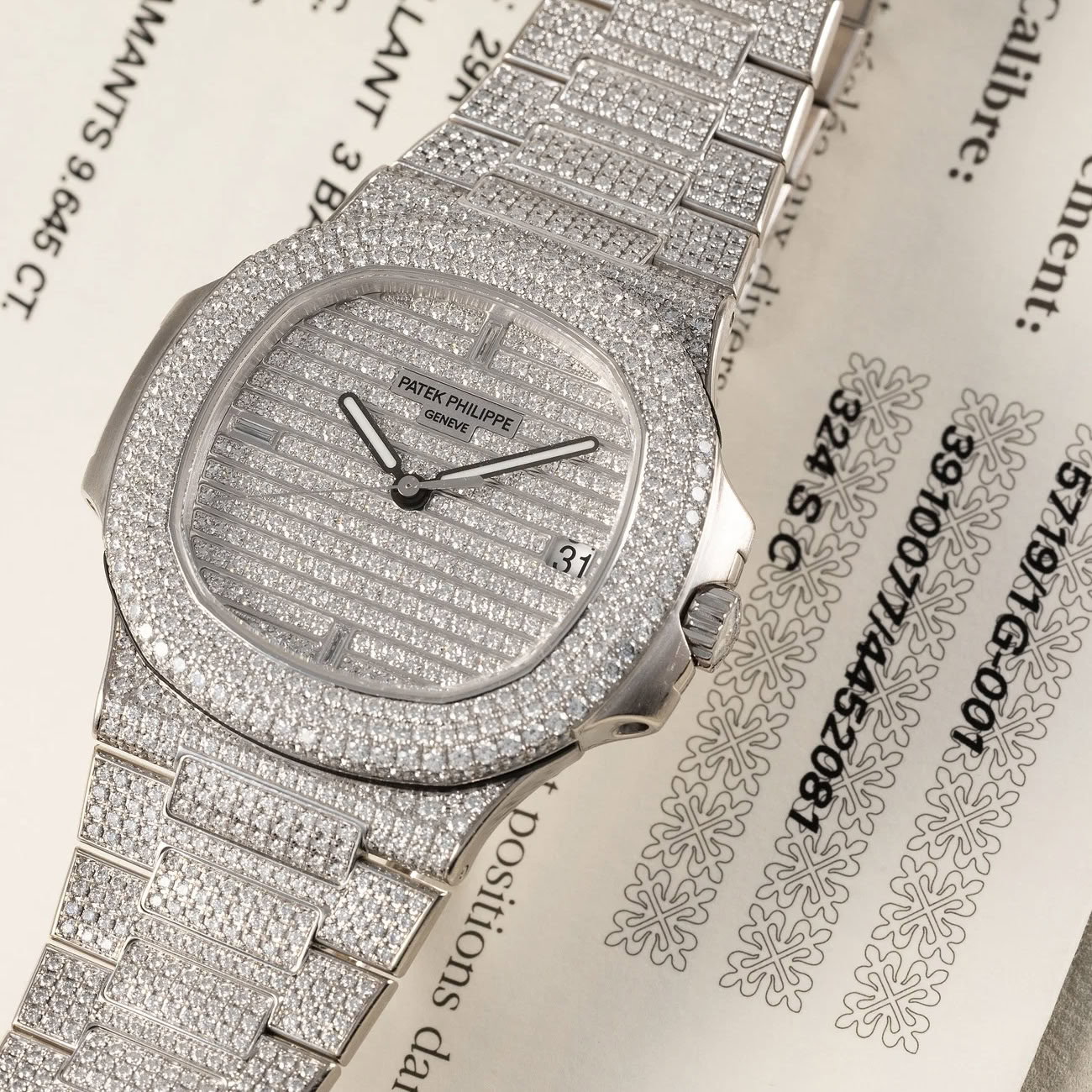
Importantly, the diamonds respect the original design, with polished white-gold borders framing the pavé-set links. Accompanied by its original Certificate of Origin and presentation accessories, this exceptional watch demonstrates Patek Philippe’s ability to reinterpret its most recognisable sports watch through the traditions of high jewellery.
Different From Its Peers
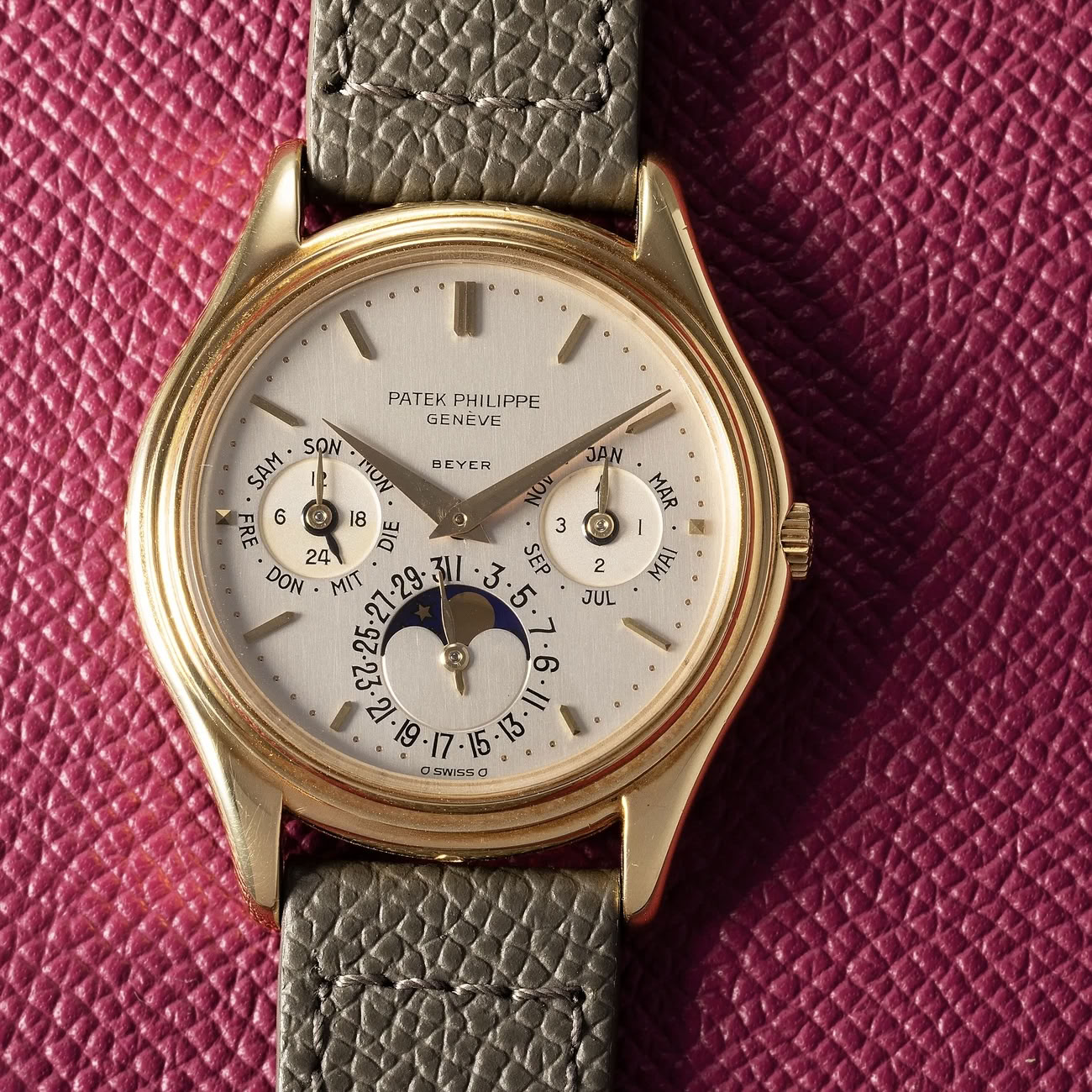
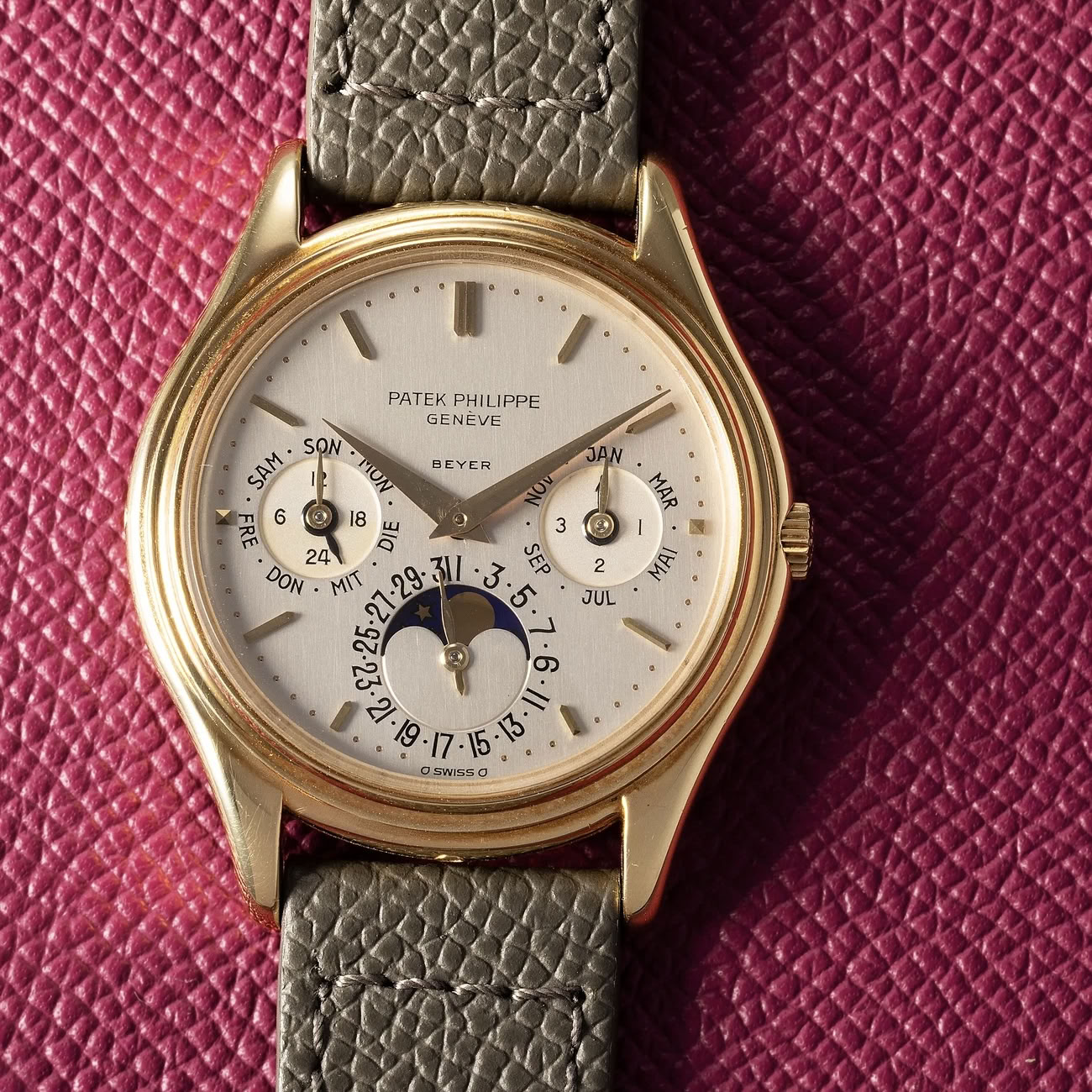
Introduced in 1985, the reference 3940 established a new benchmark for elegant, complicated wristwatches. Its ultra-thin automatic calibre 240 Q accommodated a perpetual calendar and moon phases within a remarkably refined 36mm case.
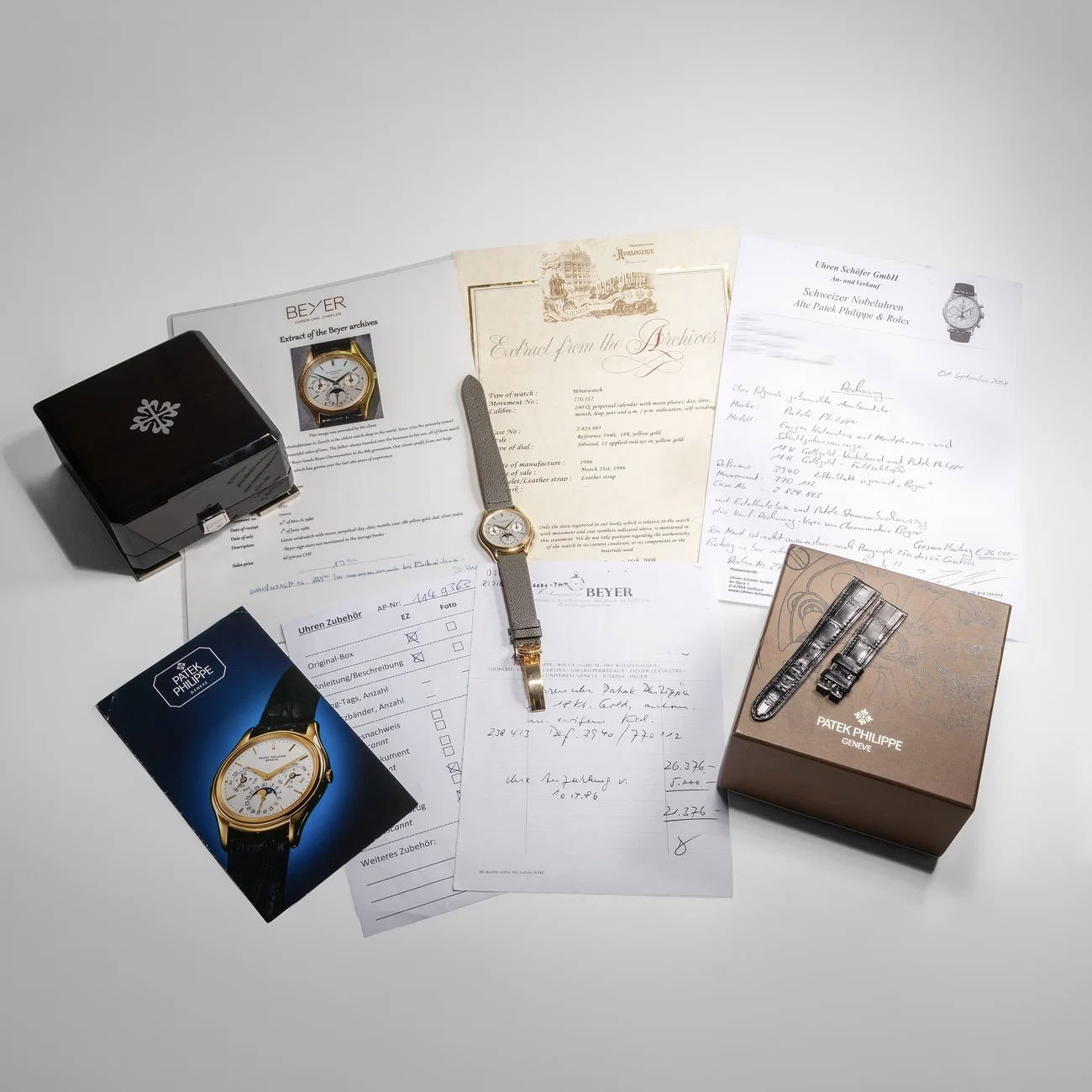
The present yellow-gold example dates to 1986 and belongs to the desirable first series, distinguished by its deeply recessed subsidiary dials and solid case back. Approximately 100 yellow-gold first-series examples are believed to have been produced, but this watch has an additional distinction in its Beyer signature.
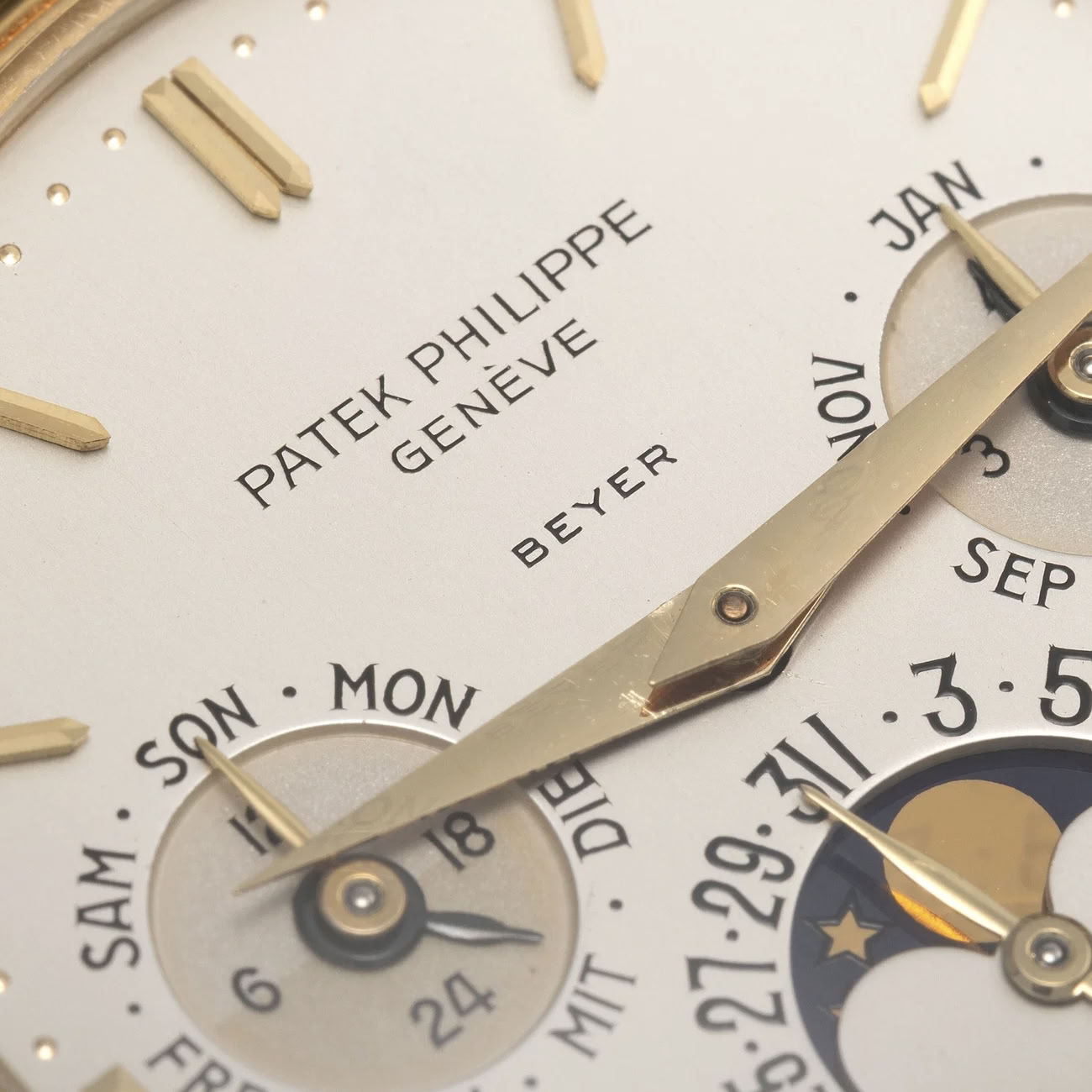
Patek Philippe introduced the reference alongside Beyer Chronometrie’s 225th anniversary, producing 25 specially numbered commemorative watches. The present example is not one of those pieces, but a regular-production first-series watch bearing the Beyer name. Accompanied by documentation from both Patek Philippe and Beyer, this unusual configuration makes it particularly interesting to collectors.
King In The Castle
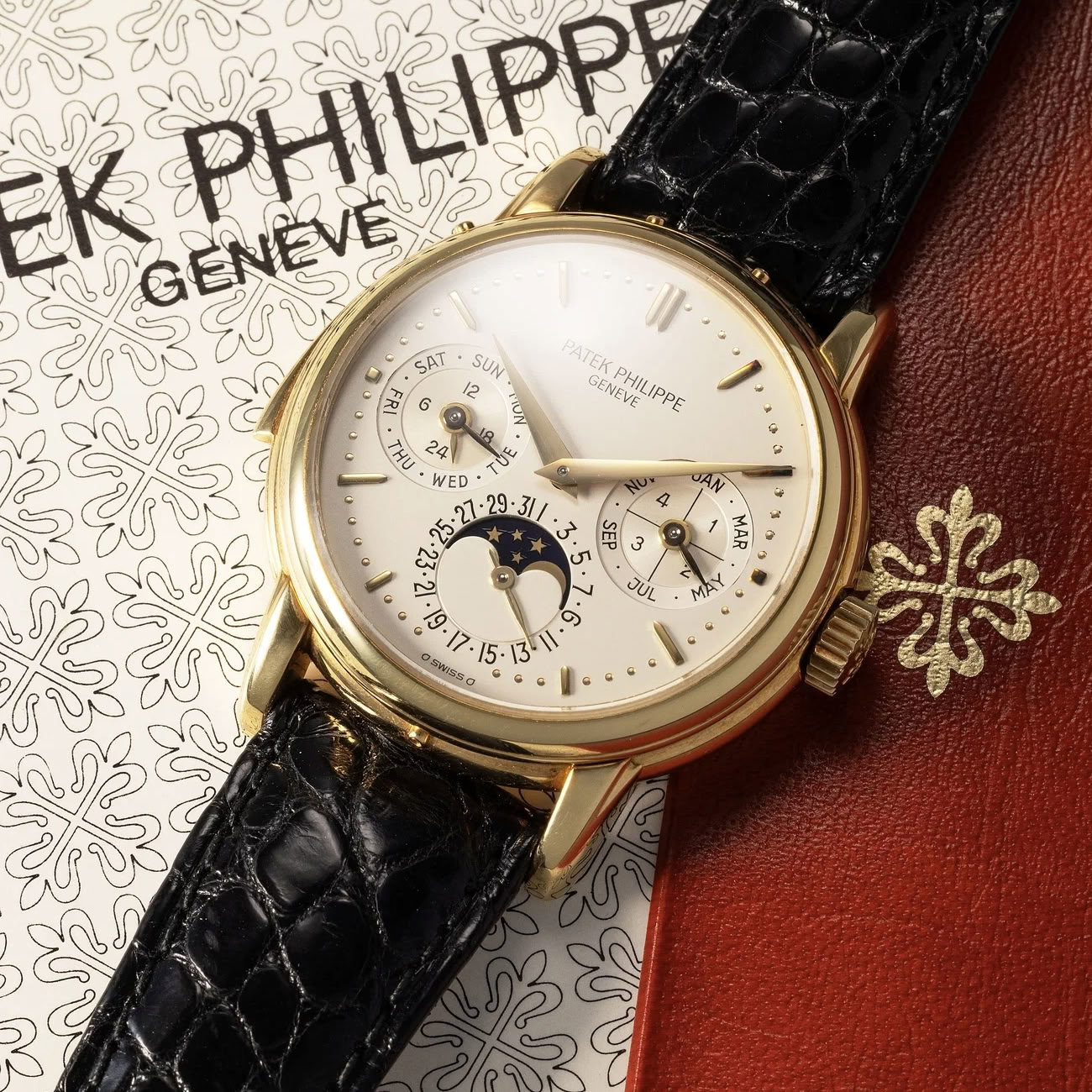
Introduced in 1989 to celebrate Patek Philippe’s 150th anniversary, the reference 3974 combined two prestigious complications, a perpetual calendar and minute repeater. Its ultra-thin automatic calibre R 27 Q incorporated a 22K gold micro-rotor, allowing both complications to be accommodated within an elegant 36.5mm case.
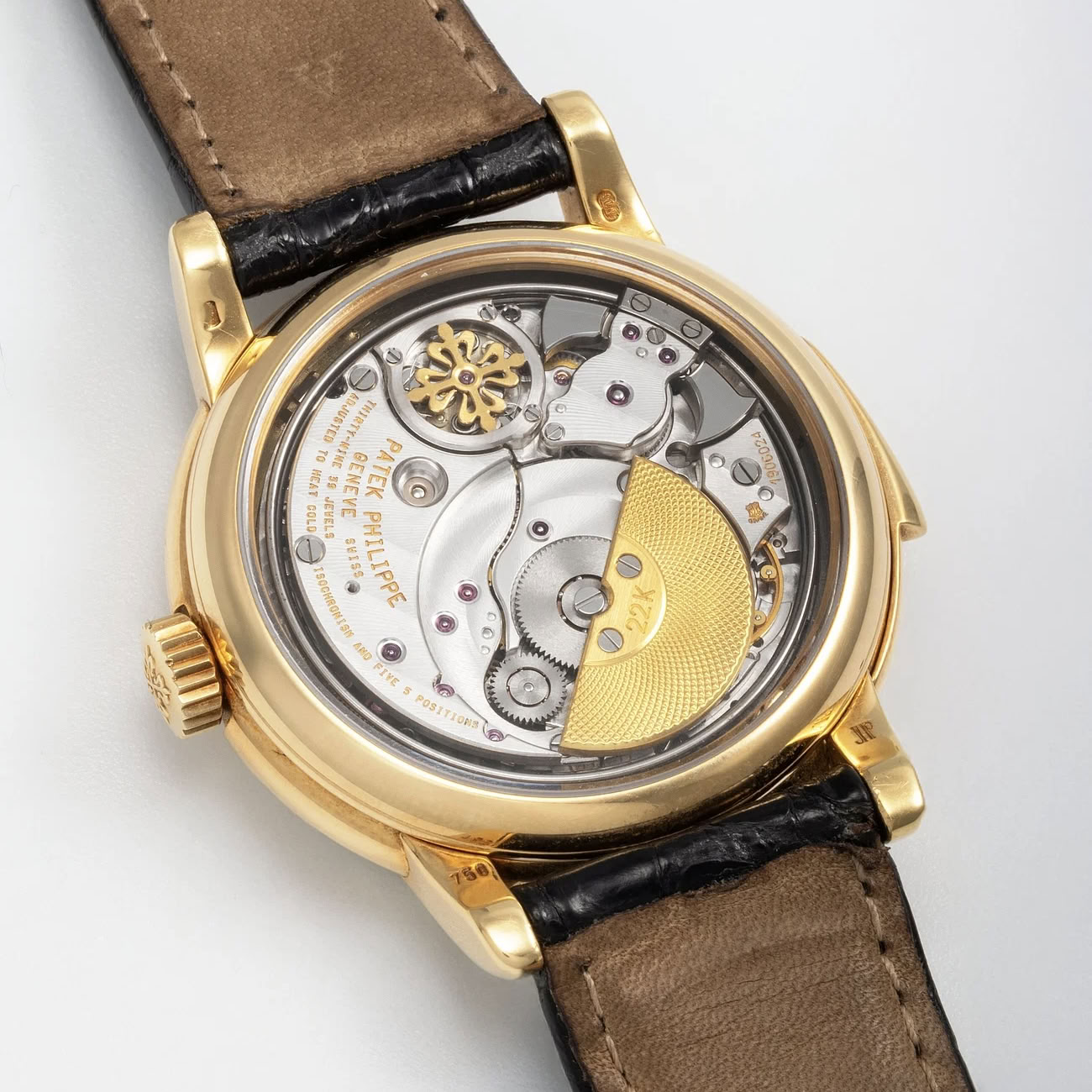
The present yellow-gold example dates to 1990, placing it among the earliest watches produced. Its particular significance lies in its case, manufactured by Jean-Pierre Hagmann and bearing the celebrated JPH hallmark. Hagmann’s work is highly regarded among collectors of complicated Patek Philippe watches, and his involvement distinguishes the earliest examples from later production undertaken by Ateliers Réunis.
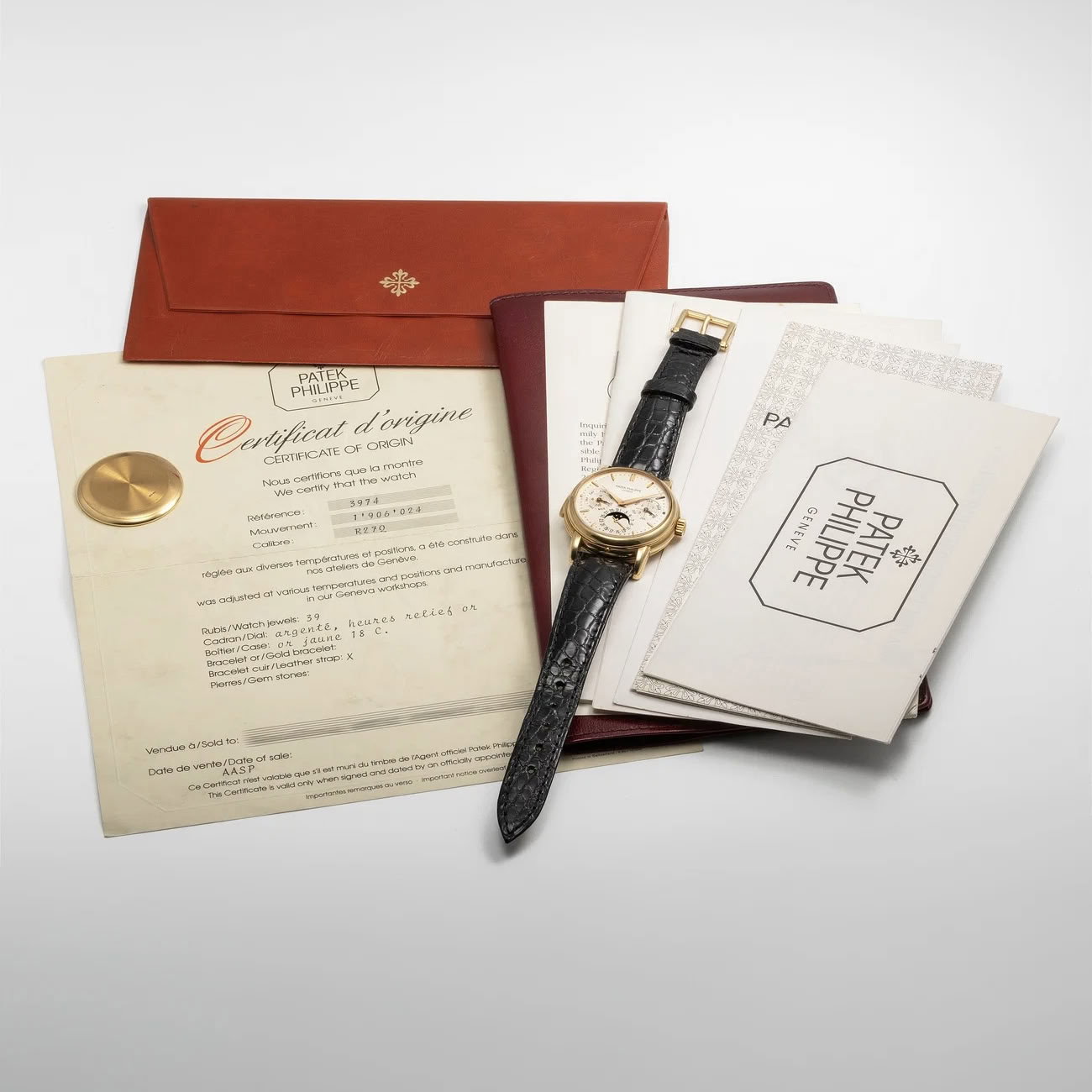
With approximately 115 yellow-gold examples believed to have been produced, this early Hagmann-cased watch, accompanied by its original Certificate of Origin and additional case back, represents an important example of one of Patek Philippe’s most technically accomplished wristwatches.
The Final Padellone
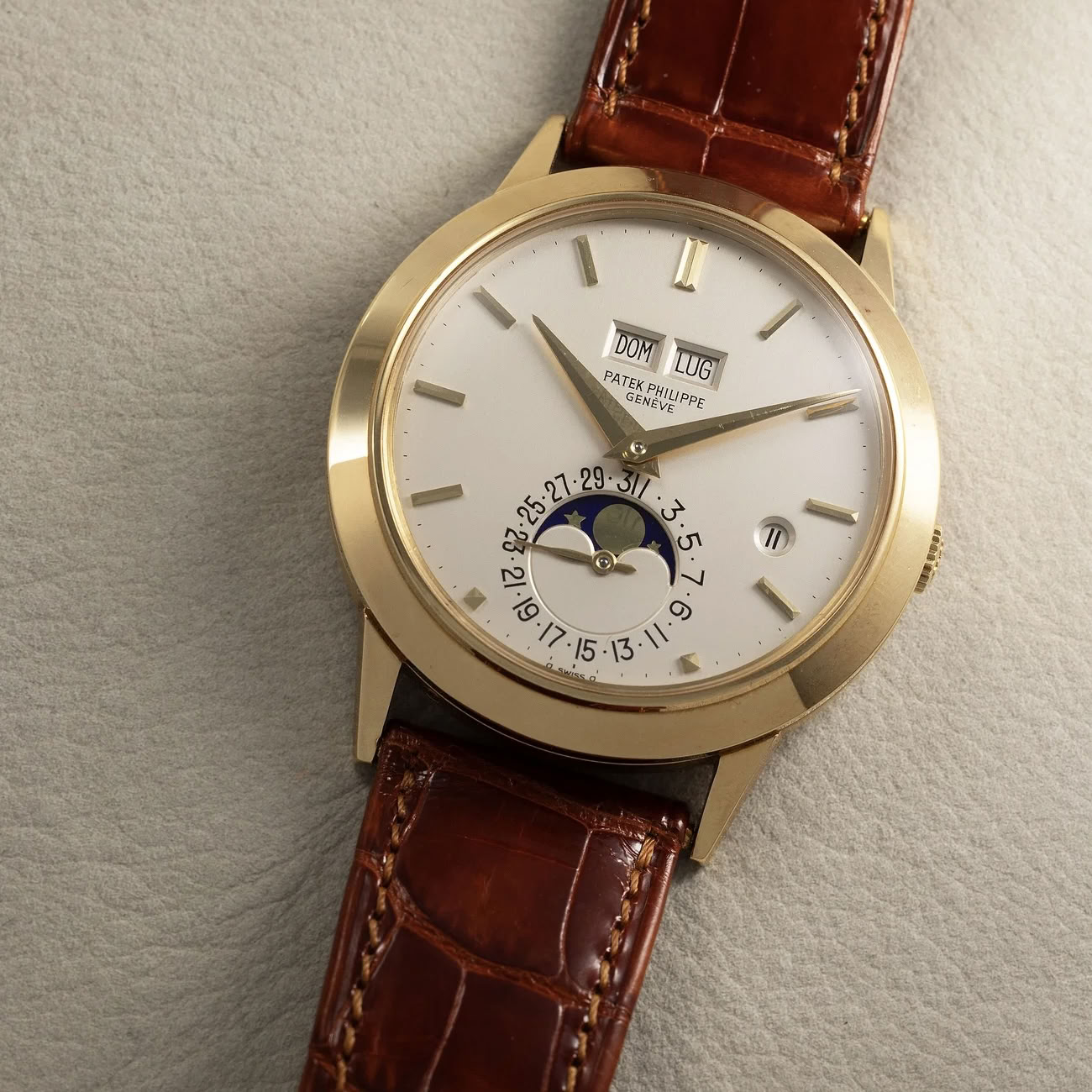
Introduced in 1981 as the successor to the reference 3448, the reference 3450 retained the imposing architectural case that earned the family its Padellone nickname while introducing an important technical innovation.
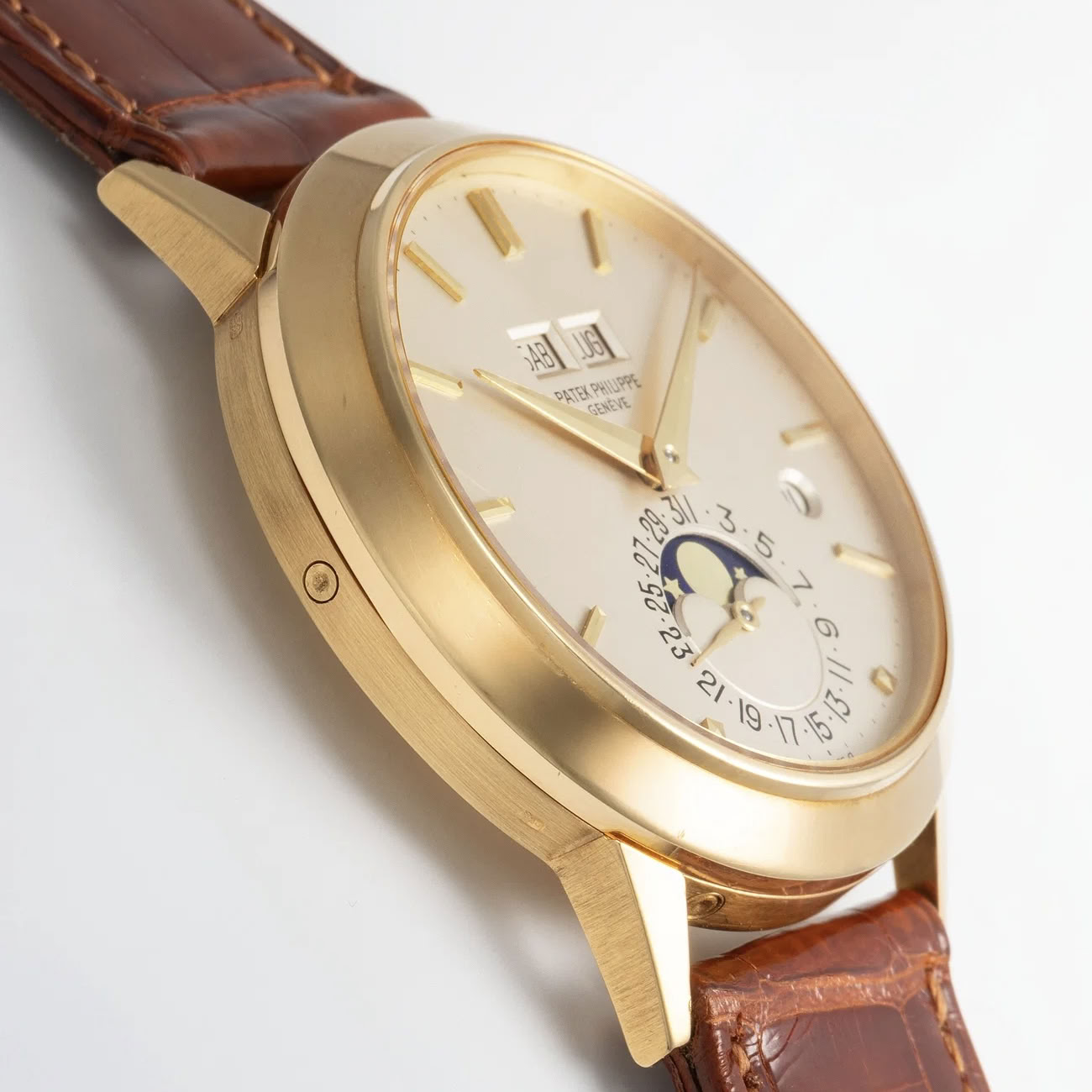
Its automatic calibre 27-460 QB incorporated a leap-year indicator, displayed through a small aperture between three and four o’clock. The present yellow-gold example dates to 1985, the final year of production. Its dial features the later Roman-numeral leap-year indication, while the substantial 37.5mm case retains the broad bezel and sculpted lugs that distinguish the reference.
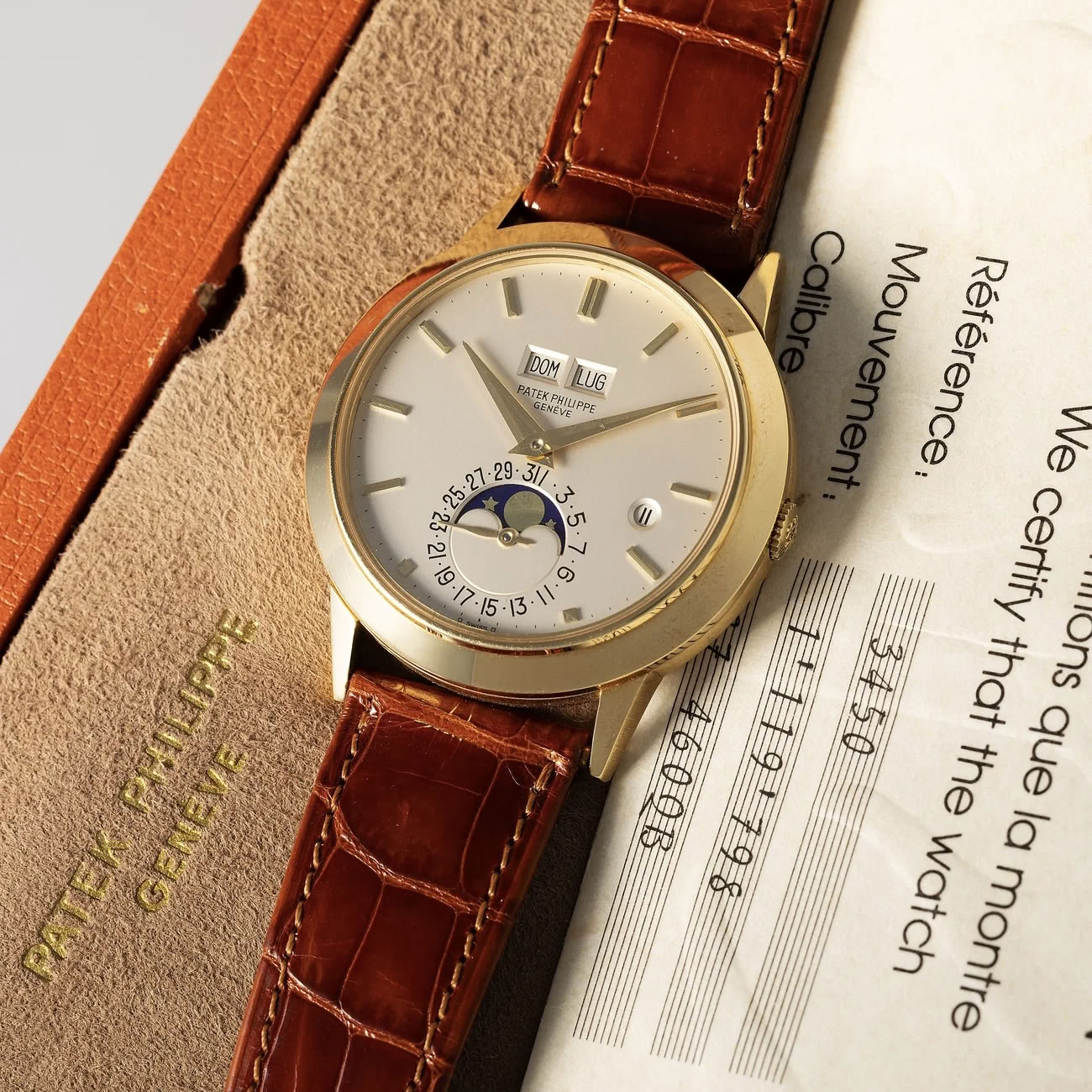
Approximately 237 examples are believed to have been produced, making the 3450 one of Patek Philippe’s rarest automatic perpetual calendars. Accompanied by its original Certificate of Origin and presentation box, this exceptionally well-preserved watch represents one of the final expressions of the celebrated Padellone design.
2nd Series At Its Finest
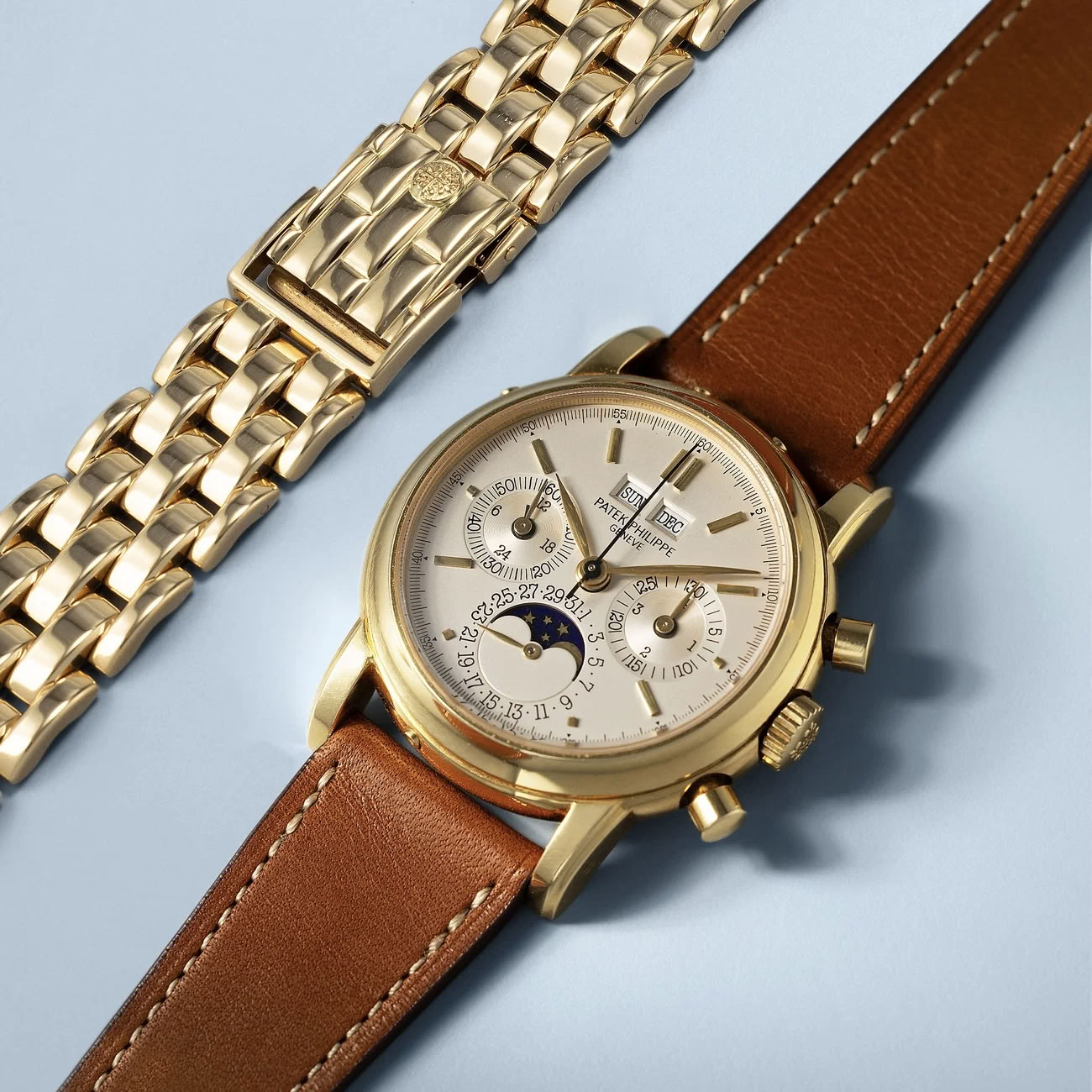
Introduced in 1986 as the successor to the reference 2499, the reference 3970 represented an important evolution in Patek Philippe’s perpetual calendar chronograph tradition. Its compact 36mm case housed the manually wound calibre CH 27-70 Q, based on the celebrated Lemania 2310 architecture and extensively modified by Patek Philippe.
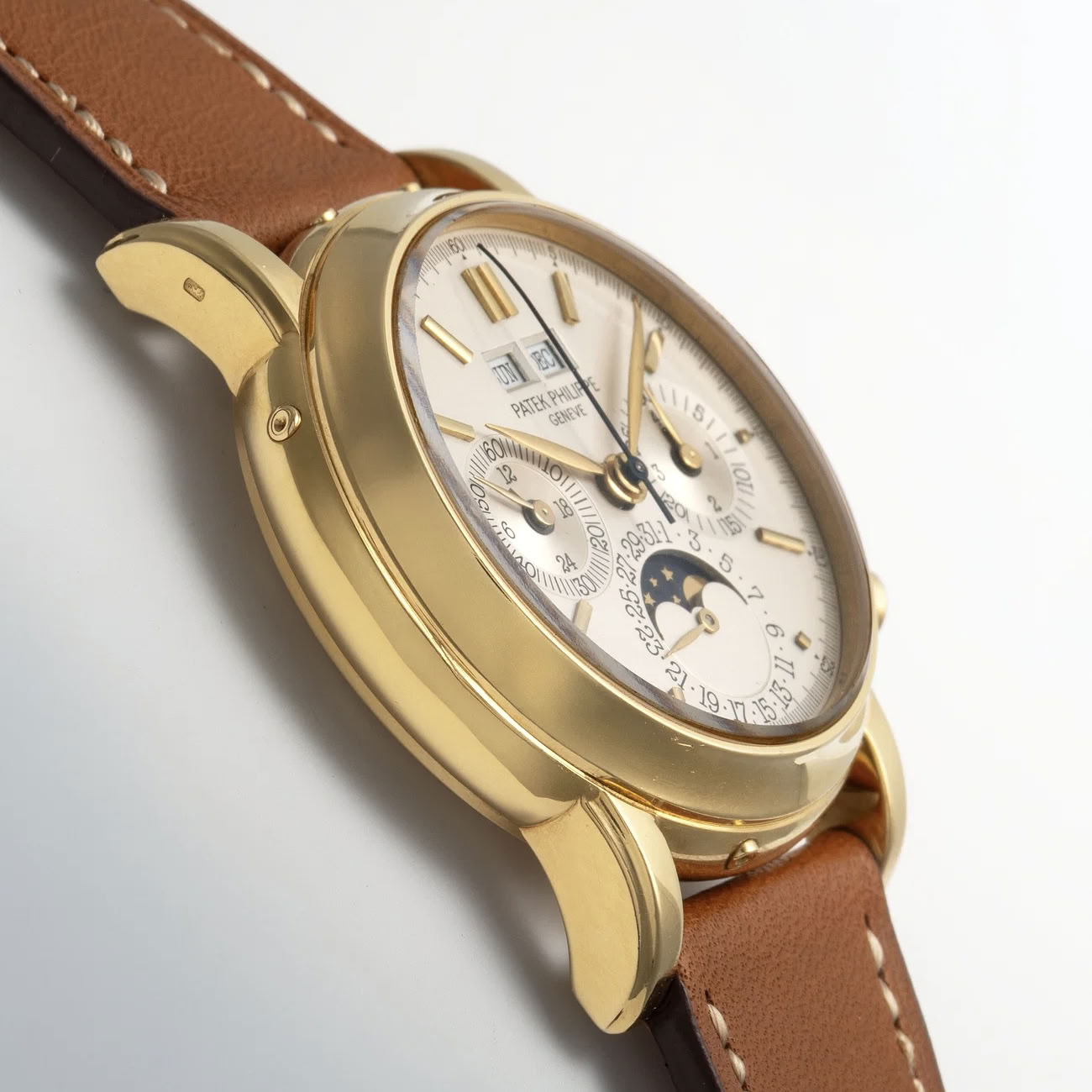
The present yellow-gold example dates to 1990 and belongs to the second series, designated 3970E, with the letter referring to its étanche, or water-resistant, screw-down case back. Approximately 650 second-series examples are believed to have been produced across all metals, making this one of the rarest generations.
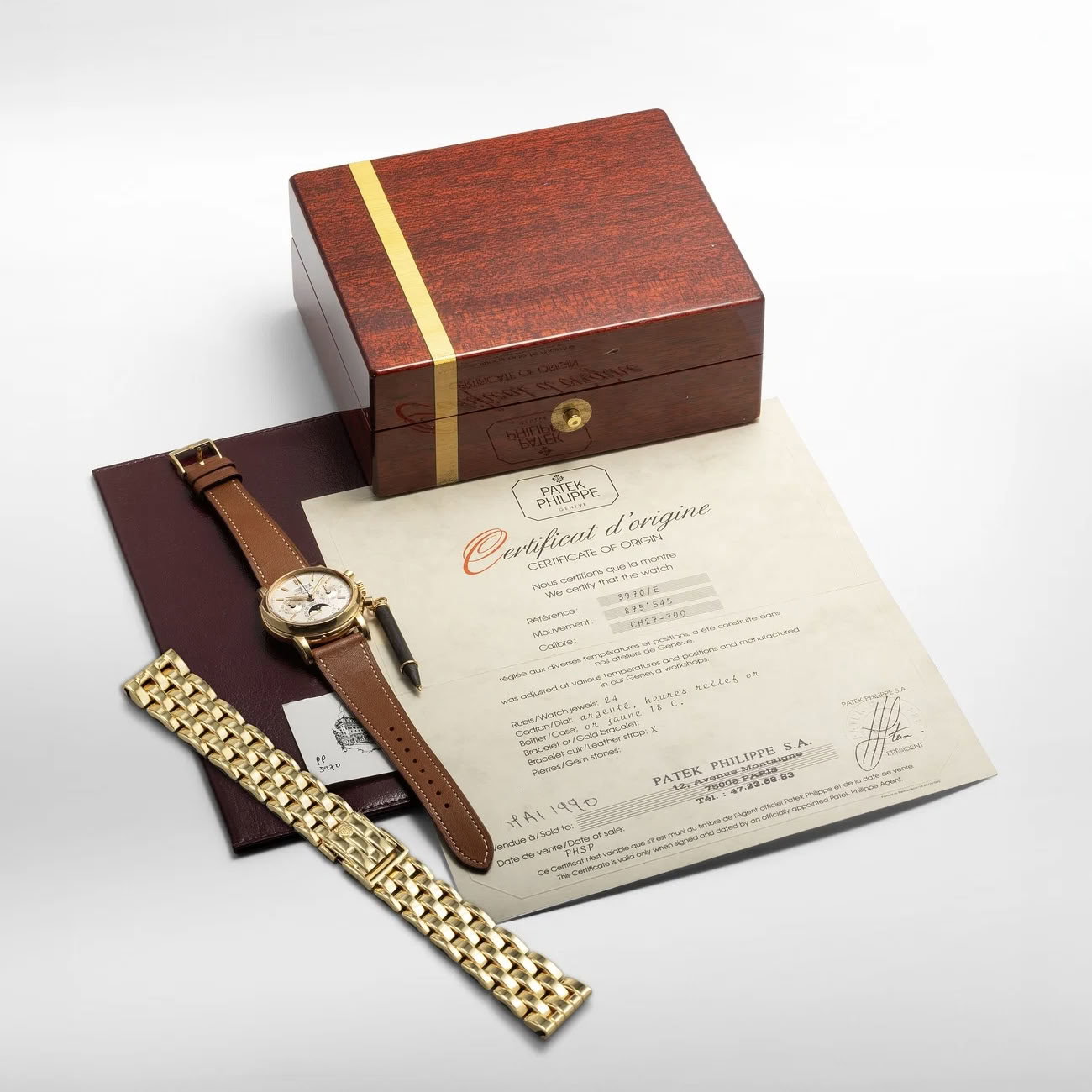
Preserved in excellent condition, the watch retains its solid case back and original Certificate of Origin. An additional point of interest is its genuine Patek Philippe yellow-gold bracelet, added after the original sale, which gives this important perpetual calendar chronograph a distinctive presence.
Highly Sophisticated
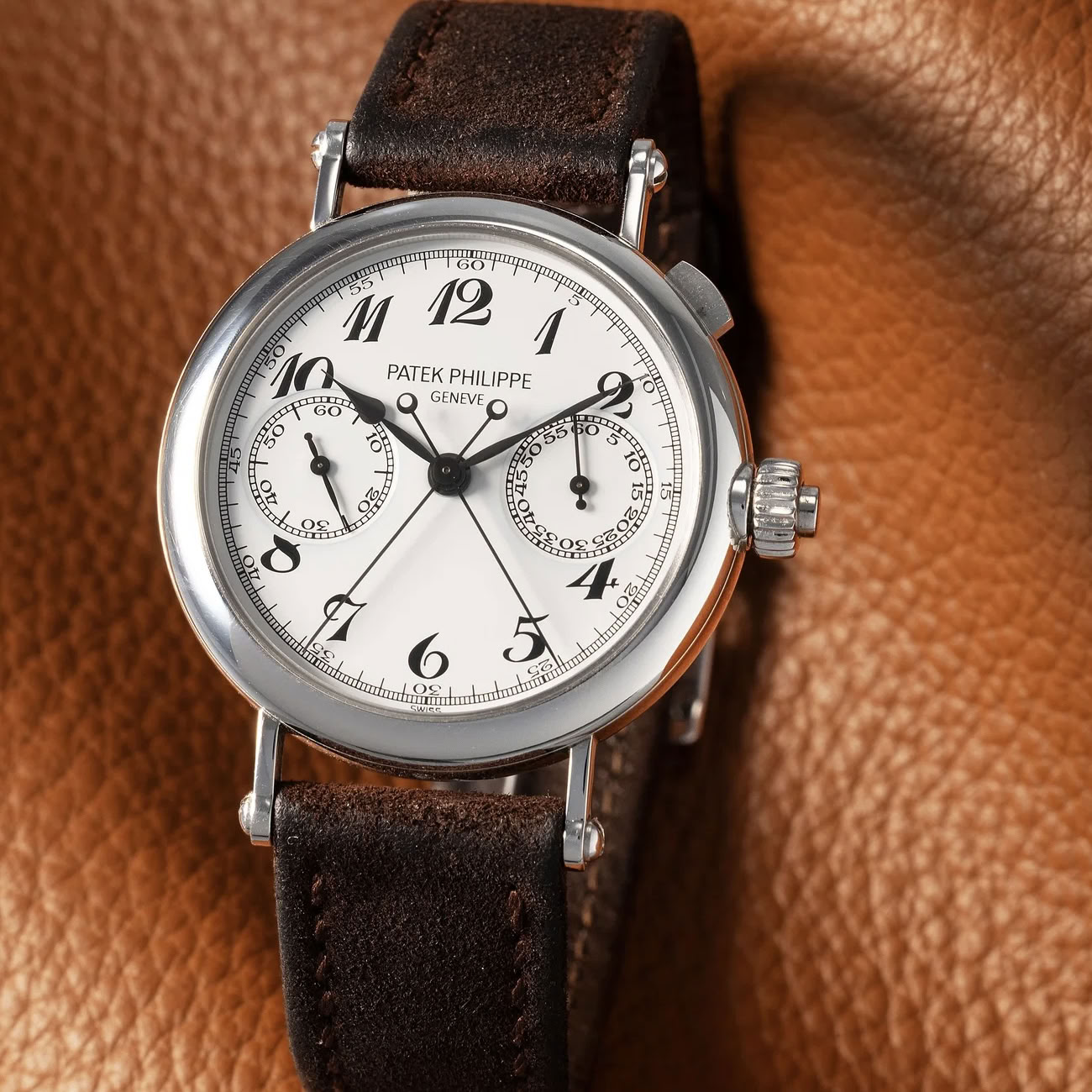
Introduced in 2005, the reference 5959 marked a major technical achievement in that it was Patek Philippe’s first entirely in-house split-seconds chronograph wristwatch movement. The manually wound calibre CHR 27-525 PS measured just 5.25mm thick, making it the world's thinnest rattrapante movement at its introduction.
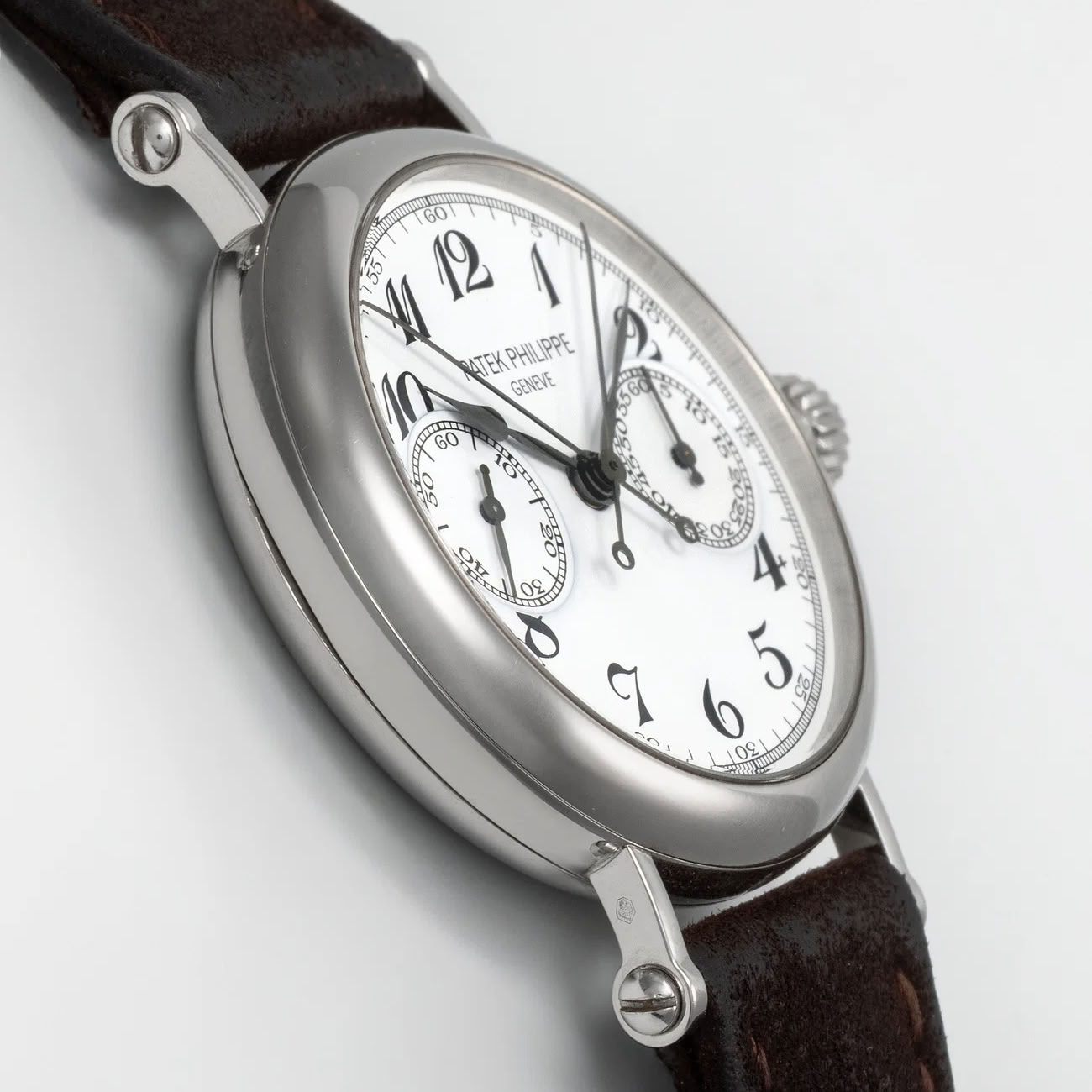
Rather than housing this exceptional movement within an imposing modern case, Patek Philippe chose an elegant 33mm platinum officer-style design inspired by its historic split-seconds wristwatches. This example, dating to 2007, is particularly desirable for its white lacquered dial with black painted Breguet numerals, a configuration believed to have been produced in approximately 50 examples.
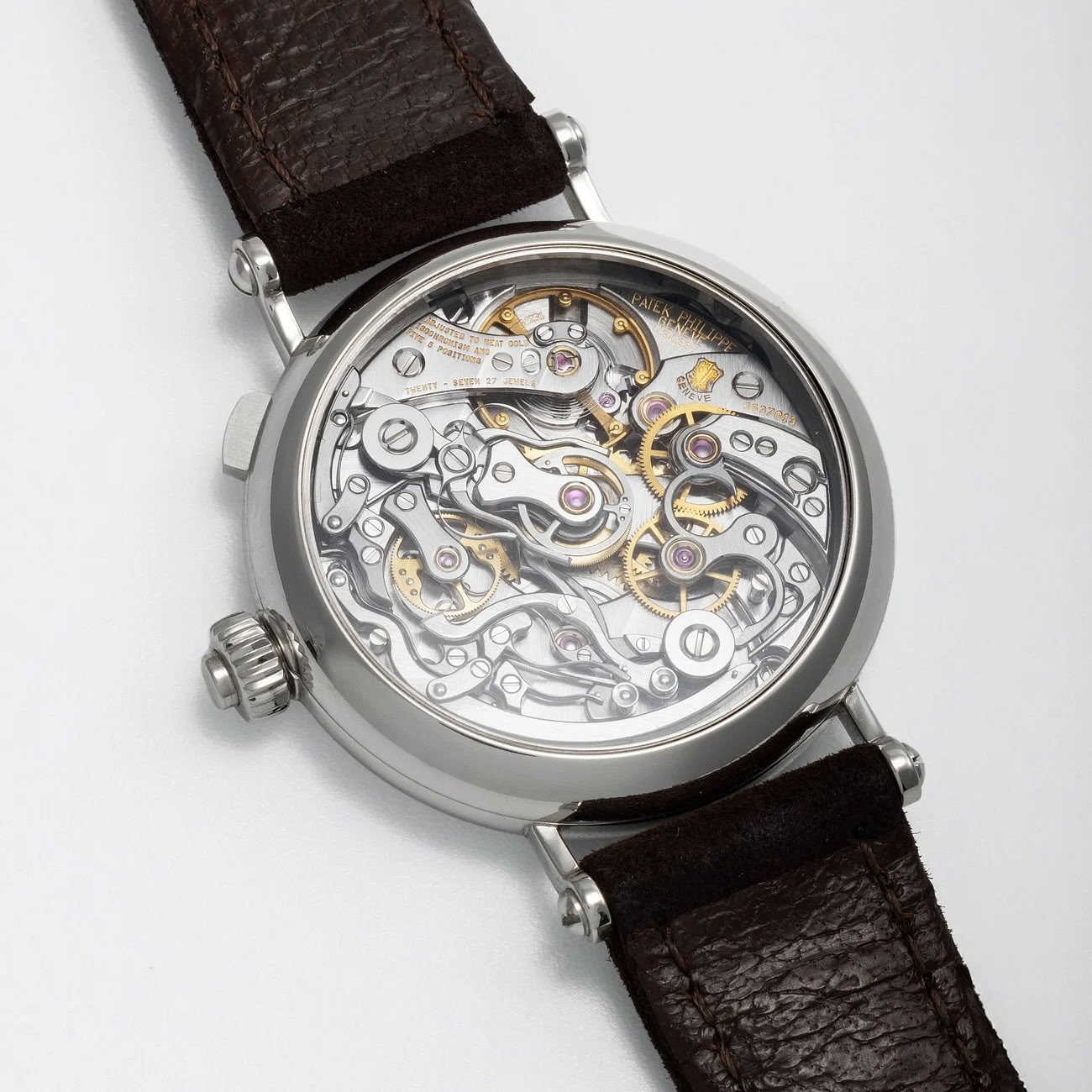
Its restrained appearance provides a fascinating contrast to the exceptional complexity beneath the dial, making this one of the most compelling modern expressions of Patek Philippe’s chronograph expertise.
3700 Top-Tier
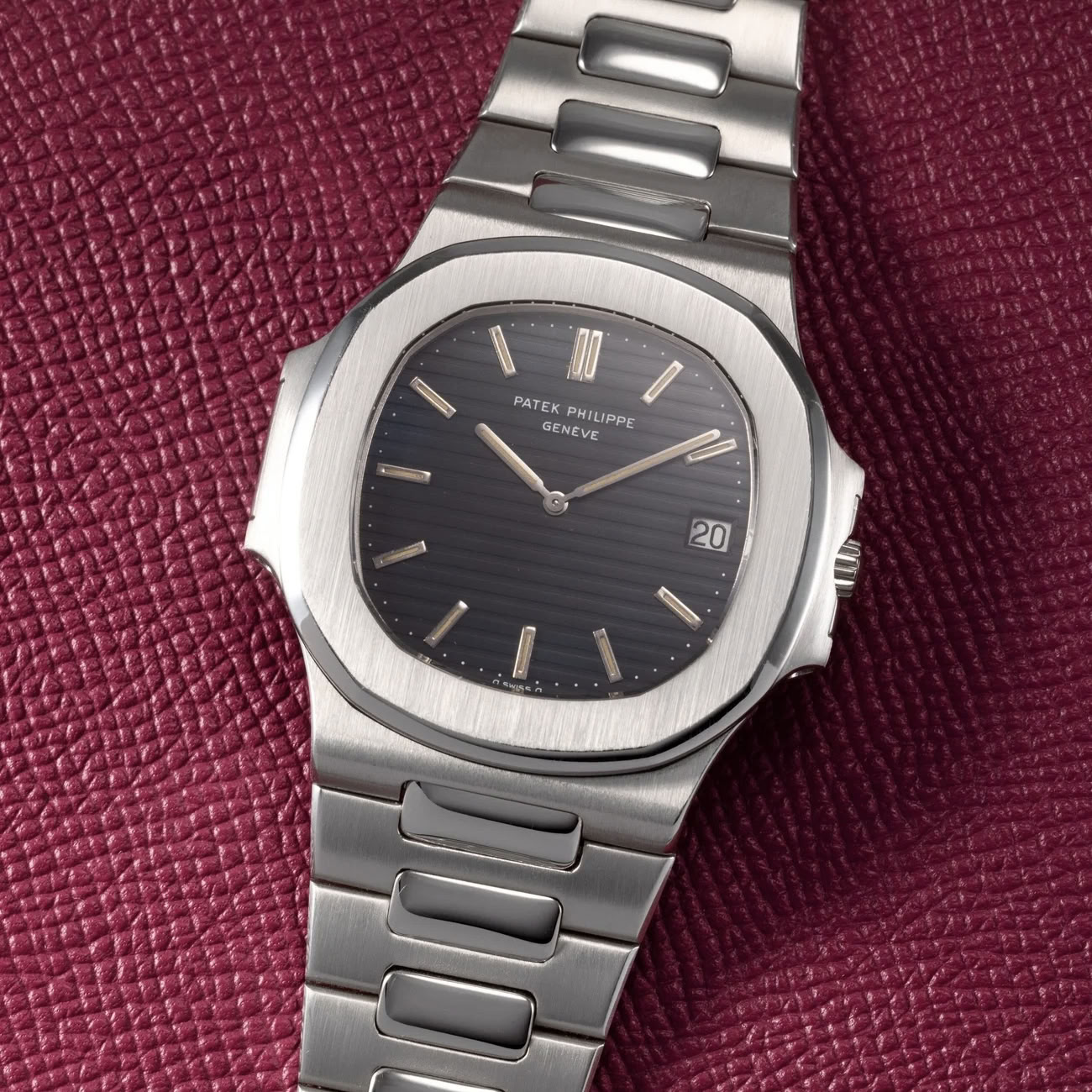
While the reference 3700 established its reputation through the unconventional combination of stainless steel and luxury watchmaking, Patek Philippe also explored considerably rarer configurations.
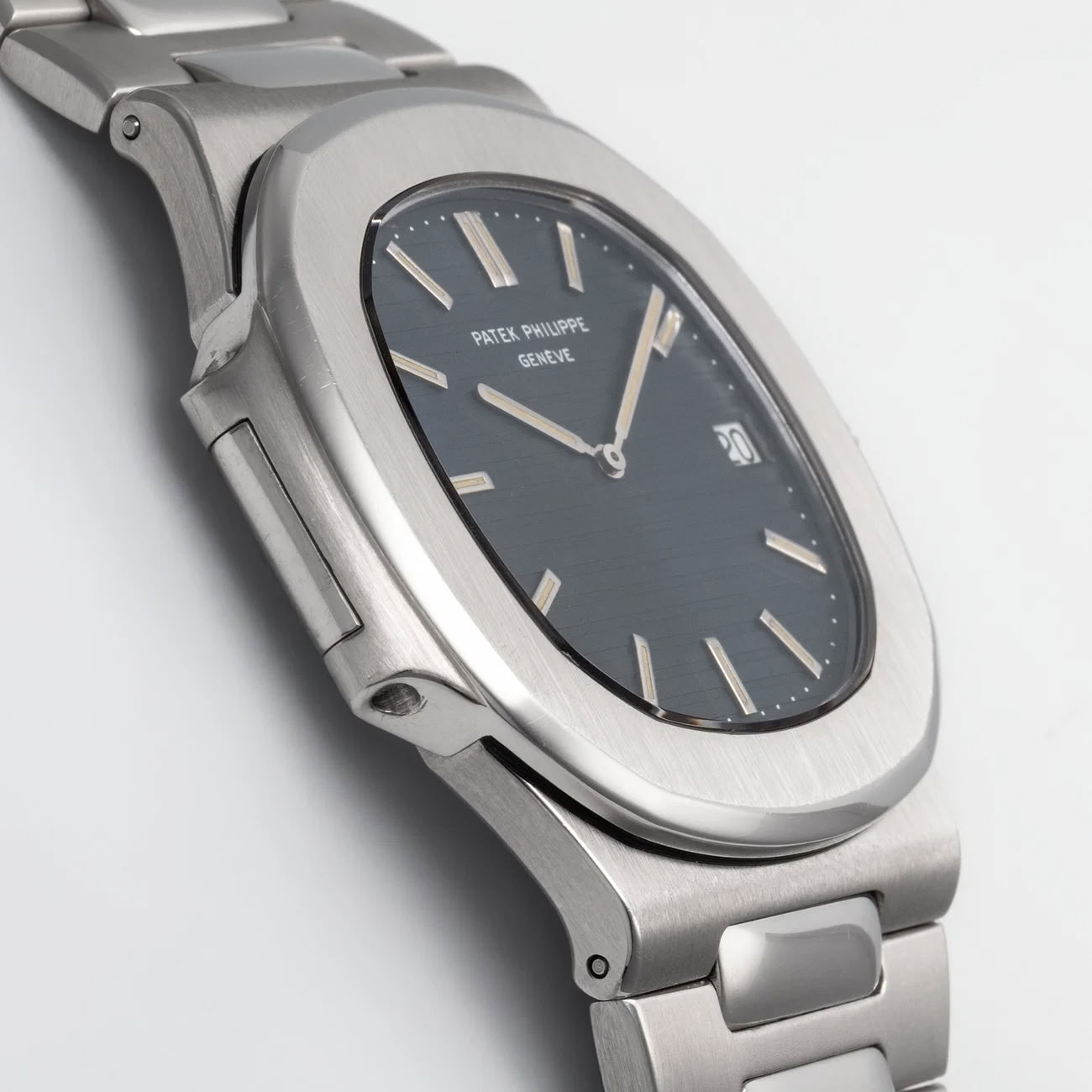
The offered reference 3700/1, produced in 1978, is crafted entirely in 18K white gold, including its integrated bracelet. Fewer than fifteen white-gold examples are known to have appeared publicly, making this one of the most elusive configurations of the original Nautilus.
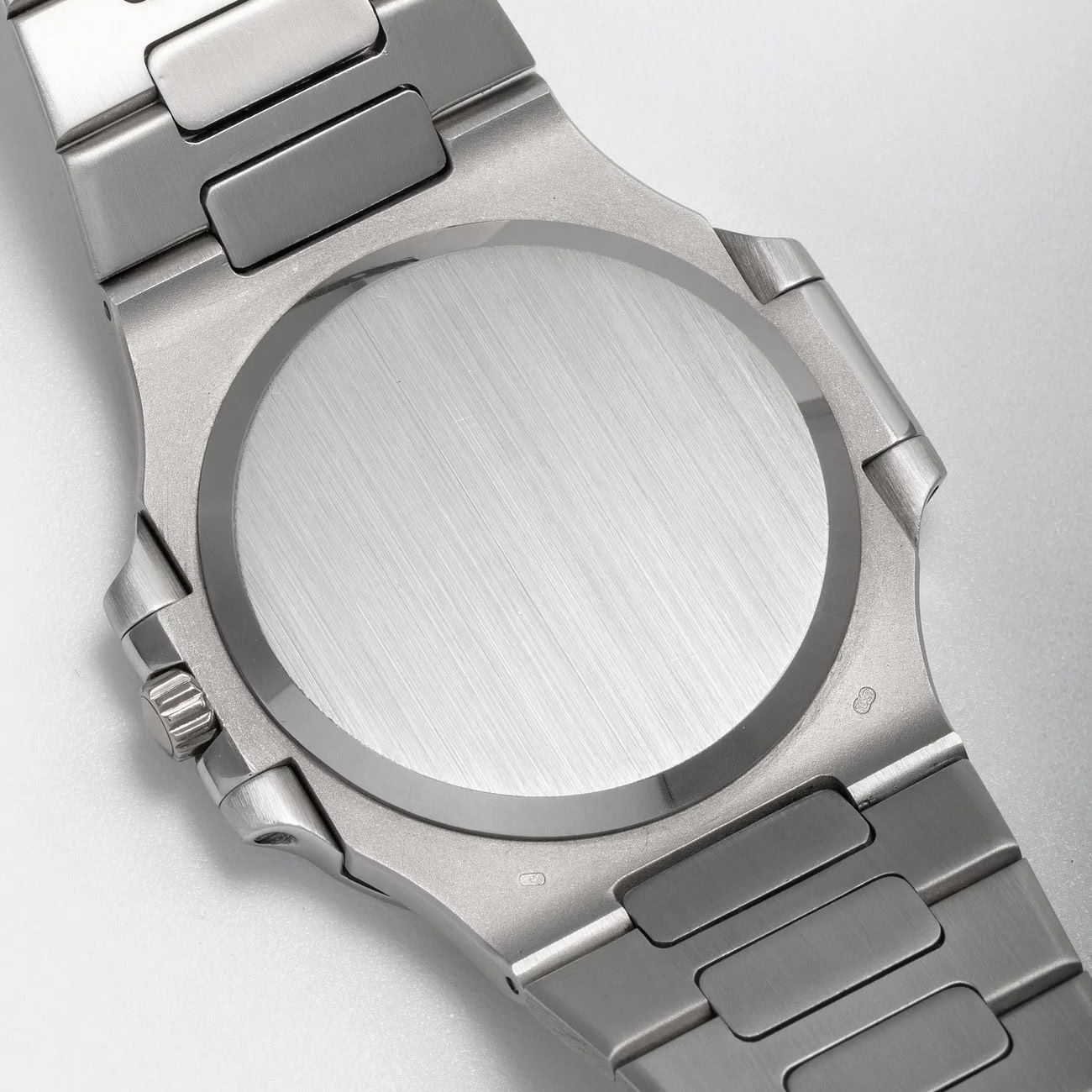
Importantly, the watch retains its original flat Gay Frères clasp, correctly executed for the early reference 3700. The integrated bracelet also remains notably tight and rigid, an important consideration when assessing the preservation of these early constructions. Accompanied by an Extract from the Archives confirming its production in 1978, this is an exceptionally rare expression of Gérald Genta’s original design.
The Matterhorn
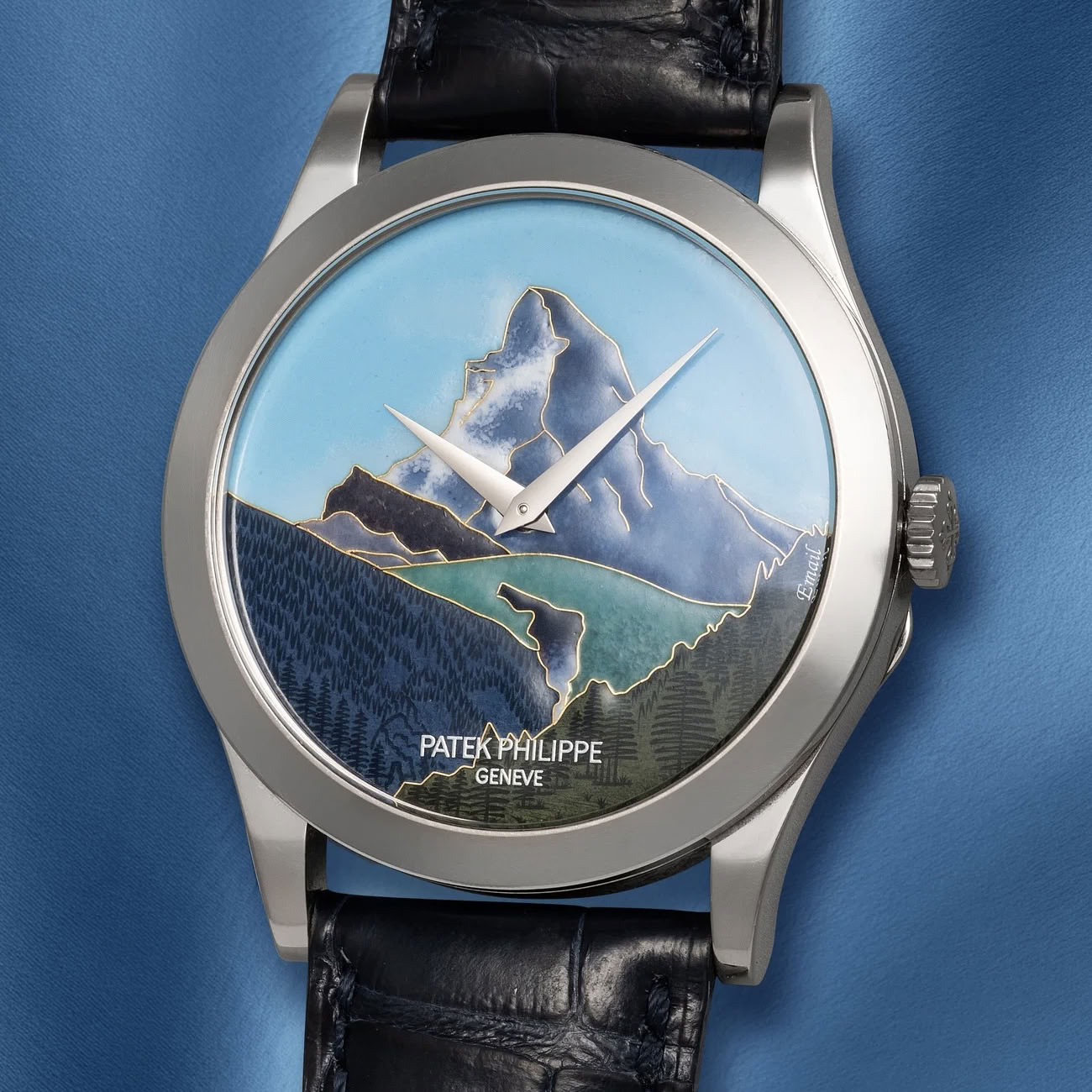
Patek Philippe’s Rare Handcrafts collection demonstrates that exceptional watchmaking is not confined to mechanical complications. The present reference 5089G-030, dating to 2015, features a remarkable Grand Feu cloisonné enamel dial depicting the Matterhorn, known in Italian as Monte Cervino. One of only 10 watches estimated to have been made.
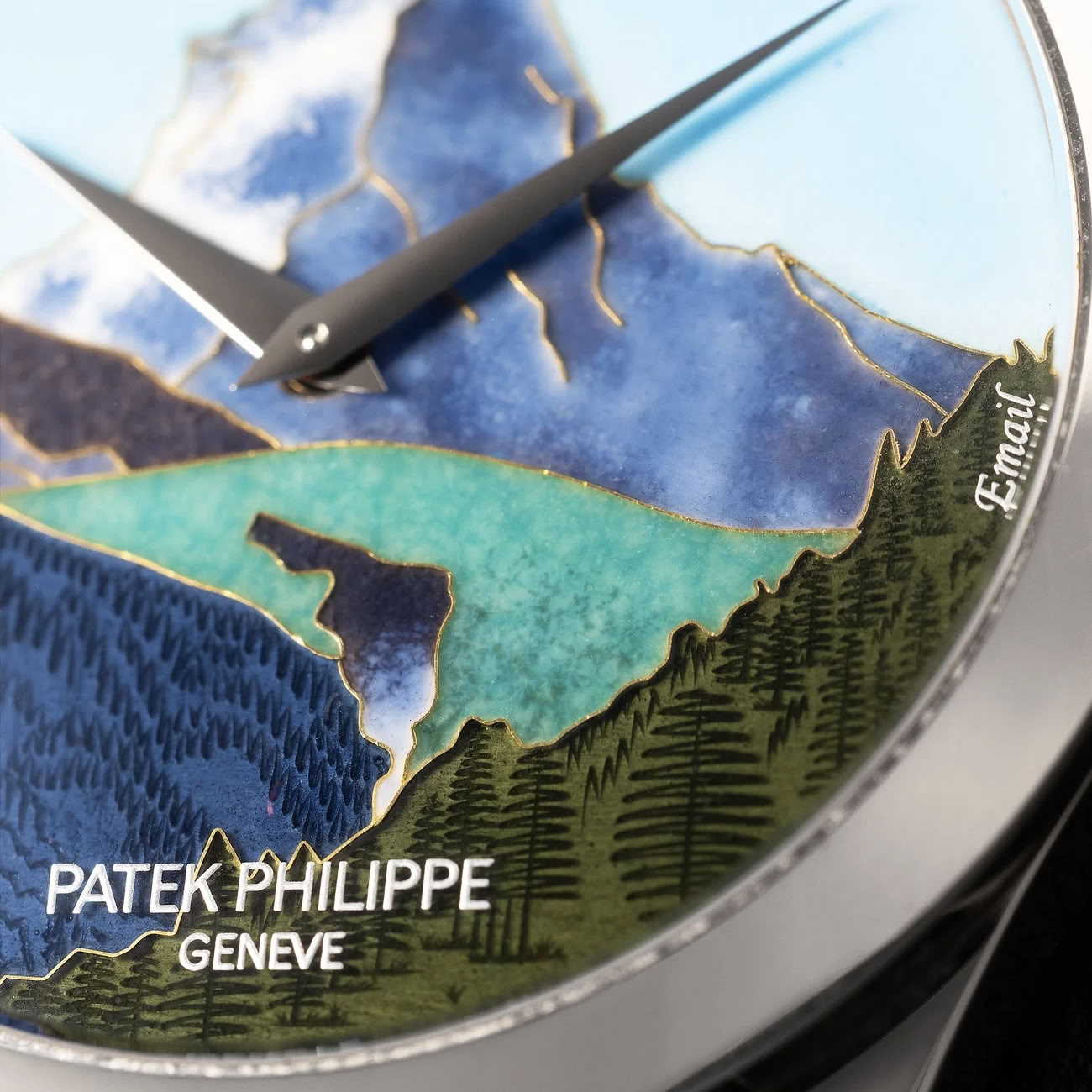
The mountain landscape is created through an intricate process in which fine gold wires define the contours of the image. Coloured enamels are applied within these boundaries and repeatedly fired to achieve the required depth and tonal variation.
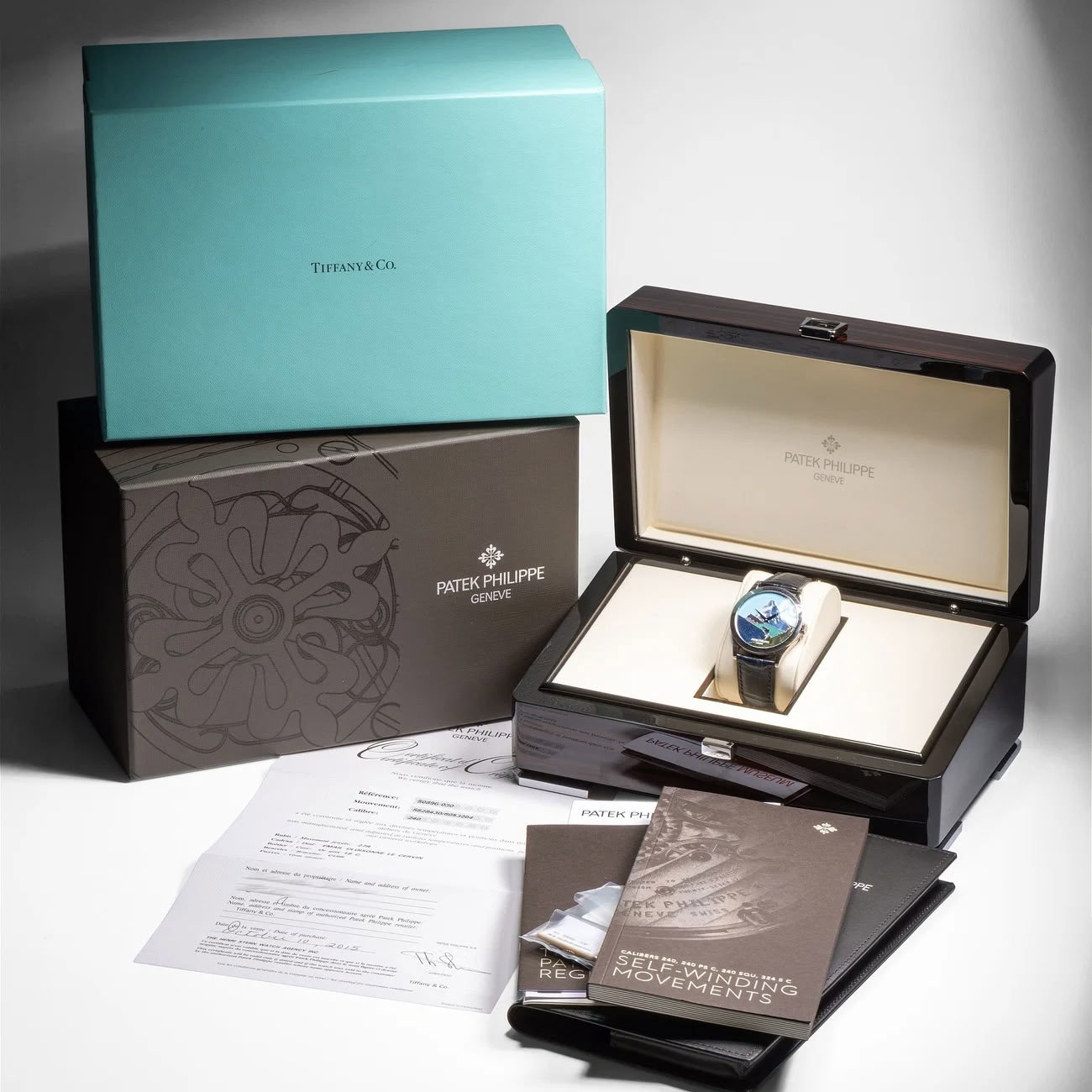
Housed in an elegant white-gold Calatrava case and powered by the ultra-thin automatic calibre 240, the watch combines traditional decorative craftsmanship with refined mechanical watchmaking. Its Certificate of Origin, dated October 2015, is stamped by Tiffany & Co., adding important retail provenance to an already exceptionally rare creation.
Unmolested Life
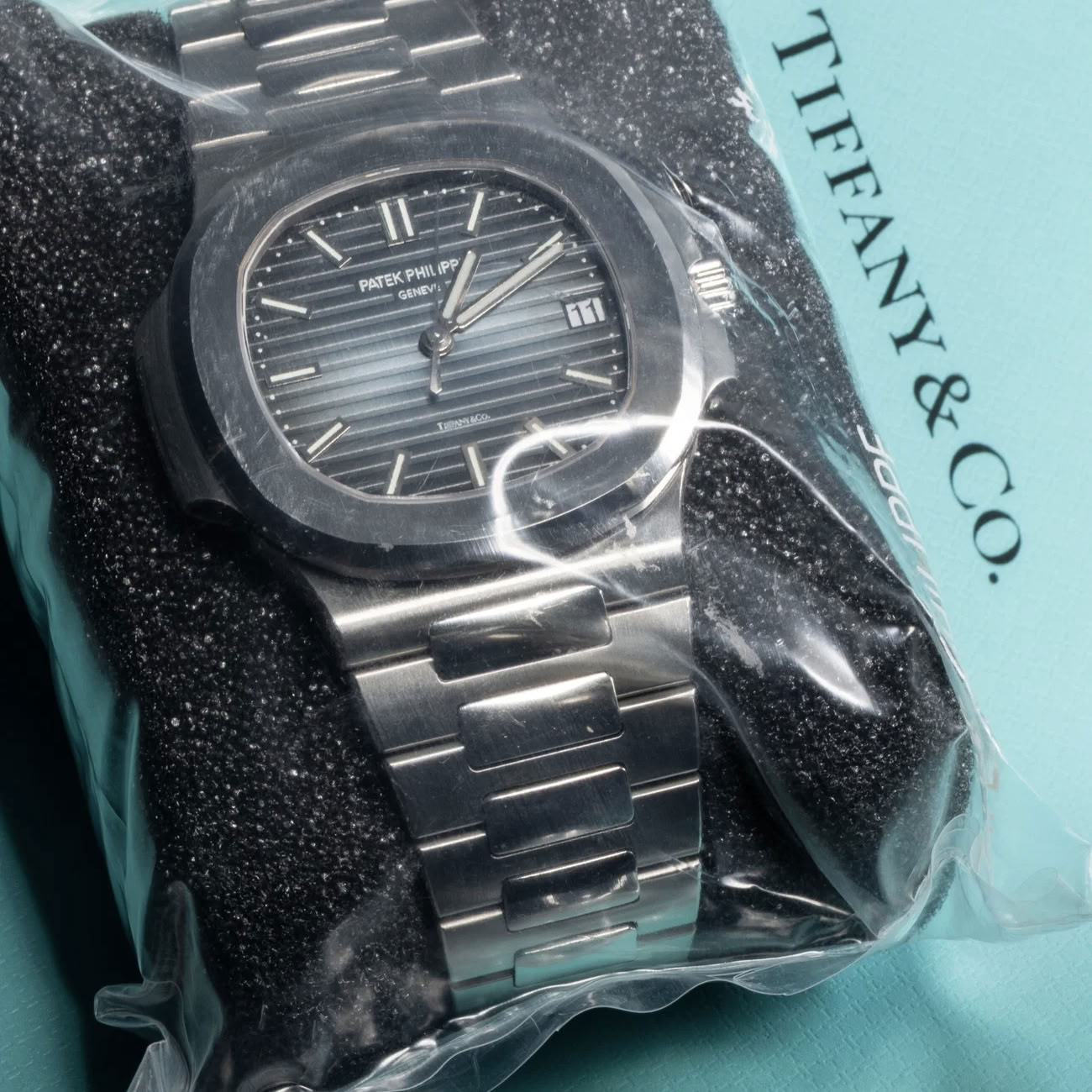
Introduced in 2006 to celebrate the Nautilus’s thirtieth anniversary, the reference 5711 retained Gérald Genta’s distinctive design while introducing a revised case, central seconds and updated movement.
On offer in the sale is a stainless-steel reference 5711/1A-010 that dates to 2018 and is distinguished by its Tiffany & Co. double-signed dial. The relationship between Patek Philippe and Tiffany stretches back to the nineteenth century, making watches bearing both signatures particularly desirable among collectors.
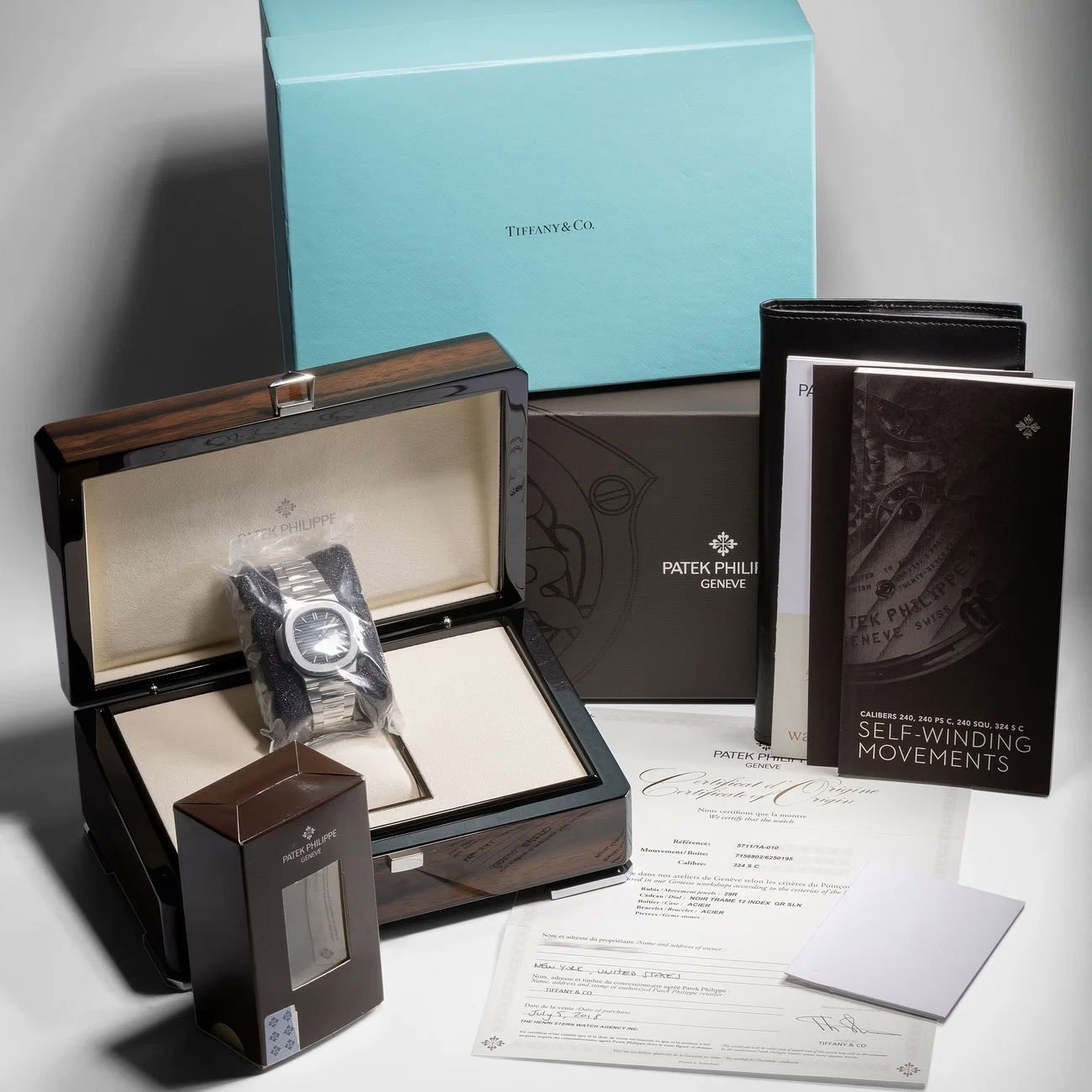
However, what elevates this example is its extraordinary preservation. The watch remains sealed in its original packaging and is described as being in new-old-stock condition, having never been opened or worn.
Accompanied by its Certificate of Origin, dated July 2018 and stamped by Tiffany & Co., together with its original presentation accessories, it represents a particularly compelling example of one of the most sought-after modern Nautilus configurations.
Specifics Are Important
These watches demonstrate why Patek Philippe collecting encompasses considerably more than celebrated reference numbers. Whether through a historically significant case, an exceptionally rare dial, important retail provenance or unusual construction, each possesses characteristics that distinguish it from the wider production of its reference. Together, they illustrate the extraordinary breadth of the manufacture’s achievements and the enduring importance of studying individual watches in detail.