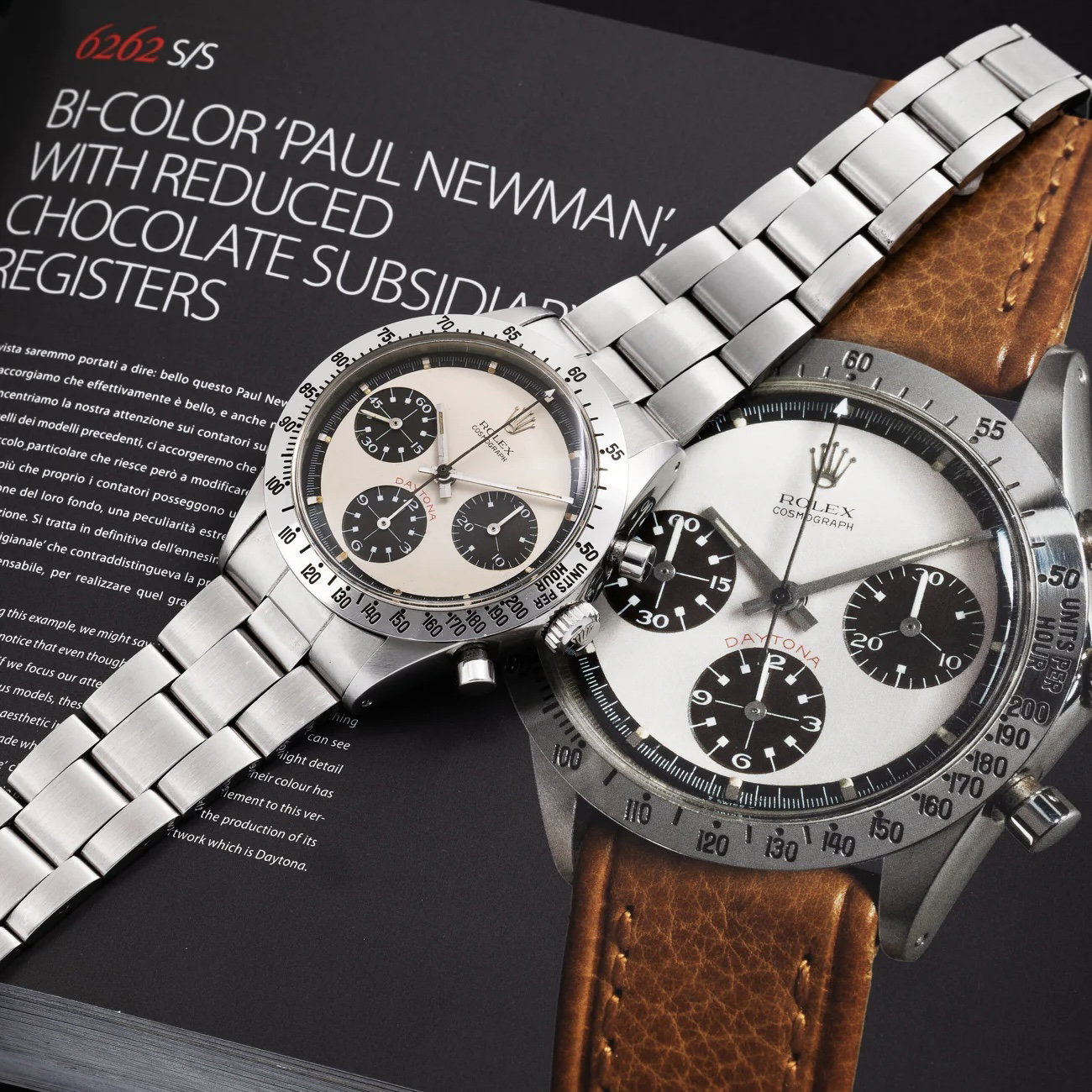
Rolex Highlights This April
Within the landscape of watch collecting, Rolex occupies a uniquely complex position. It is both the most recognisable name in horology and, at its highest level, one of the most nuanced. Beyond the familiar references lies a narrower field where production anomalies, special commissions, and historical context define true collectability. It is within this space that the most important Rolex watches exist.
This selection from our upcoming sale this April in Monaco, reflects that upper tier. From highly complicated mid-century references to specially commissioned Daytonas and possibly unique configurations, it offers a focused view into the moments where Rolex stepped beyond standard production and into something more nuanced.
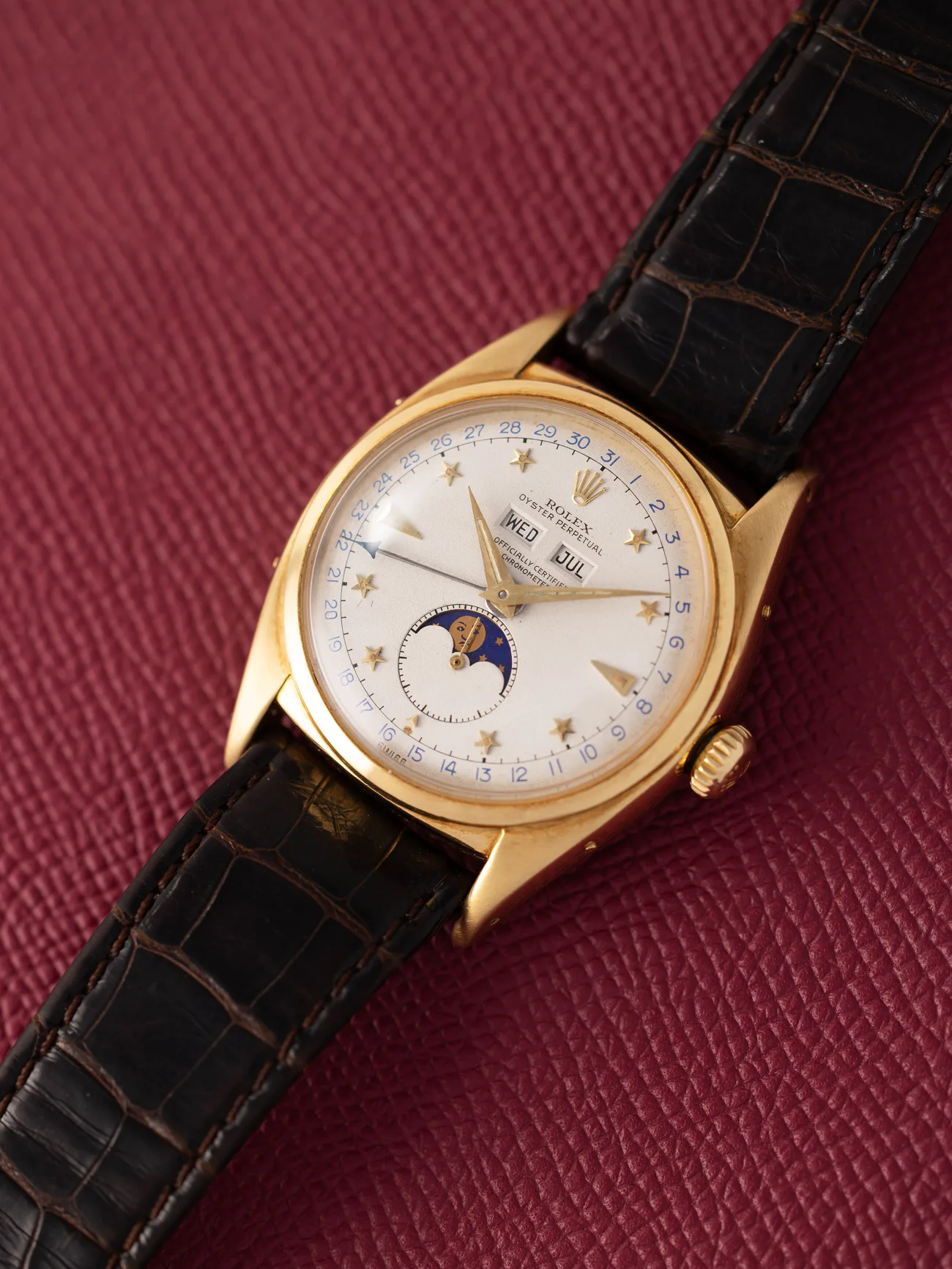
Reference 6062 “Stelline”, yellow gold, 1953 (Lot 25)
Few Rolex references demonstrate technical ambition in quite the same way as the 6062. Produced for only a short period between 1950 and 1953, it remains one of just two Rolex references to combine a triple calendar and moon phase, and the only one housed in a waterproof Oyster case, a level of complexity Rolex would never revisit.
Within that already limited production, dial variation becomes key. The present example features the highly coveted “Stelline” dial, with applied star hour markers produced in small numbers and now considered among the most desirable configurations. The combination of short production, unrepeated complication, and rare dial places this watch firmly among the most important vintage Rolex watches to be offered this season.
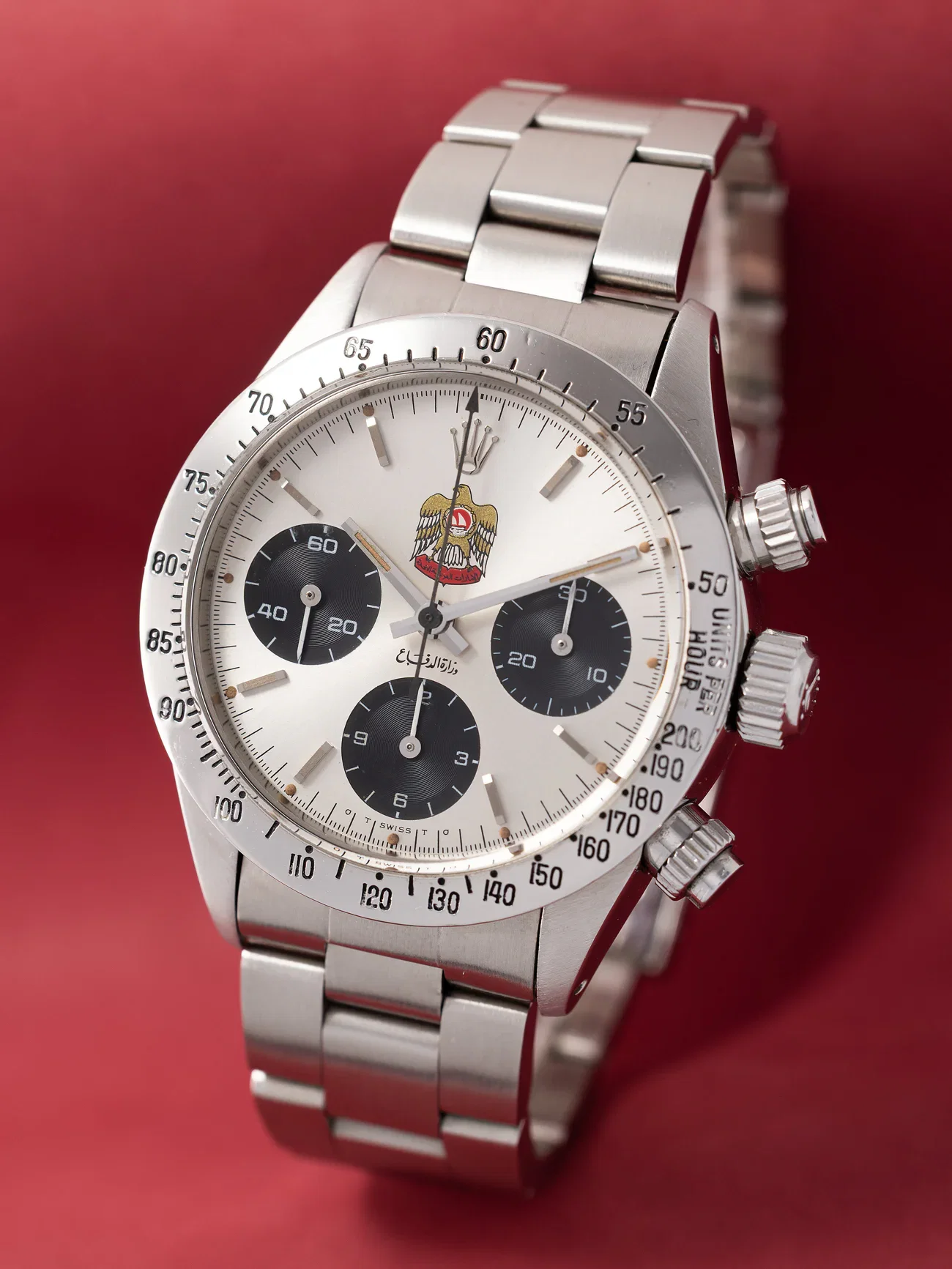
Daytona 6265 UAE “Quraysh Hawk”, steel, 1976 (Lot 52)
Commissioned watches sit outside the standard Rolex offerings. Produced in small numbers for specific governments or institutions, they are a part of the brand’s of production that was never intended for the open market.
This reference 6265 was created for the United Arab Emirates and bears the Quraysh Hawk emblem, and more specifically, the signature associated with Ministry of Defense-issued pieces; an already narrow subset believed to have been delivered to military personnel. Its significance lies in this context of a standard reference transformed by a highly specific and limited distribution channel, further reinforced here by its incredible preserved state and complete collectors set of boxes, papers, service records and even a numbered hangtag.
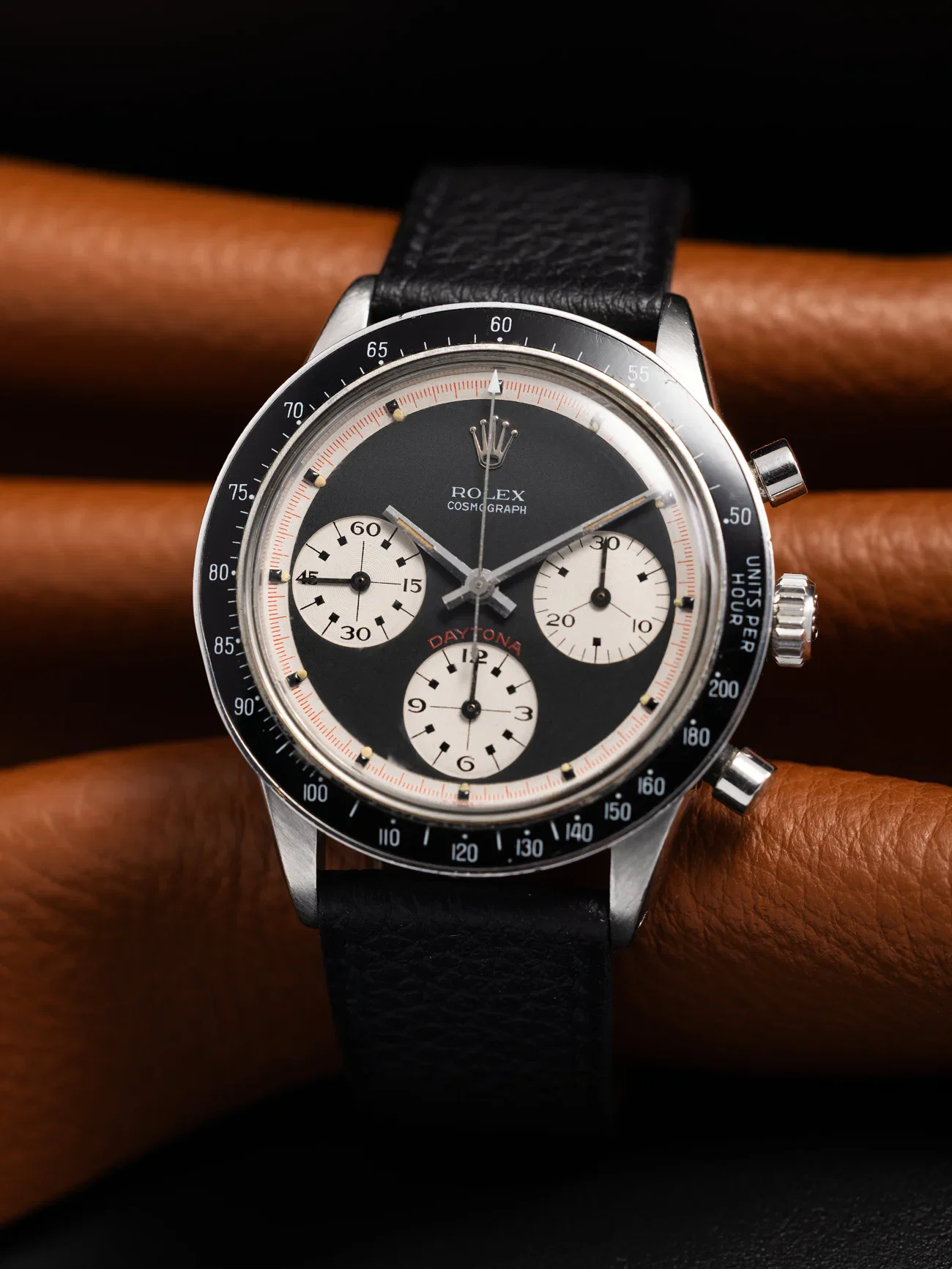
Daytona 6241 “Paul Newman”, steel, 1969 (Lot 53)
The 6241 marks a key moment in the evolution of the Daytona, introducing the black acrylic bezel and shifting the watch towards a more sporty aesthetic. At the time, however, the so-called “exotic” dial was a commercial failure. Produced in small quantities and discontinued early, it is precisely this lack of initial success that defines its rarity today.
The present example, with its classic black and white configuration and red Daytona signature, captures that early design language in its most recognisable and coveted form. It is a reference where historical context and design come together to define desirability, especially when considering the stunning condition of this lot!
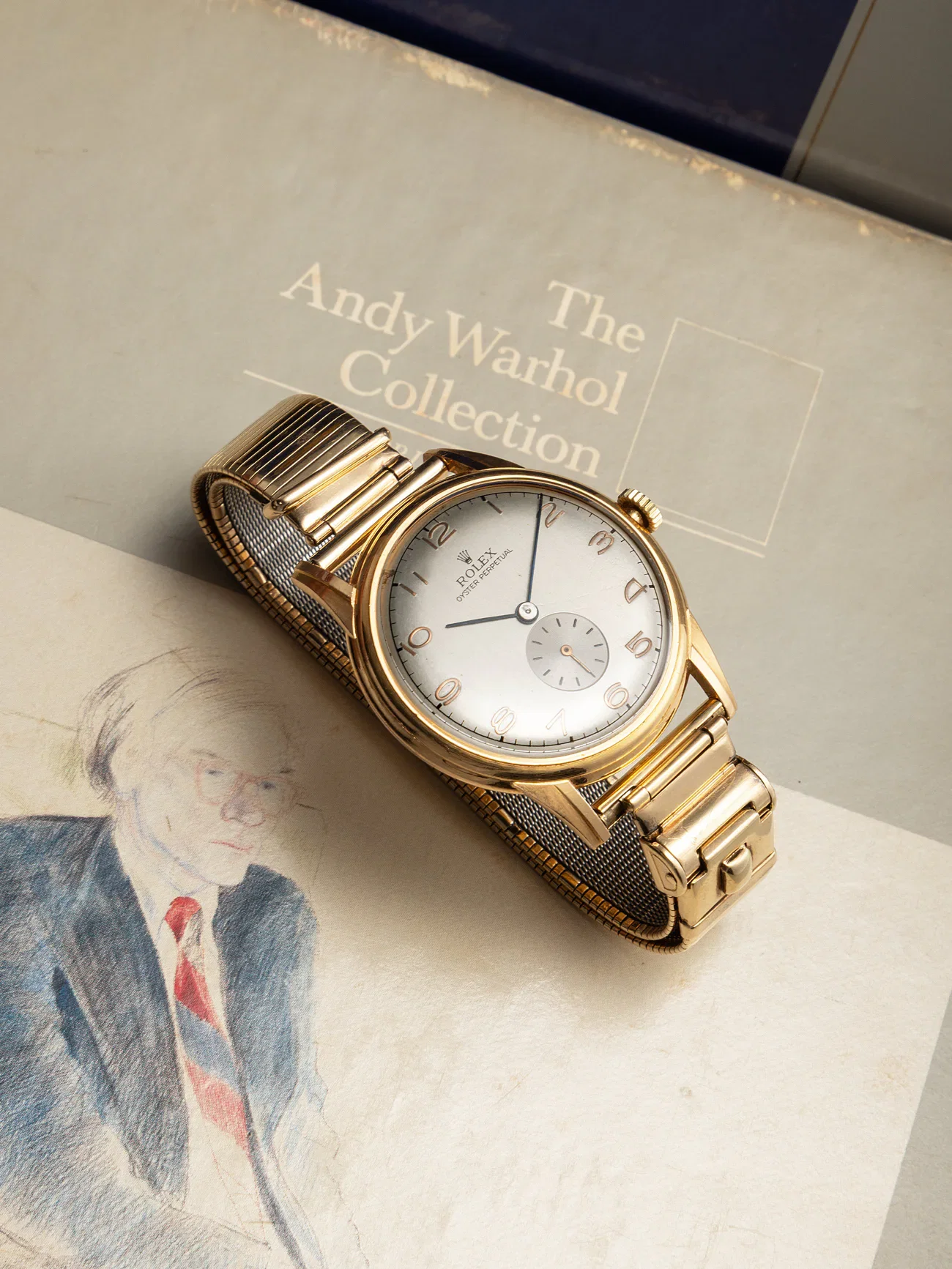
Oyster Perpetual 4021, Andy Warhol provenance, circa 1957 (Lot 72)
Not all important Rolex watches are immediately obvious. This reference 4021 becomes significant through its association with Andy Warhol. A straightforward mid-century Rolex by specification, it is transformed into a cultural artefact through provenance. This piece originally sold in the Sotheby's auction "The Andy Warhol Collection" in April 1988, proving its ownership by the American pop art icon.
In such cases, rarity is not measured in numbers produced, but in the story that it tells. The watch exists at the intersection of horology and 20th-century cultural history, appealing equally to collectors of both art and watches.
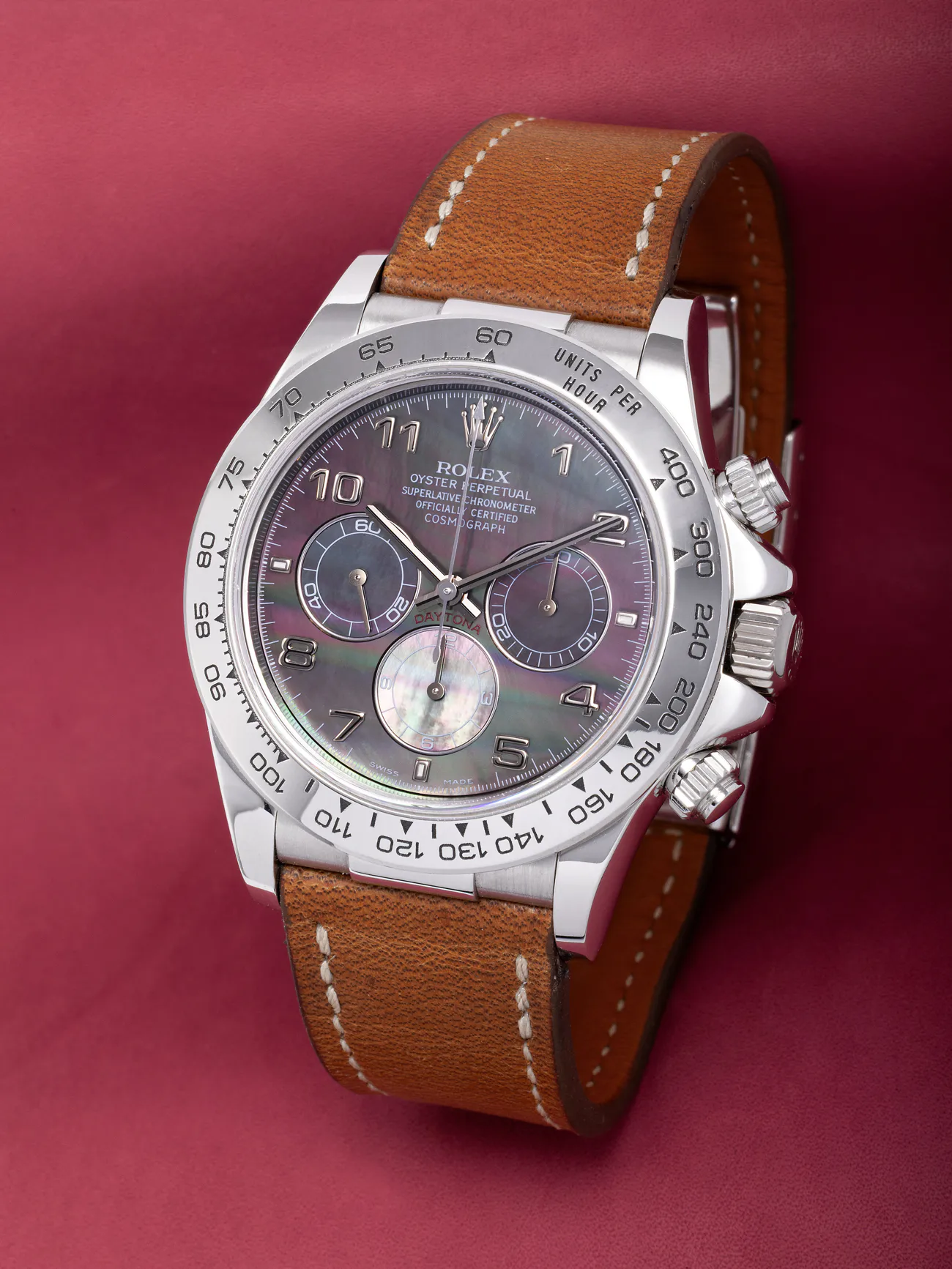
Daytona 16516, platinum, 1999 (Lot 78)
Within Daytona scholarship, the reference 16516 occupies an entirely separate category. Produced in 1999 under the direction of Patrick Heiniger, it was never part of the official catalogue. Only four platinum Zenith-powered examples are known, each fitted with a different hardstone dial.
The present watch is distinguished further as the only one delivered through the retail network, resulting in the presence of an official warranty and accessories, including numbered hangtag. Its rarity is therefore both numerical and contextual, combining extremely limited production with a unique distribution history. This is the Perpetual Daytona endgame! Read our full article here
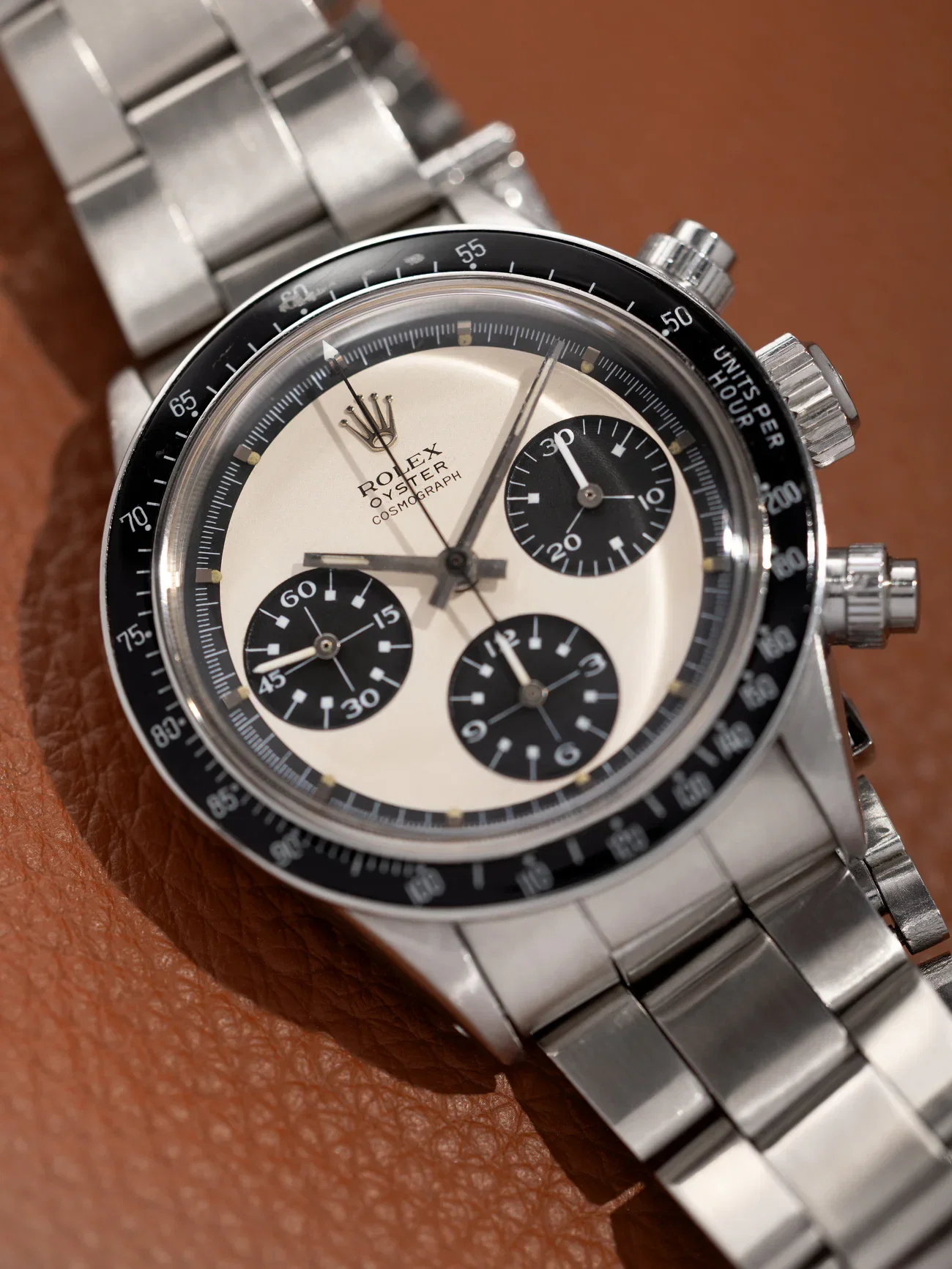
Daytona 6263 “Paul Newman” Mark I, steel, 1969 (Lot 141)
Within the 6263 Newman story, early Mark I dials represent the starting point of this incredible story. Defined by specific typographic details and found within a narrow serial range, these early executions were produced in relatively small numbers before later iterations followed.
The present example retains these characteristics, along with a well-preserved dial and consistent patina, factors that are critical in the assessment of Paul Newman Daytonas. This is the first time this lot has been offered for sale and fresh-to-market original owner examples combining this early configuration and strong condition have become increasingly scarce. This is one Rolex Daytona grail not to be missed.
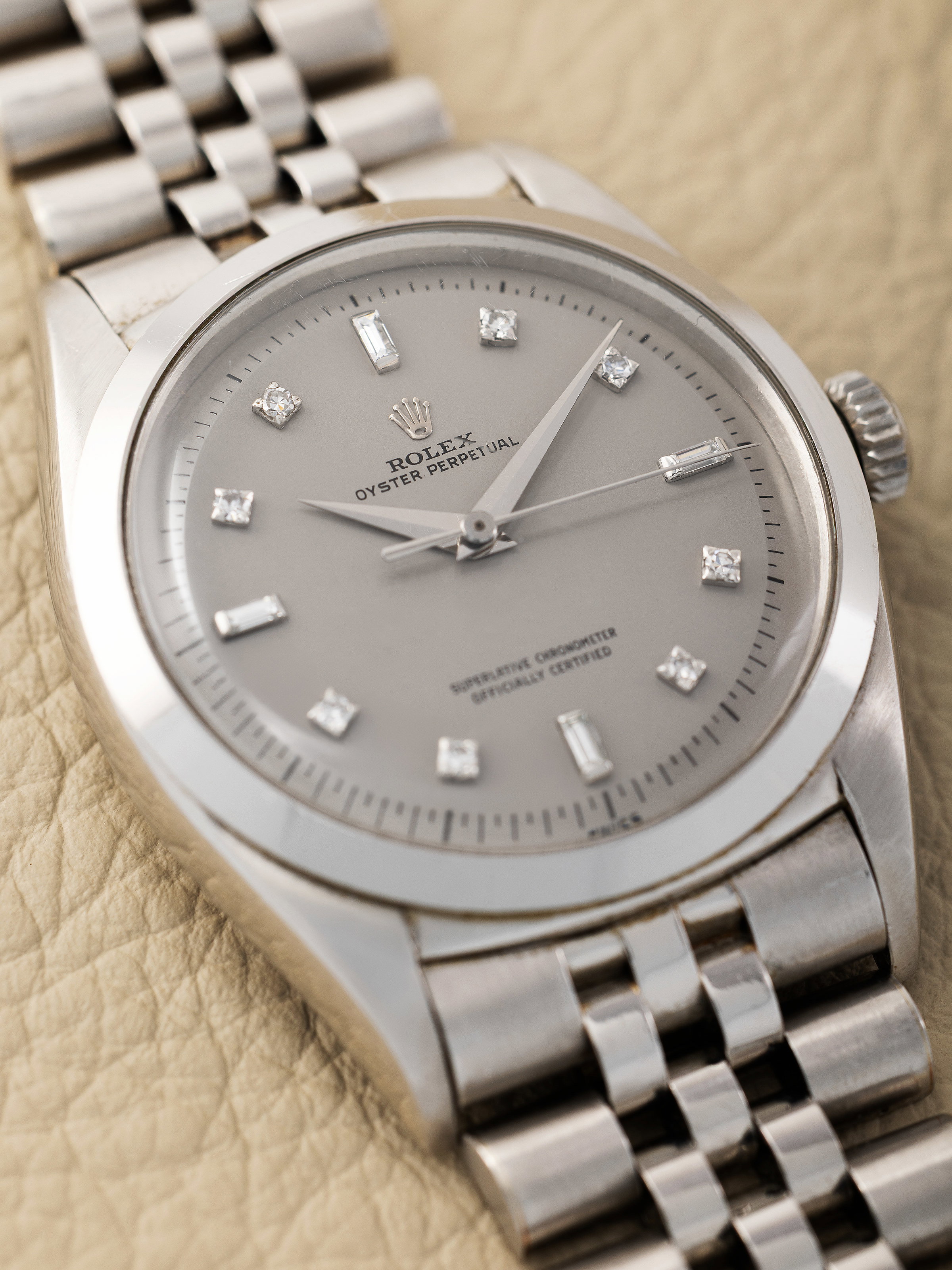
Reference 6304 “Ovettone”, platinum, 1955 (Lot 189)
Platinum examples from this period are, in themselves, highly unusual. Rolex did not incorporate platinum into regular production in the 1950s, instead reserving it for special commissions or experimental pieces. Only a handful of Ovettone references are known in this metal.
The present watch introduces further intrigue. The absence of a date, replaced by a symmetrical diamond configuration, is not a standard execution. Combined with the early use of the “Superlative Chronometer Officially Certified” designation, it suggests a piece created at a moment of transition possibly for a specific purpose. Within an already rare category, it stands apart. Read our full article here
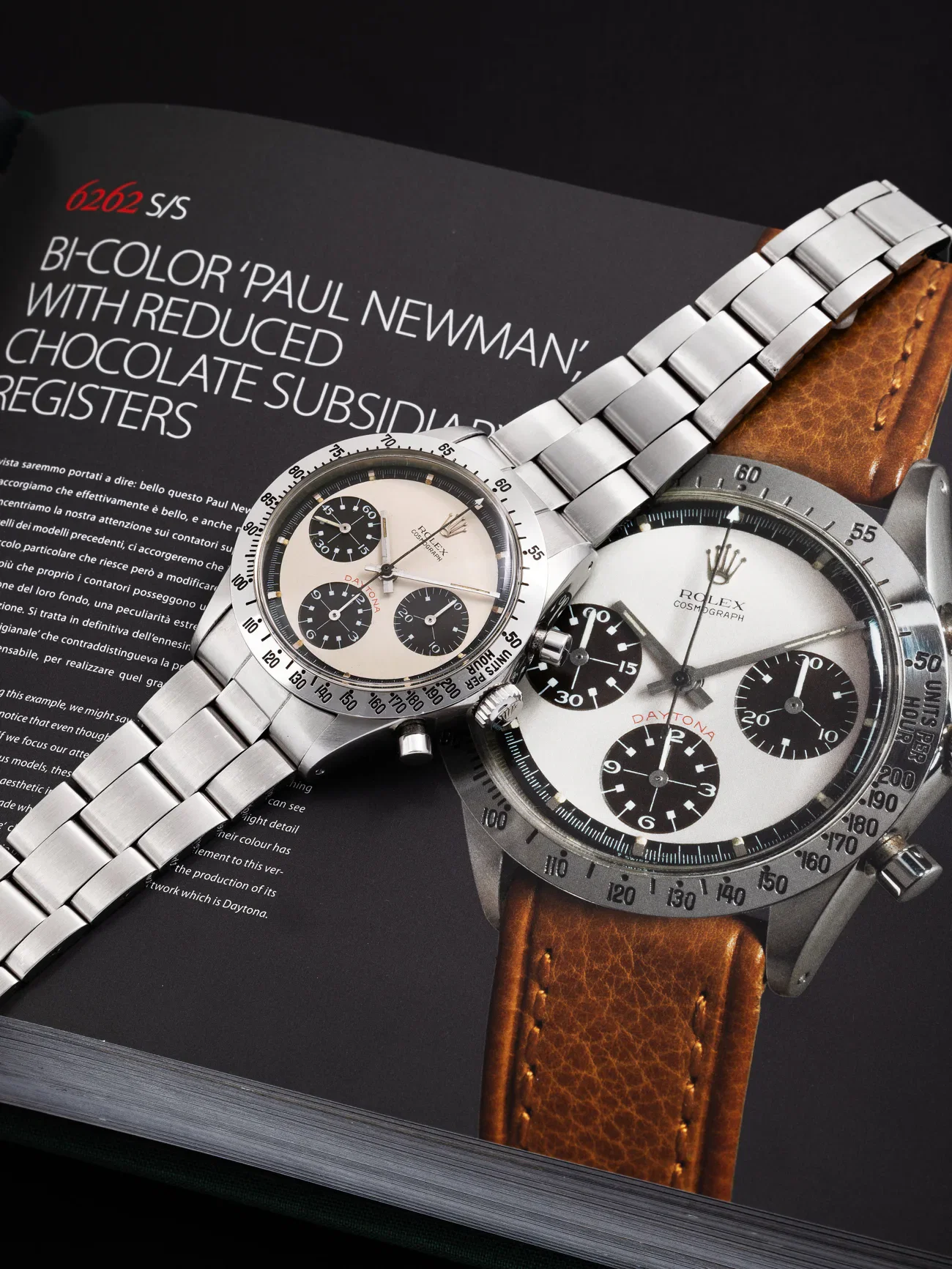
Daytona 6262 “Paul Newman”, steel, 1970 (Lot 199)
The 6262 exists as a transitional reference, produced briefly around 1970 as Rolex moved between generations of the Daytona. Retaining pump pushers while incorporating the upgraded calibre 727, it represents a short-lived technical evolution. Production numbers were consequently limited.
The addition of a Paul Newman dial, combined here with tropical sub-dials, narrows the field further. Its documentation within the Archivio Pucci Papaleo and inclusion in the Ultimate Rolex Daytona book, cement its standing as one of the most desirable examples of this model.
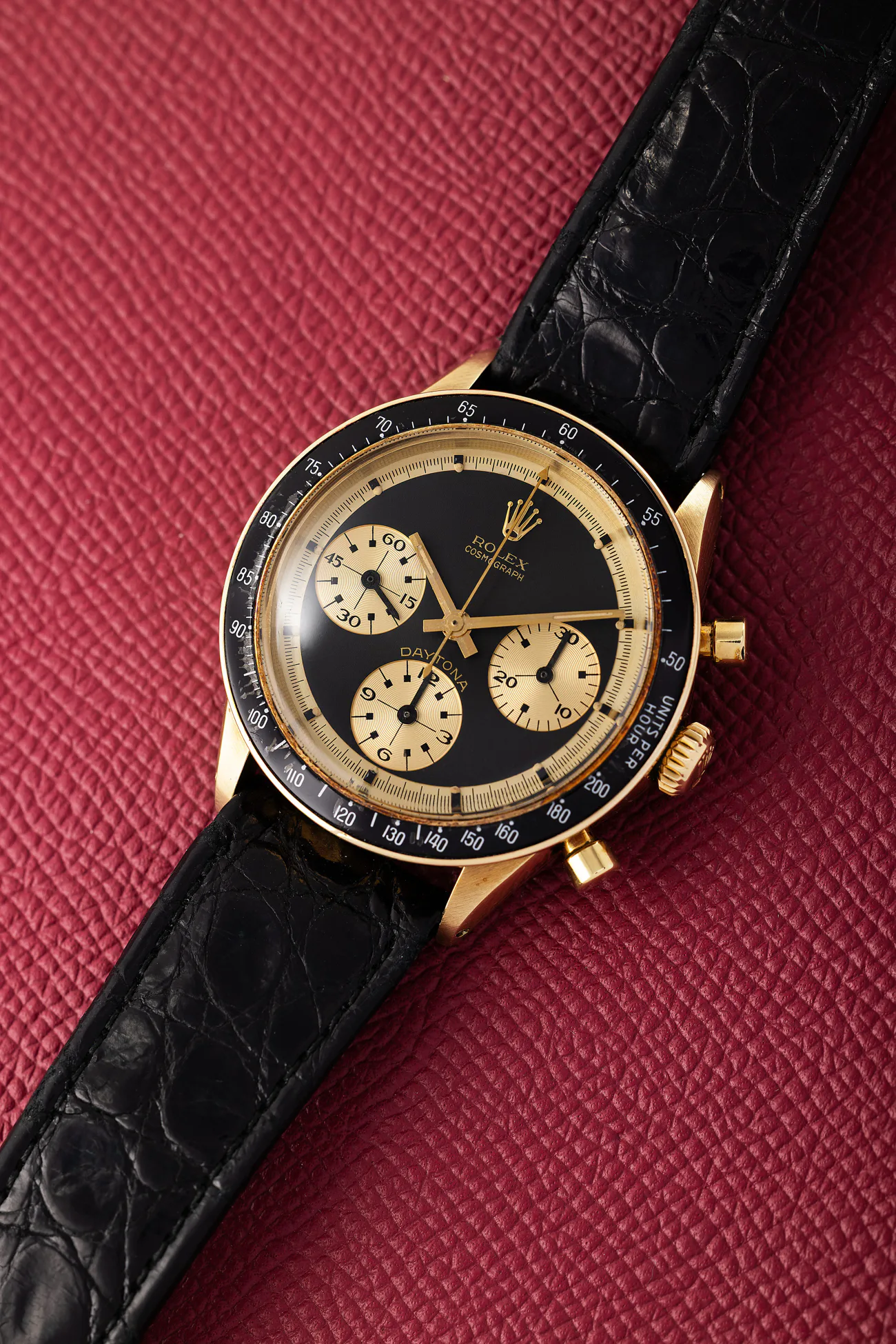
Daytona 6241 “John Player Special”, 14k gold, 1969 (Lot 288)
Gold Daytonas from this period represent a departure from the model’s utilitarian origins. Produced in relatively small numbers, particularly in 14k for the American market, they were never the core of Daytona production. When combined with the exotic dial configuration, numbers become exceptionally low.
The so-called “John Player Special” aesthetic, with its black and gold contrast, adds a further layer of identity. It is a configuration where material, design, and context align to create one of the most distinctive executions of the early Daytona. When rarity and condition, such as seen here, combine in such a watch, there can be no arguing about the label “important” being applied to this lot.
A study in exceptional examples
Taken together, these watches illustrate a consistent theme. The most important Rolex watches are rarely the most obvious. They emerge from moments of transition, from special commissions, or from quiet deviations within standard production. They are defined by context as much as by configuration, and always by condition.
In this sense, the above selection is not simply a group of highlights, but a study in exception, where rarity is not measured by numbers alone, but by intent, circumstance, and survival.